Well report No. RR-6310 · T12N · R1W · SEC 12 · filed November 13, 2026
Energy Transition in OilWell report
Global Fossil Fuel Emissions to Fall This Year as Iran War Hits Oil Demand
Global Carbon Project data shows fossil fuel emissions dipping under 0.5% this year — the first drop since 2020 — as the Iran war's oil price shock crushes demand faster than coal can backfill it.
Field notes
- Global fossil fuel emissions will fall by less than 0.5% in 2025 versus the prior year, the Global Carbon Project estimates.
- It is the first annual emissions decline since 2020, and analysts had expected emissions to rise.
- Iran shut the Strait of Hormuz, a chokepoint for roughly 25% of global crude and 19% of LNG flows.
- Higher coal use in several countries has been offset by a stark decline in oil consumption.
- Analysts are split on whether the drop persists after the war or reverses like the 2020 pandemic dip.
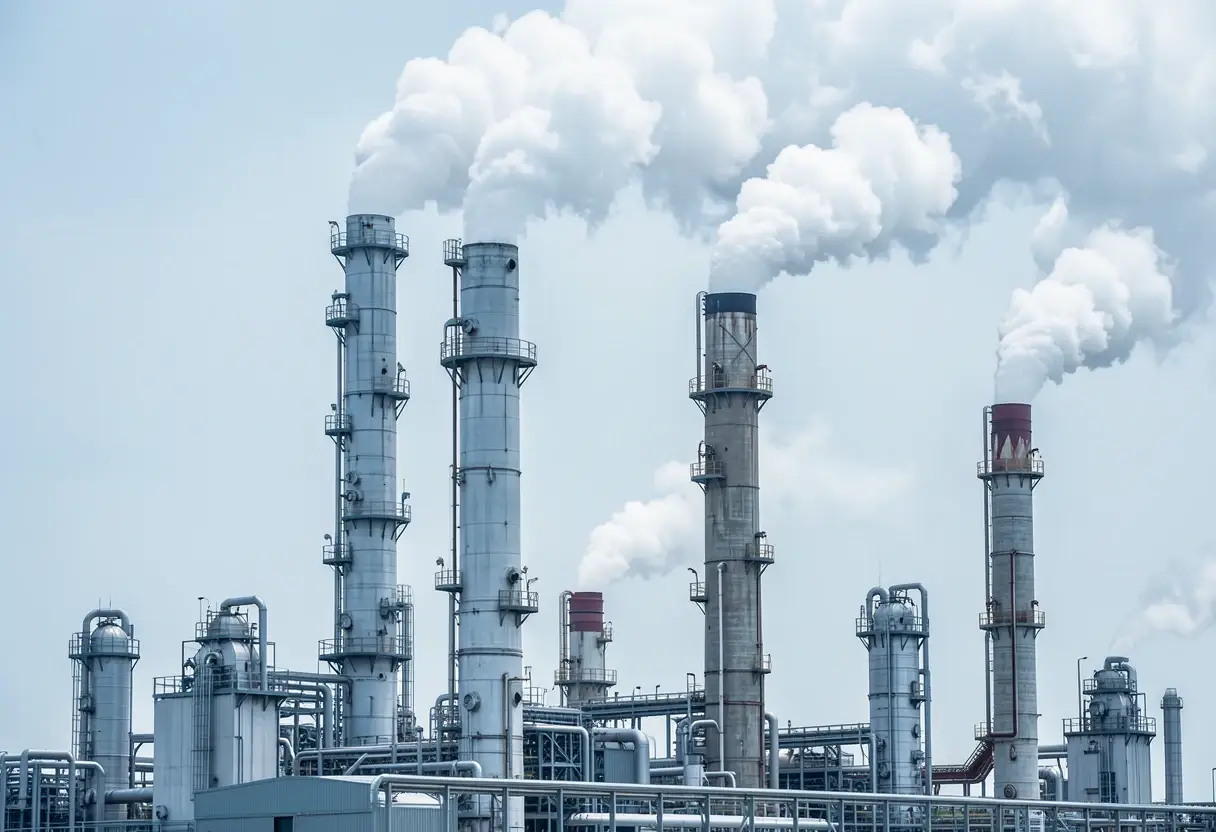
Global fossil fuel emissions will fall by less than half a percent this year versus 2025, according to the Global Carbon Project. It is the first annual decline since 2020. And unlike 2020, the driver is not a pandemic. It is war.
The Iran war has pushed oil and natural gas prices sharply higher, prompting many countries to cut consumption and seek alternatives. The result, per the Global Carbon Project's new data, is a small but unexpected dip in fossil-fuel-related emissions. Analysts had initially expected emissions to rise this year. They were wrong. Not by much — the drop is under 0.5% — but the direction of travel has flipped.
Why the Strait of Hormuz matters
The mechanism is straightforward. Iran shut down the Strait of Hormuz shortly after the first U.S.-Israeli strikes began. Roughly 25% of the world's crude oil and 19% of its liquefied natural gas moves through that chokepoint (the narrow shipping lane between Iran and Oman that connects the Persian Gulf to open sea). A closure at that scale does not nudge prices. It spikes them.
What was not obvious in the war's earliest days was what the price shock would do to global emissions in the near term. The answer cut both ways.
Coal complicated the picture
Plenty of countries scrambled to use less oil and gas to avoid spiking costs, and many raced to backfill their needs with electric vehicles or renewables. But several countries took the opposite route and sought refuge in coal — the dirtiest fossil fuel of all. That substitution threatened to erase any emissions benefit from lower oil use.
It now appears it did not. The Global Carbon Project data shows the bump in coal use has been offset by a stark decline in oil consumption in particular. Gas demand softened too, but oil is the story. The price signal did what price signals do: it destroyed demand.
Trend or aberration?
That is the question analysts are fighting over. The 2020 comparison hangs over everything. Emissions fell that year, then roared back. Some analysts argue the same pattern will repeat here — oil and gas demand will come roaring back whenever the war eventually ends. Others say the war has kick-started a wave of cleantech adoption that is here to stay, permanently denting fossil fuel demand.
The source data does not settle it. A sub-half-percent decline is noise-level in a system that emits roughly 37 billion tonnes of CO2 from fossil fuels annually — and Canary Media, whose "Chart of the Week" column published the finding, does not claim otherwise. What the data does establish is that a supply shock, not policy, moved the needle.
There is also a caveat worth stating plainly. The Global Carbon Project figure is an expectation, not a measurement. The year is not over. War-driven price swings are volatile, and a reopening of Hormuz — or a lasting closure — could push the final number either side of flat.
The takeaway: emissions fall when oil gets expensive, and the Iran war has made oil expensive. Whether the decline survives the war is the number to watch in next year's Global Carbon Project budget.
via canarymedia.com (Source)
More from Priya Raman
Show full bio
Senior reporter covering technology and product news in Oil and gas industry operations and markets at Rig & Refinery.
610 articles
Adjoining reports
- Brent and WTI Jump as Houthi Attacks Fuel US-Iran Escalation Fears
- Hormuz Disruption Traps Fifth of Global LNG, Driving European Gas Prices Higher
- Gulf oil keeps flowing through Iran conflict, but war costs mount
- Oil Market on Alert as Iran Conflict Intensifies
- Oil Climbs as Iran Holds Firm on Strait of Hormuz Demands