Well report No. RR-3080 · T14N · R26W · SEC 14 · filed October 10, 2026
Upstream Drilling & ProductionWell report
Greenland tempers expectations on US Arctic drilling timeline
Greenland has tempered expectations of American-backed oil drilling on its frontier acreage, Arctic Today reported, with no active U.S.-operated campaign currently confirmed and operator identity undisclosed.
Field notes
- Greenland has tempered expectations of American-backed oil drilling on its frontier acreage, per Arctic Today
- No active U.S.-operated drilling campaign is currently confirmed on Greenlandic acreage
- U.S. interest in Greenland resources was raised publicly in 2019 over a proposed acquisition that did not advance
- Greenland administers licensing through the Mineral Resource Authority
- Historical geological assessments cite multi-billion-barrel undiscovered resource potential offshore Greenland
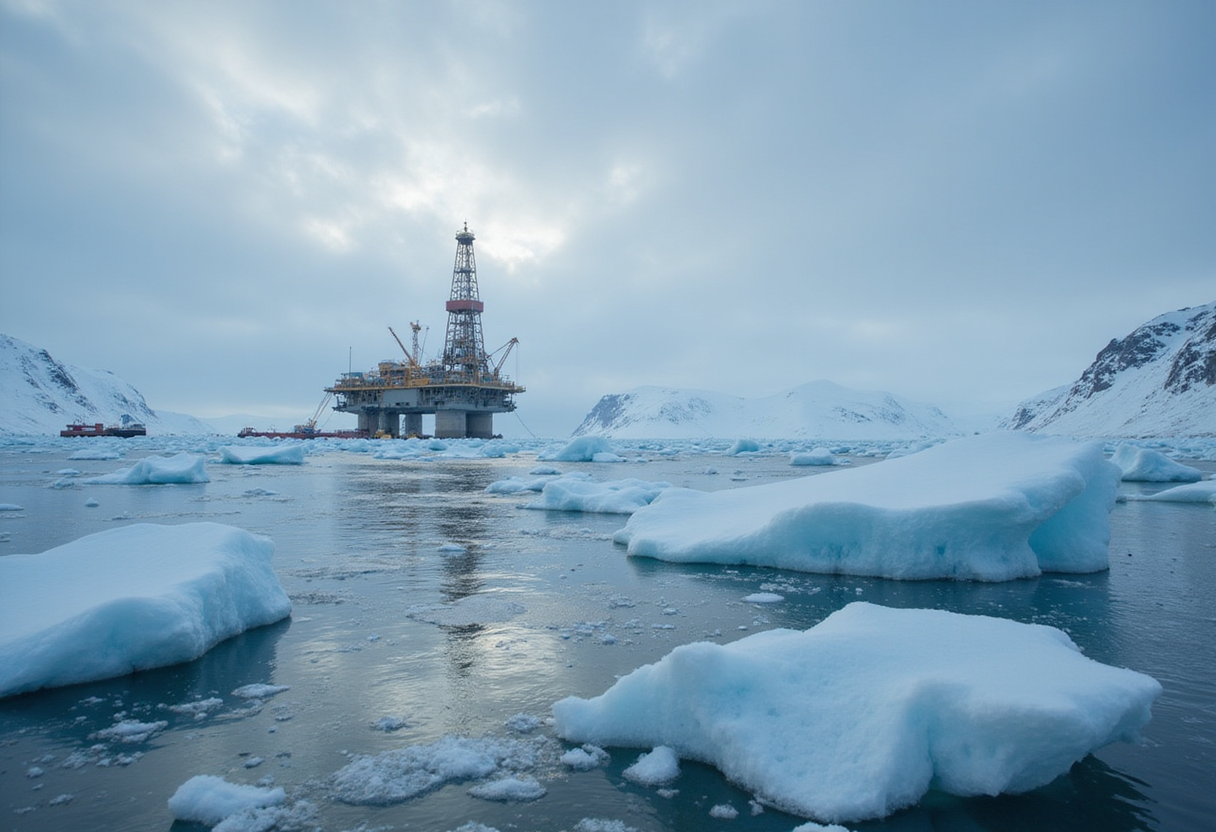
Greenland has tempered expectations of American-backed oil drilling on its frontier acreage, Arctic Today reported, with no active U.S.-operated campaign currently confirmed and the identity of any American operator remaining undisclosed.
Nuuk's shift reflects the distance between diplomatic signalling and the multi-year cycle required to licence, permit and execute exploration on the Arctic continental shelf.
What has changed in the dialogue?
The United States has engaged Greenland on resource extraction in several episodes over the past decade, most visibly during the 2019 episode around a proposed purchase that did not advance. Hydrocarbon exploration has featured in those discussions without producing a sustained operational presence.
The current reporting confirms no active U.S.-operated drilling campaign on Greenlandic acreage. Nuuk's tempered language appears designed to recalibrate expectations between the announcement of interest and the operational reality of Arctic exploration — a recalibration that has not yet produced rig commits.
Why is the operational case difficult?
Frontier drilling in Arctic waters carries a step-change in cost and complexity relative to conventional operations. Mobilisation of harsh-environment rig capacity, paired with the seasonality constraints of the Northwest Atlantic and Baffin Bay, means licence-to-spud timelines frequently extend beyond the lifespan of any single political cycle.
The economics have historically discouraged sustained capital deployment. Frontier drilling costs in Arctic waters run multiples of conventional wells, paired with a small domestic market, limited export infrastructure, and a thin contractor base. Even when geological assessments point to multi-billion-barrel undiscovered resource potential, the commercial thresholds have been difficult to clear.
How does the licensing framework operate?
Greenland's licensing framework is administered through the Mineral Resource Authority. Rounds have been opened periodically over the past two decades, with applicants required to clear environmental and social impact assessment gates. For frontier acreage in Arctic waters, those gates are particularly lengthy and have at times overlapped with regulatory uncertainty around ice-edge operations, seismic acquisition windows and protected-area designations.
Several historical licences over prospective acreage have been relinquished over the years as commercial thresholds proved unreachable, returning significant blocks to the state. The pattern is consistent with frontier basins globally: licence holders secure acreage in early rounds, then return it when exploration drilling does not produce commercial discoveries.
What does the tempering mean in practice?
The shift could be read as either a slowdown or a resetting of expectations ahead of a more concrete announcement. Without further disclosure on operator identity, licence status, seismic commitments or drilling commitments, the operational picture remains unchanged from prior reporting.
What could shift the picture?
Three triggers would convert the diplomatic signal into an operational commitment: a farm-in announcement from a named U.S. operator onto existing Greenlandic acreage; rig contract activity tied to the Arctic continental shelf; or a joint statement between Greenlandic and U.S. officials disclosing a specific drilling timeline.
Until any of those emerge, the American drilling programme remains a diplomatic signal rather than an operational commitment. The pattern is familiar across frontier basins: licence rounds attract interest, exploration wells test the geology, and most acreage relinquishes when commercial thresholds prove unreachable.
What is the watch item?
The signals to track:
- The next Greenlandic licensing-round announcement
- Any joint statement between Greenlandic and U.S. officials
- Seismic or drilling commitments disclosed by either party
- Rig contract activity tied to Greenland's continental shelf
- The next Mineral Resource Authority quarterly update on active licences and licence relinquishments
Until rig contract activity emerges, the American drilling timeline remains a diplomatic signal rather than an operational one.
via Google News: Oil drilling and production (Source)
More from Priya Raman
Show full bio
Senior reporter covering media and advertising at Rig & Refinery.
395 articles
Adjoining reports
- Greenland Clears Environmental Hurdle on Path to Oil Drilling
- Trump-linked oil venture delays Greenland drilling plan
- Trump Allies Linked to Greenland Oil Drilling Plan, Newsweek Reports
- US Auctions Contested Arctic Acreage for Oil Drilling
- Greenland exploration well delayed as permit dispute halts Arctic drilling