Well report No. RR-6472 · T14N · R42W · SEC 26 · filed September 30, 2026
Energy Transition in OilWell report
INEOS Starts Commercial CO2 Injection at Project Greensand Offshore Denmark
INEOS Energy, Harbour Energy and Nordsøfonden begin commercial CO2 storage at Project Greensand, injecting 400,000 tpy into the depleted Nini West field in the Danish North Sea.
Field notes
- INEOS Energy, Harbour Energy PLC and Nordsøfonden AS began commercial CCS operations at Project Greensand, the EU's first full-scale offshore CO2 storage site.
- Initial phase capacity is up to 400,000 tpy of CO2, with planned expansion to 4-8 million tpy; CO2 comes mainly from Danish biomethane plants.
- CO2 is liquefied, trucked to Port Esbjerg, shipped on the purpose-built carrier Carbon Destroyer 1, and injected into the depleted Nini West oil field, 250 km offshore at ~1,800 m depth.
- EU CCS targets stand at 50 million tpy by 2030 and 250-280 million tpy by 2040.
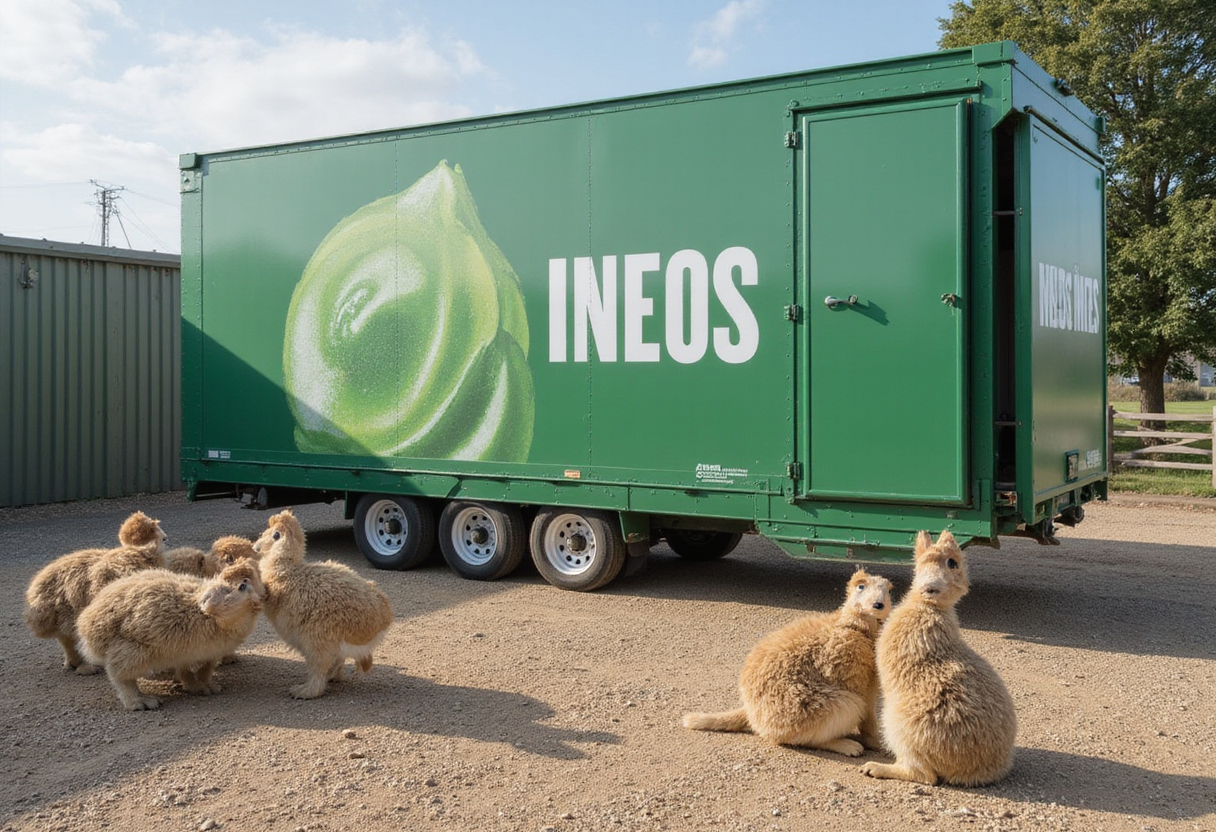
INEOS Energy, together with partners Harbour Energy PLC and Nordsøfonden AS, has begun commercial carbon capture and storage operations at Project Greensand — the European Union's first full-scale site for transport and permanent offshore storage of CO2. The CO2 will come mainly from Danish biomethane plants.
The initial commercial phase provides storage capacity of up to 400,000 tonnes/year (tpy) of CO2, with plans to expand to 4-8 million tpy as demand increases.
The storage target is the Nini West reservoir in the Danish North Sea. Nini West is a depleted oil field 250 km offshore, roughly 1,800 m below the seabed in water depths of about 200 ft.
The logistics chain runs from capture to injection. Once captured, operators liquefy the CO2, truck it to a dedicated CO2 terminal at Port Esbjerg on Denmark's west coast, and ship it aboard the purpose-built CO2 carrier Carbon Destroyer 1 for injection into the reservoir.
Project Greensand gives the EU its first operating full-scale reference point in a sector that remains far from the bloc's stated ambitions. The EU is working toward carbon capture and storage targets of 50 million tpy by 2030, rising to 250-280 million tpy by 2040.
The gap between current capacity and those targets is the sector's central constraint. At 400,000 tpy, Greensand's initial phase handles less than 1% of the 2030 goal. The planned expansion to 4-8 million tpy, if sanctioned, would scale the project substantially — but that growth depends on demand, on capture buildout at emitting and biogenic sources, and on the shipping-and-terminal chain linking them to the Danish offshore storage site.
The watch item is the pace of that expansion. Industry attention will focus on when INEOS and its partners commit capital beyond the initial phase, and whether Greensand's ship-and-inject model — liquefied CO2 moved by truck and purpose-built carrier to a depleted offshore field — proves replicable across other North Sea reservoirs as the EU pushes toward 50 million tpy by the end of the decade.
via Oil & Gas Journal (Source)
More from Daniel Okafor
Show full bio
Market editor covering consumer brands and retail at Rig & Refinery.
90 articles