Well report No. RR-9175 · T15N · R12W · SEC 15 · filed October 10, 2026
Refining & PetrochemicalsWell report
Israel Strikes Iranian Petrochemical Plant as Conflict Escalates
Israeli forces struck a petrochemical plant inside Iran, extending the war to downstream hydrocarbon infrastructure and raising supply and shipping risks across the Gulf.
Field notes
- Israeli forces struck a petrochemical plant inside Iranian territory
- The strike extends the war's target set to downstream hydrocarbon processing assets
- The attack was reported as part of a broader escalation of the Israel-Iran conflict
- Plant operating status and potential retaliation remain the key open questions
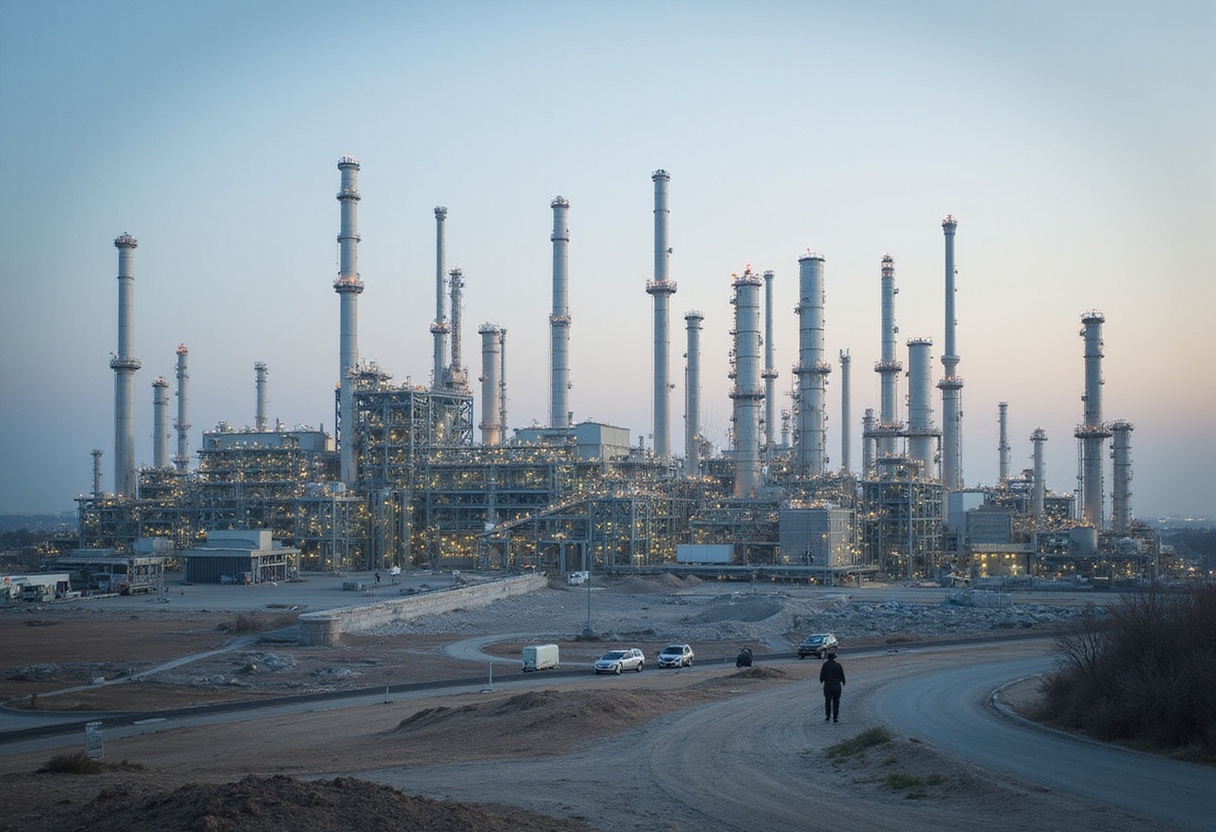
Israeli forces have struck a petrochemical plant inside Iran, extending the ongoing war to a new category of hydrocarbon-processing infrastructure and putting downstream assets — not just crude production sites — directly in the firing line.
The strike, reported by OilPrice.com, hits a sector Iran has leaned on heavily for export revenue as sanctions squeeze its crude sales. Petrochemical output has become a critical earner for Tehran, and any disruption to plant operations or export logistics carries direct commercial consequences for buyers across Asia.
What does the strike signal?
Until now, the exchange of fire between Israel and Iran had raised the industry's central question: whether energy infrastructure would remain off limits. This attack appears to answer it. A petrochemical plant is a downstream asset — it processes feedstock into exportable products, and it sits within a supply chain that connects Iranian fields, fractionation trains, storage terminals and tanker loadings.
For refiners and petrochemical buyers, the risk calculus changes. Insurance rates for vessels calling at Iranian and Gulf loading points tend to reprice quickly when strikes land on processing or export infrastructure. Traders will be watching whether the damage forces a halt in plant throughput or whether operations continue at reduced rates.
How does this fit the escalation pattern?
The report frames the strike as part of a broader escalation of the war. Each extension of the target set — from military sites toward energy assets — raises the probability of supply disruptions in a region that moves a large share of the world's seaborne crude and products.
The Strait of Hormuz remains the benchmark risk. Any strike that pushes Tehran toward interference with tanker traffic, or that prompts retaliation against Gulf energy facilities, would move freight and crude differentials well beyond the Gulf itself.
What should markets watch next?
The key watch items are straightforward.
- Damage assessment: whether the affected petrochemical plant halts production fully, partially, or continues operating.
- Retaliation scope: whether Iran responds against energy infrastructure elsewhere in the region.
- Shipping flows: any rerouting of tankers or jump in war-risk premiums at Gulf terminals.
For now, the strike itself is the story: a downstream plant in Iran has become a wartime target, and the industry's assumption that processing assets would stay outside the conflict zone no longer holds. The next data point that matters is plant status — running, impaired, or dark.
via Google News: Refineries and petrochemicals (Source)
More from Daniel Okafor
Show full bio
Market editor covering consumer brands and retail at Rig & Refinery.
321 articles
Adjoining reports
- Israeli Strike Hits Iran's Karoon Petrochemical Complex
- Israeli Strike Halts Production at Iran's Mahshahr Petrochemical Complex
- Brent and WTI Jump as Houthi Attacks Fuel US-Iran Escalation Fears
- Gulf Producers Keep Crude Moving Through Iran Conflict
- Israeli Strikes Shut Iran's 72 Mt/y Bandar Imam Petrochemical Complex