Well report No. RR-6458 · T8N · R31W · SEC 32 · filed October 30, 2026
Refining & PetrochemicalsWell report
Jizan's 400,000-bpd Refinery Stays Dark, Diesel Squeeze Runs to Mid-2027
Jizan's 400,000-bpd refinery stays shut and Morgan Stanley sees Q2 2027 maintenance at 2.5x normal, keeping diesel tight into mid-2027 despite a token Russia-US cargo.
Field notes
- Saudi Aramco's 400,000-bpd Jizan refinery remains shut after multiple Iranian strikes.
- First Russia-US ULSD cargo, ~300,000 barrels, departed Primorsk; arrival in New York expected November 7.
- Morgan Stanley: Q2 2027 planned maintenance will be 2.5x the usual spring offline capacity globally.
- Half of Russia's refineries have been offline for months after Ukrainian drone strikes.
- U.S. diesel is nearly $1/gal above 2022's $5.33/gal Election Day average.
By Priya Raman
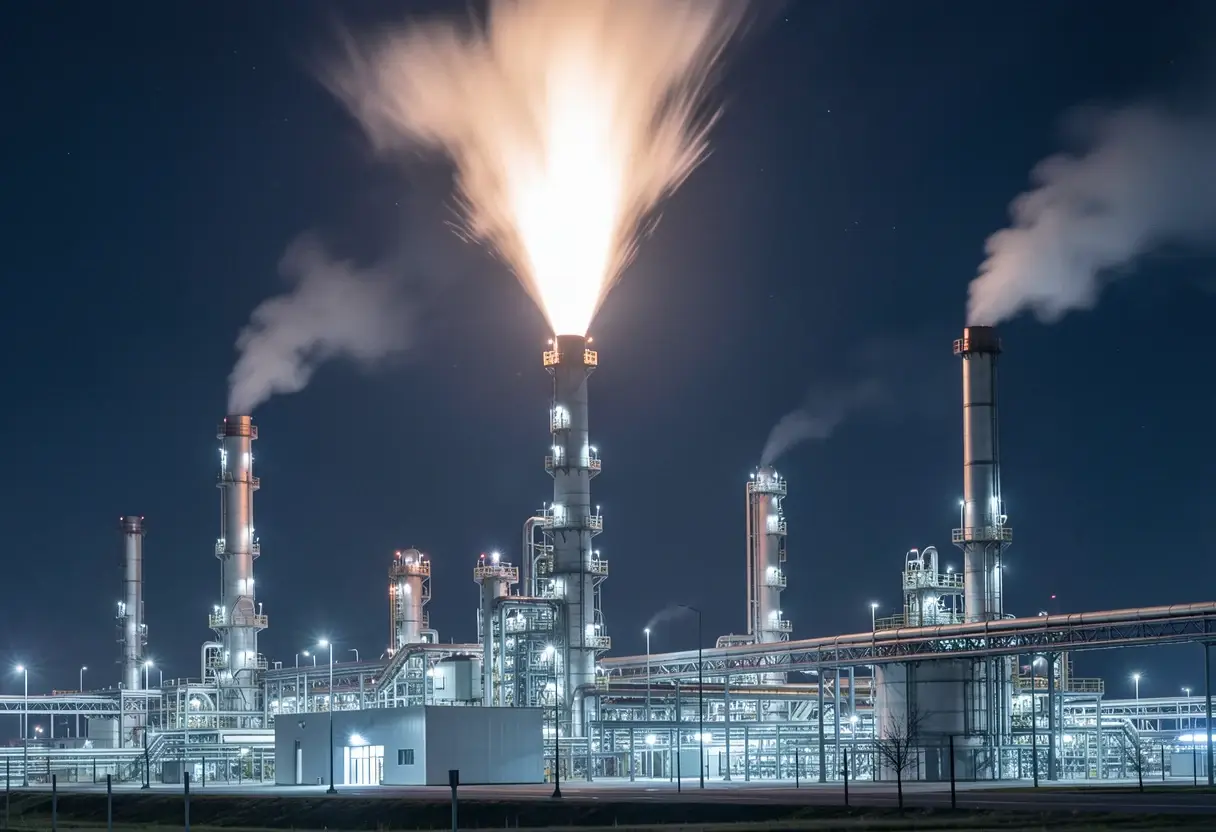
A 400,000-bpd refining gap sits at the center of the global diesel crisis. Saudi Aramco's Jizan refinery on the Red Sea remains shut after multiple Iranian strikes, and analysts now expect the diesel crunch to persist well into 2027.
That is the hard number. The rest of the story is about what cannot be fixed quickly.
What is actually offline?
Bahrain's Bapco refinery is back to three-quarters of capacity after early-war Iranian strikes. Jizan is not back at all. Strait of Hormuz crude flows have nearly recovered to pre-war levels, per ship-tracking services, but product exports remain limited.
Fuel cargoes are riskier to move out of the Persian Gulf. They are more flammable if a vessel is struck, and they typically sail on smaller tankers.
Then there is Russia. Half of Russia's refineries have been offline for months after Ukrainian drone strikes. That triggered a domestic fuel crisis and a diesel export ban — a ban partially lifted only this month.
Takeaway: the world's diesel supply sits below 2025 levels until Middle East and Russian capacity returns.
Does the Trump-Putin diesel deal help?
Not meaningfully. The first tanker carrying roughly 40,000 metric tons — about 300,000 barrels — of ultra-low sulfur diesel (ULSD, the low-emission road fuel grade) left Russia's Baltic port of Primorsk last week, bound for the U.S.
"On November 7, the first vessel, carrying a measly 300,000 barrels, less than a tenth of what the US consumes every day, should arrive in New York," Robin Mills, chief executive of energy advisory firm Qamar Energy, wrote in The National.
Three hundred thousand barrels is a rounding error in a tight global market. Analysts say the deal's effect on supply and prices will be negligible — and certainly not before the U.S. midterm elections on November 3.
Takeaway: one tanker does not offset two war-damaged refining systems.
Can refineries elsewhere run harder?
They already are, and it has limits. Refineries outside the Middle East and Russia, including in the United States, have deferred maintenance for months to maximize diesel output.
They cannot defer it indefinitely. Push too hard and you invite malfunctions and unplanned shutdowns, which would tighten supply further.
Morgan Stanley said last week that global fuel markets will stay tight until at least the middle of next year. The reason: the second quarter of 2027 will carry unusually high planned maintenance deferred from this year.
That expected Q2 2027 drop in refinery utilization is two and a half times the usual capacity taken offline by spring maintenance globally. It exceeds all the capacity currently offline in the Middle East and Russia combined, per Morgan Stanley's analysts.
The IEA's October Oil Market Report carries the same warning: the diesel and gasoil crunch extends into mid-next-year.
Takeaway: the maintenance deferral bill comes due in Q2 2027, and it is large.
What about demand-side fixes?
Mills frames it bluntly: "the strategic choice is to save on consumption, whenever and wherever possible."
Options include heavy-duty trucks on natural gas, buses on gas or battery-electric power, and faster passenger EV adoption. Record gasoline and diesel prices have already accelerated Europe's EV shift beyond what years of regulation achieved.
None of it is immediate. Winter is coming, and Northern Hemisphere heating oil demand will jump — especially in the U.S.
What happens to prices?
The near-term risk tilts to the upside until Middle East and Russian fuel flows recover.
U.S. prices are not easing despite the administration pulling, in one analyst's words, virtually every lever available. "Diesel edged modestly higher nationally, and with the national average for gasoline likely to remain above $4 per gallon and diesel above $6 heading into the U.S. election, the relief motorists and policymakers have been hoping for remains elusive—even as states have moved to cut fuel taxes," Patrick De Haan, head of petroleum analysis at GasBuddy, said Monday.
With a week to the election, U.S. gasoline sits 42.3 cents/gal above the 2022 Election Day average — itself the priciest Election Day at the pump ever. Diesel is nearly $1/gal above 2022's $5.33/gal. Both are on track for record Election Day prices, though not all-time highs, De Haan noted.
Watch item: the November 7 ULSD cargo arrival in New York, and whether Jizan shows any restart timeline at all.
via thenationalnews.com (Original)
More from Priya Raman
Show full bio
Senior reporter covering technology and product news in Oil and gas industry operations and markets at Rig & Refinery.
595 articles
Adjoining reports
- Middle East Diesel Exports Drop 52% on Gulf Shipping Squeeze
- Diesel Crack at 2025 Highs as Hormuz, Russia Export Curbs Squeeze Supply
- Diesel Crunch Will Persist Well Into 2027, Pressuring Fuel Buyers
- Drone War Cuts Russian Refining to 1.6 Million Bpd as Fuel Shortage Deepens
- OPEC+ Holds November Output Steady as Brent Stays Above $100