Well report No. RR-8228 · T24N · R13W · SEC 24 · filed October 10, 2026
Refining & PetrochemicalsWell report
Kazakhstan Plans Near 30 Million Tonne Refining Build by 2031
Kazakhstan plans to lift oil refining capacity to nearly 30 million tonnes per year by 2031, The Astana Times reported, though the headline figure lacks project sanctioning details or capex.
Field notes
- Kazakhstan plans to lift oil refining capacity to nearly 30 million tonnes per year by 2031, per The Astana Times
- Three existing refineries operate at Atyrau, Pavlodar and Shymkent, processing Pre-Caspian and Mangystau crude
- At 7.3 barrels per tonne, the target translates to approximately 600,000 bpd of installed throughput
- The report does not identify a sanctioning authority, capex figure, or project operator
- Kazakhstan currently routes most crude exports through the CPC Blend pipeline to Novorossiysk and into China
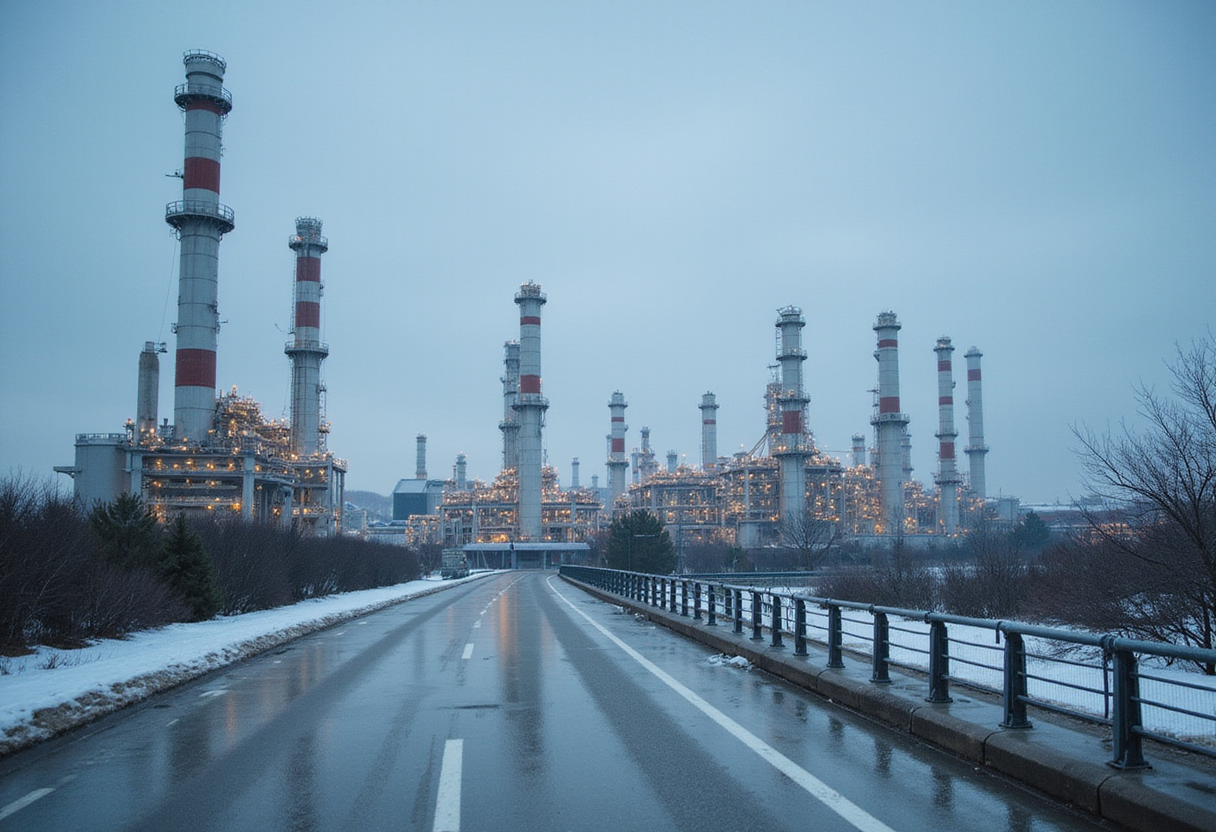
Kazakhstan plans to lift oil refining capacity to nearly 30 million tonnes per year by 2031, The Astana Times reported.
The downstream expansion, framed as part of the country's longer-term industrial strategy, would unfold over a six-year horizon. Kazakhstan currently runs three major refineries at Atyrau, Pavlodar and Shymkent, processing crude from the Pre-Caspian and Mangystau basins.
What the headline figure means
The 30 million tonne benchmark, if reached, would mark a substantial step up from current domestic processing. Standard industry conversion of roughly 7.3 barrels per tonne places the headline figure at approaching 600,000 barrels per day of installed throughput — within range of mid-sized European refining systems.
Why the timing matters
The capacity target lands against a regional backdrop of constrained refining. Russian refineries have absorbed repeated Ukrainian drone strikes since 2022, tightening product flows across the Commonwealth of Independent States.
Kazakhstan, with a long Russian border and membership in the Eurasian Economic Union, has commercial reasons to capture more value domestically. Higher domestic throughput would also shift the country's crude export arithmetic.
Kazakhstan currently routes the bulk of its crude through the CPC Blend pipeline to Novorossiysk and through pipelines and rail into China. Processing more crude at home would, in principle, lift exports of gasoline, diesel, fuel oil and jet fuel. Those products have fetched stronger netbacks than raw crude during recent product cracks.
What the report does not say
The Astana Times headline does not specify whether the 30 million tonne target represents greenfield construction, debottlenecking, or both. It does not name a sanctioning authority, attach a capex figure, or identify a project operator.
The Kazakh Ministry of Energy has not yet published a 2024–2031 refinery roadmap that would corroborate the figure.
Watch items
The next Ministry of Energy statement, and any follow-up reporting from The Astana Times, will determine whether the target is anchored in a sanctioned pipeline or floated as aspiration. Watch for:
- A baseline capacity figure for Atyrau, Pavlodar and Shymkent against which the 30 million tonne target can be measured
- A capex envelope and financing structure, including any role for KazMunayGas or international lenders
- A unit-level commissioning schedule
- Clarification on whether the 2031 target supersedes or extends the existing refinery modernization roadmap
A new Kazakh refining cycle would have implications for Russian crude exports, since domestic refineries typically run a blend of West Kazakhstan and Russian feedstock. The Astana Times item does not address feedstock sourcing.
The 30 million tonne headline sets the marker for Kazakhstan's downstream ambitions. The sanction package, financing structure, and commissioning schedule will decide whether the plan lands as policy or as aspiration.
via Google News: Refineries and petrochemicals (Source)