Well report No. RR-9377 · T23N · R35W · SEC 35 · filed October 10, 2026
Refining & PetrochemicalsWell report
Kyrgyzstan Weighs China-Backed Refinery, Pipeline Build-Out
Kyrgyzstan has opened bilateral talks with China on a paired oil refinery and cross-border pipeline package, per Caspian Post. No signed agreement, capacity figure, or named Chinese counterparty has been disclosed.
Field notes
- Kyrgyzstan opened bilateral talks with China on a paired oil refinery and cross-border pipeline package, per Caspian Post reporting carried this week
- No signed intergovernmental agreement, refining capacity figure, or named Chinese counterparty has been disclosed in the public reporting
- The project sits in the announced-but-unconfirmed category pending a feasibility study, FID, or binding intergovernmental memorandum
- A China-Kyrgyzstan pipeline would, in regional analysis, be read as a directional signal on Central Asian energy transit diversification
- Three watch items: a Chinese ministry or SOE readout, a published feasibility study with bpd capacity, or a Kyrgyz gazette publication of a binding agreement
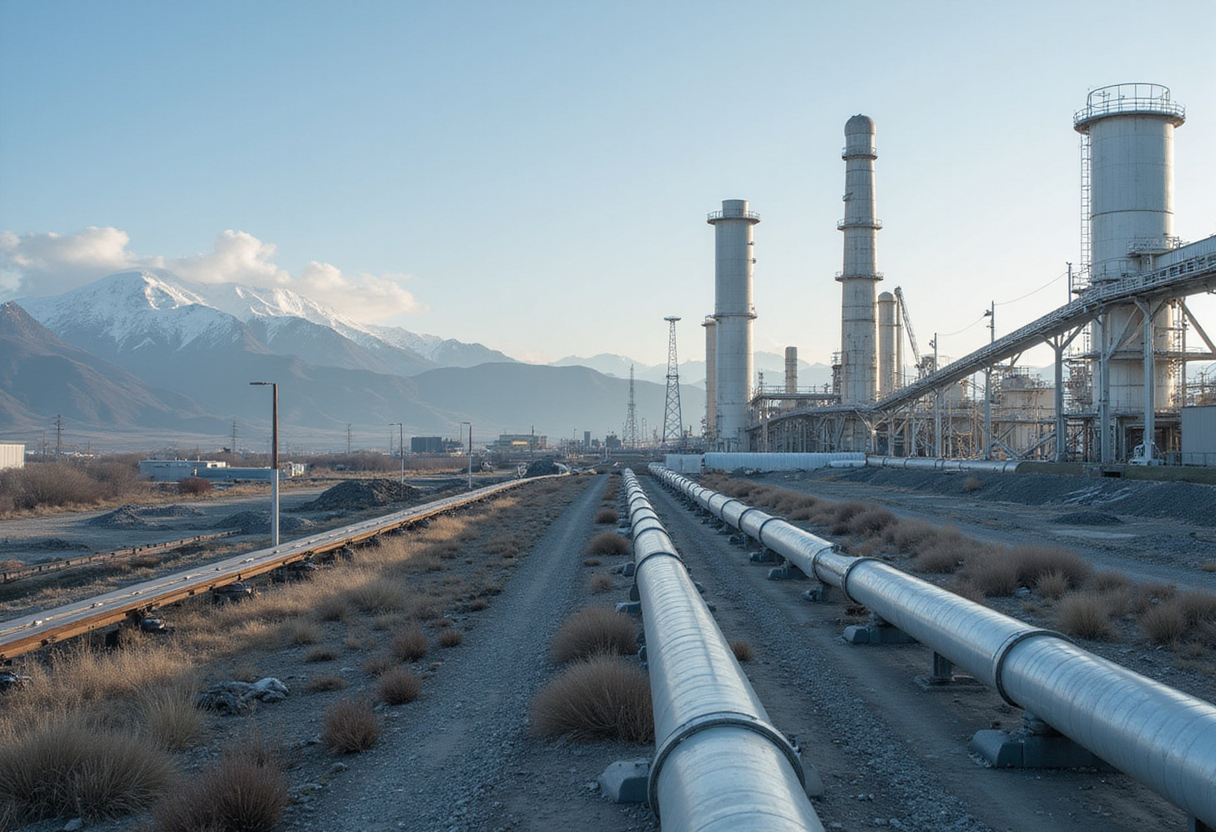
Kyrgyzstan has opened bilateral talks with China on a paired energy infrastructure package — a domestic oil refinery and a cross-border pipeline — according to Caspian Post reporting carried this week.
The proposal sits at the discussion stage. No signed intergovernmental agreement, disclosed refining capacity, named Chinese counterparty, or announced financing structure has appeared in the public reporting to date. That positioning — announcement without execution — is the operative fact for downstream operators reading the signal.
Why pair refinery and pipeline in one package?
A new domestic refinery requires secure feedstock supply. A cross-border pipeline provides that anchor more reliably than spot-market crude purchases. In that framing, the pipeline component would serve as feedstock logistics for the refinery component — a configuration common in cross-border energy builds where the parties want to negotiate crude supply, offtake, and financing terms as one stack rather than as two separate deals.
What remains undisclosed?
Caspian Post's coverage does not specify several items that would normally anchor a refinery-and-pipeline announcement:
- Refining capacity targets, in barrels per day or million tonnes per year
- Capital cost estimates or financing structure (concessional loan, EPC, joint venture)
- The route, length, and terminus of any pipeline
- Construction timeline, phased commissioning dates, or first-oil target
- The Chinese counterparty — whether a state-owned oil company, a policy bank, or a contractor consortium
- Whether the project contemplates third-party transit across neighboring states
Until those details emerge, the project sits in the announced-but-unconfirmed category rather than the sanctioned-project ledger.
How does the proposal read regionally?
Kyrgyzstan is a landlocked Central Asian state. A new domestic refinery would in principle reduce reliance on cross-border imports of finished products — a stated rationale that often accompanies such proposals in the region.
Energy infrastructure projects involving China typically carry implications for the regional balance of energy trade routes, given existing cross-border crude and gas corridors linking Central Asian production to Chinese end-markets. A China-Kyrgyzstan pipeline would, in regional analysis, be read as a directional signal on the diversification of Central Asian energy transit — a point worth flagging without overstating, given the absence of any signed document.
What's the gap between announcement and execution?
A final investment decision, a published feasibility study, or a formal intergovernmental memorandum would move the project from the discussion category into the sanctioned category. None of those documents has surfaced publicly. Caspian Post has not indicated whether the Chinese side has formally reciprocated the Kyrgyz overture, and no Chinese energy ministry has posted a public readout confirming active negotiations.
Watch items
Three developments will signal whether the proposal is advancing from announcement toward execution:
- A formal readout from China's National Energy Administration, a state-owned oil and gas counterparty, or the Ministry of Commerce
- Publication of a feasibility study with a defined bpd capacity figure, route map, and cost envelope
- A Kyrgyz government gazette publication of a binding intergovernmental agreement with disclosed cost, route, and timeline
Until at least one of those anchors appears, the refinery-and-pipeline package remains a bilateral discussion point. The distinction matters when downstream operators, regional planners, and trade-flow analysts read the signal.
via Google News: Pipelines and midstream (Source)
More from Priya Raman
Show full bio
Senior reporter covering media and advertising at Rig & Refinery.
395 articles
Adjoining reports
- Kazakhstan Targets Fourth Major Refinery Online by 2033
- Trans-Caspian Oil Pipeline Back on the Table as Risk Map Shifts
- CPC completes scheduled maintenance on Kazakhstan section of pipeline
- Iranian Oil Begins Reaching Tajikistan in Late August
- Crude Extends Losing Streak to Sixth Session on Iran Talks, Saudi Pipeline Return