Well report No. RR-4768 · T6N · R37W · SEC 18 · filed November 6, 2026
Upstream Drilling & ProductionWell report
Nigeria's CDS credits Navy with 1.84 million bpd output
Nigeria's CDS credits Navy enforcement with lifting crude output to 1.84 million bpd and revenue to $9.39 billion, while commanders set 2026 security priorities.
Field notes
- Average crude output rose from 1.4 million bpd in October 2025 to 1.84 million bpd in September 2026, according to Gen. Olufemi Oluyede.
- Crude earnings increased from $8.11 billion in Q1 2026 to $9.39 billion in Q2 2026, a 15.78% gain, Oluyede said.
- The Navy's Special Boat Service rescued students and teachers at Orire town in July 2026 after 56 days in captivity.
- Strategic Directives 2026 set six objectives across readiness, fleet sustainability, personnel, governance and maritime security.
- The Five-Year National Defence and Security Operations Plan was still being finalized at the 2026 retreat.
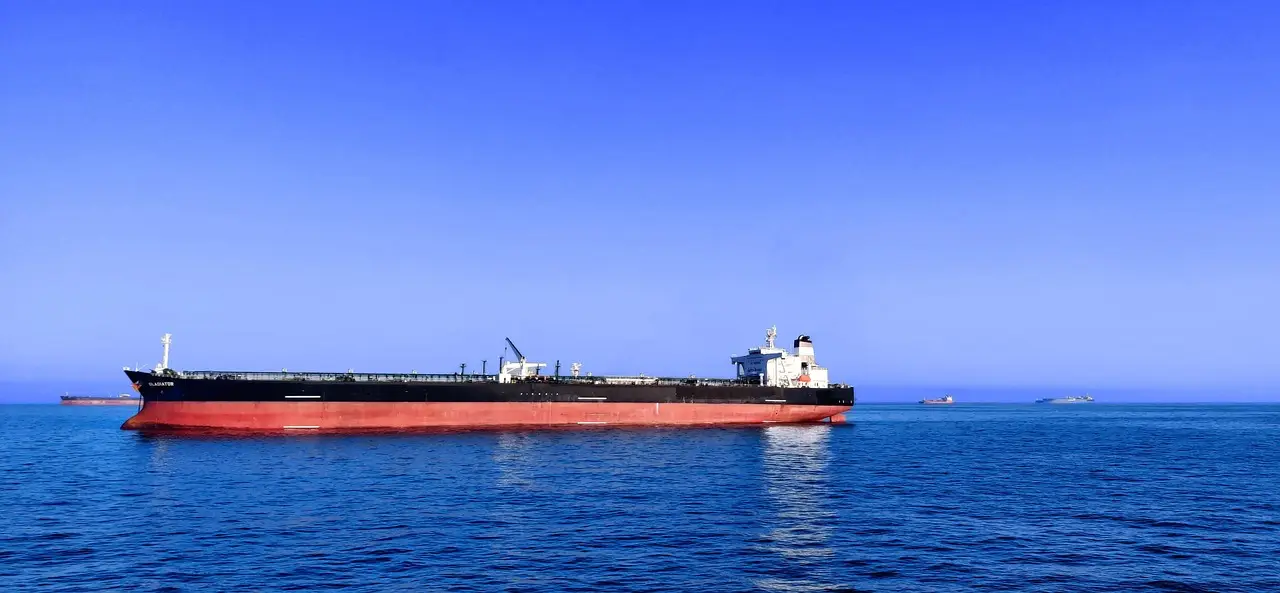
Nigeria’s average crude oil production reached 1.84 million bpd in September 2026, up from 1.4 million bpd in October 2025, Chief of Defence Staff Gen. Olufemi Oluyede said at the Chief of Naval Staff Annual Retreat 2026 at the Naval Headquarters in Abuja.
He attributed the increase to the Nigerian Navy’s intensified maritime enforcement, which he said had reduced pipeline vandalism and crude oil theft and restored production stability. Nigeria’s earnings rose from $8.11 billion in the first quarter of 2026 to $9.39 billion in the second quarter, a 15.78% increase, he said.
“Through enhanced sea presence and intelligence-driven operations, you have significantly reduced pipeline vandalism and crude oil theft,” Oluyede said. “The Navy’s intensified enforcement has translated into oil production stability and financial recovery for Nigeria.”
What changed in Nigerian oil output?
Oluyede described the 1.84 million bpd September level as Nigeria’s highest sustained output since April 2020. His statement made maritime enforcement, rather than a new upstream development, the stated production lever.
The announcement did not identify a specific oil field, pipeline repair, refinery, terminal or sanctioned project. Nor did it provide a pipeline-by-pipeline sabotage count or explain how enforcement activity translated into individual barrels.
Takeaway: The claim links existing Nigerian production to security operations, not to a new oil project.
How does maritime enforcement reach oil operations?
Oluyede said the Navy also worked with the Nigerian Army and Nigerian Air Force against terrorism and other criminality nationwide. He credited strategic deployments and joint operations with securing critical waterways, disrupting criminal logistics routes and neutralizing insurgent elements.
He described this work as part of the whole-of-government approach in his military strategic philosophy, praised the Chief of Naval Staff and Navy personnel, and said their contribution supported national security and regional maritime security. Oluyede also called the retreat a forum for reviewing strategy, doctrine and operational structures.
He sought feedback on strategies that would strengthen joint operations against security threats.
Takeaway: The Navy presents waterways enforcement as the link between reduced theft and stable crude output.
What operational record did the Navy cite?
In July 2026, the Navy’s elite Special Boat Service rescued students and teachers from captivity at Orire town in Oyo State after 56 days, according to the CDS. He said the operation dealt a decisive blow to criminality.
He also cited the Navy’s deployment of personnel and specialized equipment to Igbokoda swamp, the crash site of a Nigerian Air Force ATR-42 aircraft. He presented the response as evidence of readiness across terrain and support for protecting Nigerian lives.
These were security and rescue missions, not oil-production projects. Their upstream relevance lies in the CDS’s claim that stronger deployments and joint operations secure waterways and reduce the conditions that permit crude theft.
Takeaway: The rescue record supports the readiness argument, but it does not measure oil production.
What will guide the Navy’s next operating year?
Vice Admiral Idi Abbas said the retreat, themed “Appraisal of Nigerian Navy Commands for Enhanced Operational Effectiveness,” would review command performance, assess progress and set direction for the coming year. He said it also tests institutional capabilities against the Navy’s constitutional mandate.
Abbas said priorities must follow prevailing security realities, emerging threats and operational requirements, as well as the National Threat Assessment and the Five-Year National Defence and Security Operations Plan, which was still being finalized.
Following his 2025 assumption of office, he had set out initial priorities to principal staff officers, flag officers commanding, commanding officers and other senior commanders.
His Strategic Directives 2026 established six strategic objectives aimed at strengthening operational readiness, fleet sustainability, human capital development, institutional governance and maritime security operations. The directives also identify development lines covering:
- Operations, fleet renewal and infrastructure
- Logistics, personnel administration and training
- Technology and inter-agency cooperation
Together, the directives are intended to produce measurable gains in a secure maritime environment and support national development.
“Beyond reviewing the past year, this retreat must also establish a clear direction for the next strategic year,” Abbas said. “Our priorities and operational plans must be informed by emerging security threats and aligned with the strategic direction of the Federal Government.”
Abbas required well-defined priorities, realistic targets, actionable recommendations, clear responsibilities and measurable performance indicators to support monitoring and accountability. He said the review must measure actual effects on operations and personnel administration, not merely count activities, programmes and resources spent. He also said the objectives depend on sustained commitment, effective leadership and periodic assessment.
He called for identifying successful areas, performance gaps and institutional constraints, then reconsidering approaches that blocked progress. Command coordination, he said, determines whether the directives deliver their intended results. Abbas thanked President Bola Ahmed Tinubu for supporting the Navy and advancing national security.
Takeaway: The next operating year will be judged against stated targets and cross-command coordination rather than activity alone.
Watch item: The immediate test is finalization of the Five-Year National Defence and Security Operations Plan, followed by command assessments showing whether the 2026 directives produce measurable operational gains.
via Google News: Pipelines and midstream (Source)
More from James Calloway
Show full bio
Staff writer covering people, launches and day-to-day practice in Oil and gas industry operations and markets at Rig & Refinery.
563 articles
Adjoining reports
- Nigeria Crude Output Climbs to 1.53 Million Bpd, OPEC Data Show
- OPEC Data Show Nigeria's Crude Output Up 2% to 1.53 Million Bpd
- Nigeria Holds 1.53 Million Bpd for Fifth Straight Month Within OPEC Quota
- Nigeria Hits OPEC Quota Five Months Running as Output Climbs
- Nigeria's Output Rebound: From 960,000 bpd Toward 1.5 Million