Well report No. RR-1914 · T22N · R36W · SEC 34 · filed October 9, 2026
Petroleum MarketsWell report
Oil Retreats From $110 as Trump Rules Out Pre-Midterm Iran Strike
Oil backed off $110/b after Trump vowed no Iran strike before the midterms, but Hormuz tanker attacks and a US Gulf hurricane keep supply risk live.
Field notes
- Oil retreated from near $110/b on October 9, 2026 after Trump ruled out attacking Iran before the midterm elections
- Iran has hit at least one tanker in the Strait of Hormuz every day for the past three weeks
- A hurricane threatening the US Gulf adds a second supply-disruption risk
- Washington reports 'productive discussions' with Tehran
- The security situation in Saudi Arabia is deteriorating, per market reporting
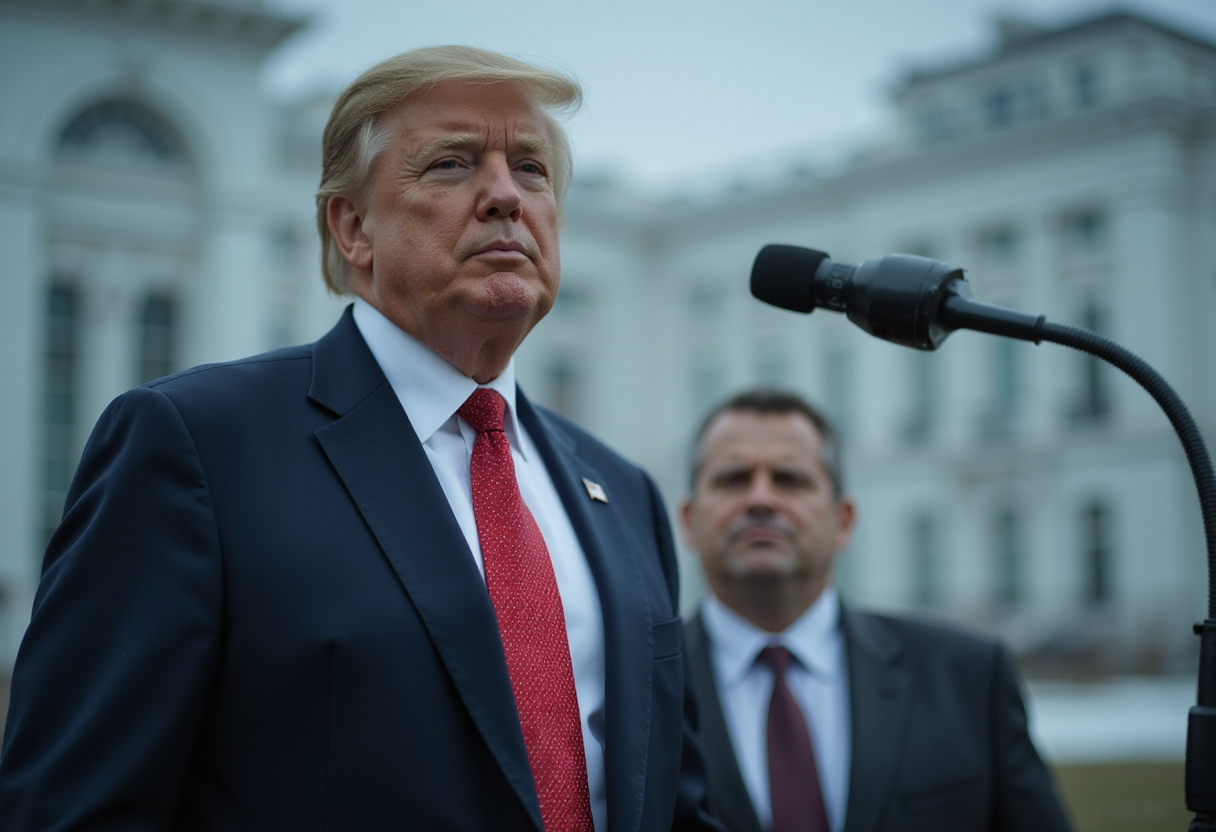
Oil prices pulled back from the $110/b mark after US President Donald Trump said he will not attack Iran before the midterm elections, easing — for now — the market's most immediate supply fear. The retreat caps three weeks in which Iran has hit at least one transiting tanker in the Strait of Hormuz every day, while a hurricane forming in the Gulf of Mexico threatens a second front of supply disruption.
The statement landed Friday, October 9, 2026, as Brent benchmark prices approached $110/b amid a deteriorating security situation that now spans Saudi Arabia and the Strait of Hormuz. Trump framed his position as an explicit electoral constraint: no strikes on Iran before Americans go to the polls in the midterms.
What does the pullback from $110 mean?
The move off the $110 level is a political de-escalation trade, not a supply recovery. The physical threat picture is unchanged. Traders face two simultaneous risk channels:
- At least one tanker attacked in the Strait of Hormuz per day for the past three weeks, attributed to Iran
- A developing hurricane in the US Gulf that could shut in crude production and force evacuations of offshore platforms
- A security situation inside Saudi Arabia that market sources describe as deteriorating
Any one of these could re-establish the premium that Trump's statement stripped out. A landfall-tracking storm in the Gulf would hit US shale-adjacent waterborne output and refining capacity on the Texas-Louisiana coast at the same time.
Is diplomacy gaining traction?
Washington has reported what it calls "productive discussions" with Tehran, according to the reporting that accompanied Friday's price action. The word "productive" carries the market only so far: the talks have not stopped the tanker attacks, which continued on a daily basis through the three weeks leading up to Trump's statement.
The Strait of Hormuz remains the choke point of the story. Roughly a fifth of seaborne crude passes through it, and a sustained one-vessel-per-day attack rate forces war-risk insurers to reprice transit coverage — a cost that propagates into physical differentials long before any cargo is actually lost.
What should oil and gas operators watch now?
The watch items are specific and dated.
First, the midterm elections. Trump's self-imposed ceiling on military action expires at the ballot box. The moment votes are counted, the constraint that took oil off $110 disappears, and the market will reprice accordingly.
Second, the hurricane track. Storm systems entering the US Gulf typically trigger precautionary shut-ins within 48-72 hours of forecast landfall. Producers and refiners along the Gulf Coast will be watching model runs over the weekend of October 10-11 for whether the system curves toward the production corridors.
Third, the Hormuz attack rate. A single day without a tanker incident would mark the first break in the three-week pattern and would give the "productive discussions" language its first hard test.
Fourth, the Saudi internal security situation, which the market is currently pricing through the geopolitical premium rather than through any measured outage — so far.
For refiners, the combined picture argues for caution on prompt crude procurement: a hurricane-driven US Gulf outage would tighten light sweet supply just as Middle Eastern freight and insurance costs rise. For producers with Gulf exposure, the storm is the near-term operational item; the Iran question is a price item until November.
The market's working assumption, as of Friday's close, is that Trump holds his pre-midterm position and the talks produce at least a pause in tanker attacks. Both assumptions are falsifiable within days.
via reuters.com (Original)
More from Olivia Hart
Adjoining reports
- Oil Retreats as Trump Rules Out Iran Strikes Before Midterms
- Hormuz Tanker Threats Put Fresh Crisis Risk On Global Oil Market
- Iran Threatens Regional Energy Infrastructure as Hormuz Standoff Persists
- Brent tops $105/bbl as Hormuz attacks, Gulf hurricane curb output
- Brent Holds Above $107 as US-Iran Talks Stall Over Hormuz