Well report No. RR-8853 · T23N · R6W · SEC 35 · filed October 10, 2026
Petroleum MarketsWell report
OPEC+ Locks November Output as Middle East Tensions Hold
OPEC+ holds November crude output unchanged amid Middle East tensions, deferring any voluntary tranche unwinding and keeping the producer bloc's existing cut envelope intact into Q1.
Field notes
- OPEC+ will hold crude output unchanged for November, per Business Post Nigeria
- Decision framed against Middle East tensions shaping the bloc's operating environment
- Steady-keep preserves layered voluntary and mandatory cut structures in place since late 2023
- Hold defers any voluntary tranche unwinding by another month
- December ministerial calendar becomes the next operative watch item
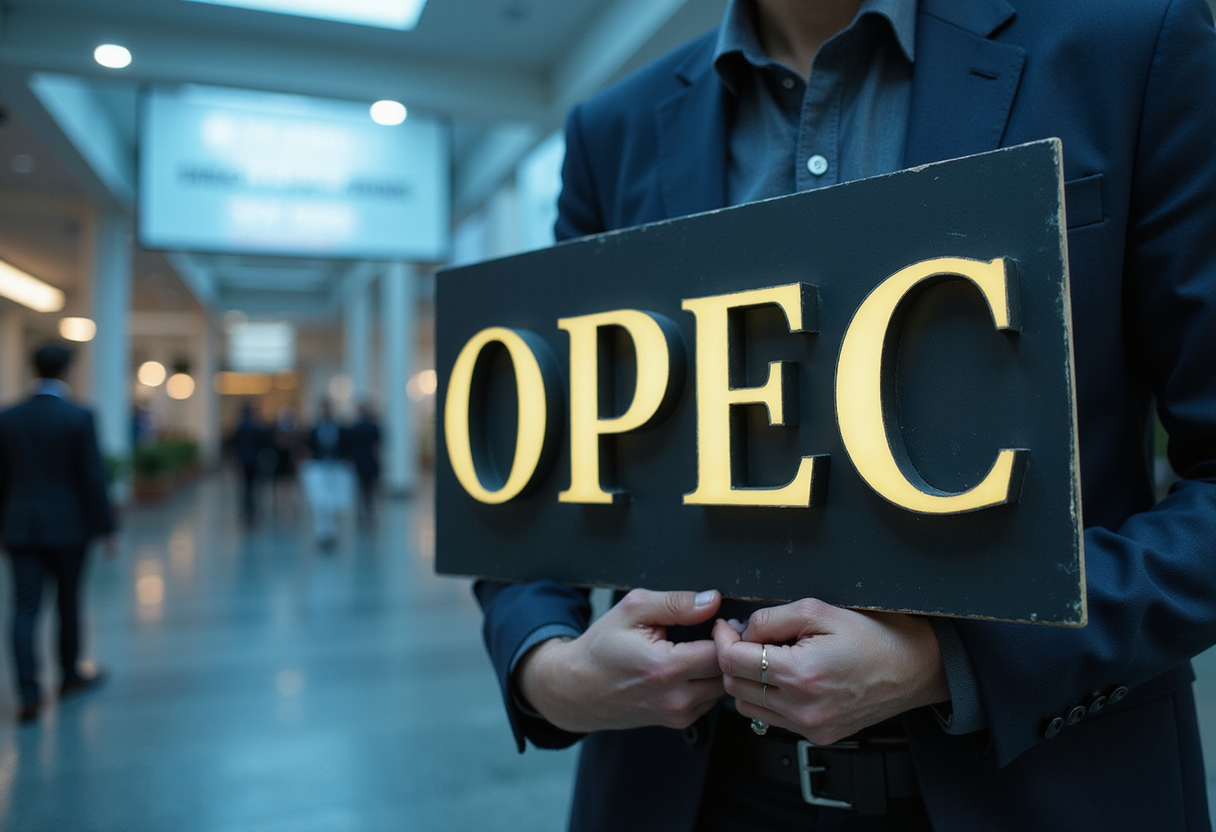
OPEC+ will hold crude output unchanged for November, according to Business Post Nigeria, framing the producer bloc's choice against the Middle East tensions shaping its recent operating environment.
The steady-keep removes one policy variable from a market tracking the same risk threads. With members operating under layered cut structures and the geopolitical calendar stacking risk events into November and December, "steady" preserves rather than tests the existing envelope.
What does the decision tell upstream desks?
For a producer bloc that has run layered voluntary and mandatory cuts since late 2023, a hold preserves the existing envelope rather than testing how the market absorbs incremental barrels. Members continue to operate well below nameplate.
The compliance question—how closely producers track their assigned baselines versus the voluntary reductions layered on top—remains the operative variable for analysts watching real tonnage into Q1 loadings.
What does it tell downstream desks?
The decision flows through margins and product cracks rather than crude itself. The headline output choice does not directly govern middle distillate balance. The geopolitical backdrop the bloc cites shapes landed costs for Mediterranean and Asian buyers through freight, insurance, and routing choices.
What is the geopolitics angle?
November sits between two risk windows. OPEC+ has historically hedged its quota posture through such windows rather than swinging with the news cycle. The November steady-keep fits that pattern.
What does the Middle East tension backdrop mean for shipping?
For shippers, the tension backdrop translates into higher war-risk premiums, longer routing options via the Cape of Good Hope, and longer tonne-mile demand for VLCCs and Suezmaxes.
For OPEC+ itself, it complicates the calculus of bringing barrels back: incremental supply is harder to deliver and harder to insure when the choke points between the Gulf and the Atlantic basin dominate the routing map.
What does the November read tell us?
The decision to hold through November—rather than begin any voluntary tranche unwinding—reads as defensive rather than opportunistic. Markets had been pricing optionality on the unwinding timeline. That optionality is now deferred by another month.
What does the OPEC+ calendar now look like?
The producer bloc returns to its regular ministerial rhythm in early December. Prior sessions have set monthly guidance rather than recalibrated the underlying voluntary structure. Any movement on voluntary tranche expiry is more likely to surface through a formal communication than through a routine monthly meeting.
What is the trading read?
Dated Brent and Dubai physical differentials will be the first tape to react. If December opens with the same forward curve shape that priced the November decision, the steady-keep has been validated by the market. If the curve flattens or inverts at the front, the bloc has bought itself one month of optionality at the cost of credibility. The Dubai-Brent spread itself sits at the intersection of the geopolitical and policy threads, carrying Hormuz risk in the front months and OPEC+ posture in the back.
What is the watch item?
The December ministerial calendar, any formal guidance on voluntary cuts tranche timeline, and the behavior of dated Dubai and Brent physical differentials through the next OPEC+ communications cycle. The trading desk's operative question is whether November's stability survives the next geopolitical event or whether the group's hand is forced in either direction.
via Google News: OPEC and oil markets (Source)
More from Daniel Okafor
Show full bio
Market editor covering consumer brands and retail at Rig & Refinery.
321 articles