Well report No. RR-7822 · T4N · R32W · SEC 4 · filed October 2, 2026
Midstream & PipelinesWell report
Ottawa and Alberta Back New Oil Pipeline; Industry Commitment Pending
Ottawa and Alberta are backing a new oil pipeline from Western Canada, but the project awaits firm shipper commitments before any final investment decision.
Field notes
- Ottawa and Alberta have both signaled government support for a new oil pipeline from Western Canada.
- The project lacks firm shipper commitments and remains at the conceptual stage, short of FID.
- A binding open season with committed volumes is the next milestone that would move the project toward sanction.
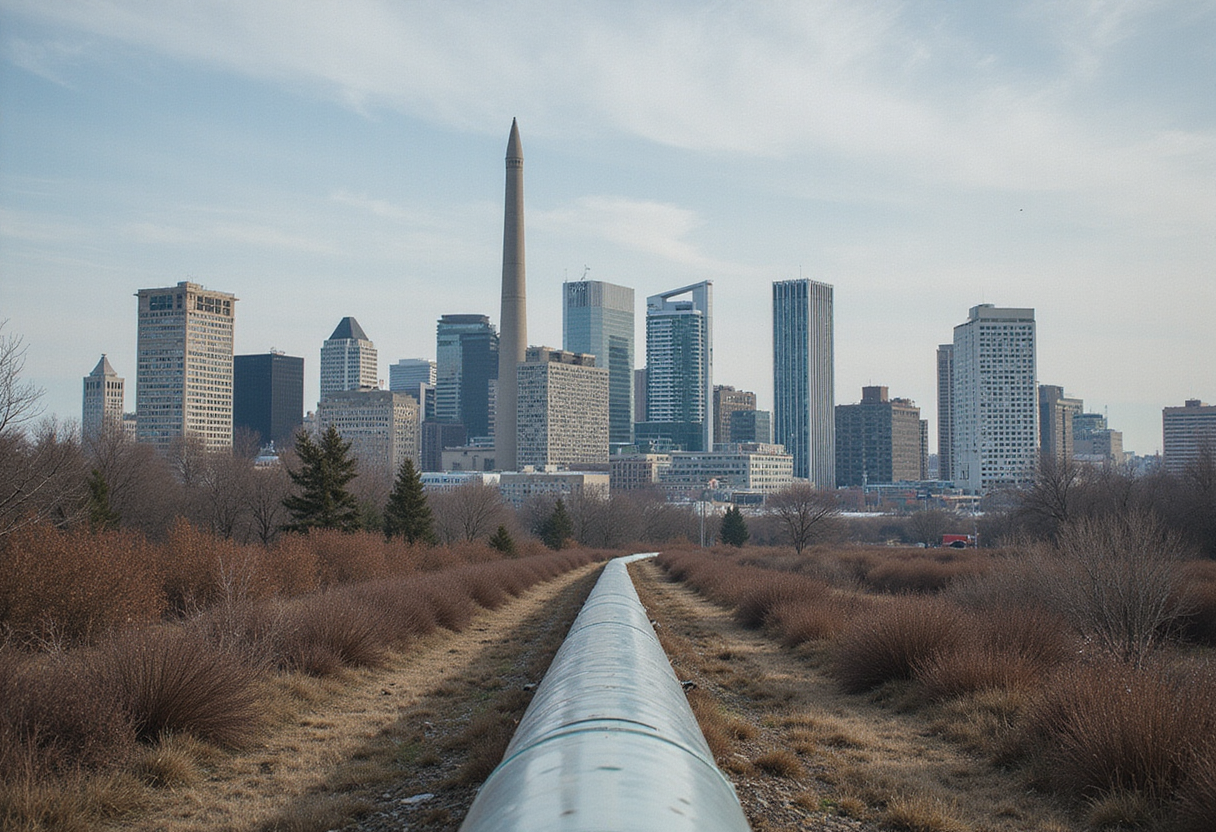
Ottawa and Alberta have both signaled support for a new oil pipeline out of Western Canada, but the project's fate now hinges on a question neither government can answer: whether producers and shippers will commit volumes to another line of crude egress capacity.
The Hub reports on the emerging push for additional pipeline capacity following the completion and expansion of existing export routes from the Western Canadian Sedimentary Basin. Government backing on both the federal and provincial level marks a shift from the regulatory chill that followed previous projects, but a supportive policy environment alone does not sanction a pipeline.
The central uncertainty is commercial. A new large-diameter crude line from Alberta requires firm shipper commitments — the same anchor-volumes test that ultimately determined the economics of prior WCSB export projects. Without binding transportation agreements from producers in the Athabasca, Cold Lake, Peace River, and Montney-dominant producing regions, no sponsor will take a multibillion-dollar line to a final investment decision.
"I don't think it's a crazy bet," one observer cited in the report said of the government position — a framing that reflects growing confidence in the basin's outlook rather than a declaration that the project is assured.
The case for new capacity rests on production growth. Crude output from the WCSB has continued to climb as majors complete their oil sands expansions, and the disconnect between available takeaway capacity and future volumes is the standard argument pipeline sponsors make when seeking shipper interest. The argument against — or at least the caution — is that the same growth outlook has been wrong before, and that producers burned by prior take-or-pay commitments will demand clarity on netbacks and diffusers before signing long-haul contracts.
Government support carries practical weight in Canada's regulatory environment. Federal approval under the Impact Assessment Act and provincial alignment from Edmonton shorten the permitting timeline — the single largest source of schedule risk on the last major export lines. Ottawa's willingness to back new egress reverses the posture that left the federal government owning and then selling the Trans Mountain expansion system.
Alberta's government has been the more vocal advocate, consistent with its standing position that the province's resource sector is chronically underbuilt on export infrastructure.
For the downstream and midstream desks, the watch items are concrete. First, whether any sponsor — a pipeline operator, a producer consortium, or a government-backed entity — steps forward with a defined route, diameter, and capacity number. Second, whether the open season attracts firm commitments at tariffs that cover the capital cost. Third, the regulatory filing itself, which will establish the timeline any startup would follow.
Until a sponsor opens a binding open season, the project remains at the conceptual stage: government enthusiasm with no barrels attached. Sanctioned it is not. The difference between those two states — a stated policy preference and a signed transportation agreement — is where this story will be decided, and no amount of federal or provincial backing closes that gap on its own.
The margin to watch is the WCSB egress math itself. If production growth absorbs remaining uncommitted capacity on existing lines faster than producers expect, shipper appetite for a new build firms up. If growth flattens, the government bet looks early — and the industry answer to the question posed in the headline will be no.
via Google News: Pipelines and midstream (Source)
More from Olivia Hart
Adjoining reports
- $44-Billion Alberta-B.C. Pipeline Fast-Track Decision Due Thursday
- Decision on Fast-Tracked $44 Billion Alberta-B.C. Pipeline Expected Thursday
- Ottawa Moves to Fast-Track Oil Pipeline Aimed at US Diversification
- Ottawa Moves to Fast-Track Oil Pipeline Aimed at Non-US Markets
- Ontario Signals Public Money for 3,300-km Canadian Oil Pipeline