Well report No. RR-7697 · T21N · R14W · SEC 33 · filed October 2, 2026
Midstream & PipelinesWell report
Ottawa Fast-Tracks 1 Million bpd Pacific Link Pipeline to Asia
Canada designates the $25-31 billion, 1 million b/d Pacific Link pipeline a national-interest project, targeting final regulatory conditions by September 2027 and startup around 2032-33.
Field notes
- Pacific Link: 1,250 km, 1 million b/d pipeline from Bruderheim, Alberta to a deepwater port near Delta, BC, targeting startup around 2032-33 at an estimated cost of $25-31 billion.
- Government figures show 90.1% of Canadian crude exports went to the US last year; Pacific Link plus Trans Mountain optimization could cut fixed pipeline dependence on US capacity from 82-83% to 65-70%.
- Open season for shipper commitments expected next spring; Pembina Pipeline holds a 10% economic interest but has not committed construction capital ahead of FID.
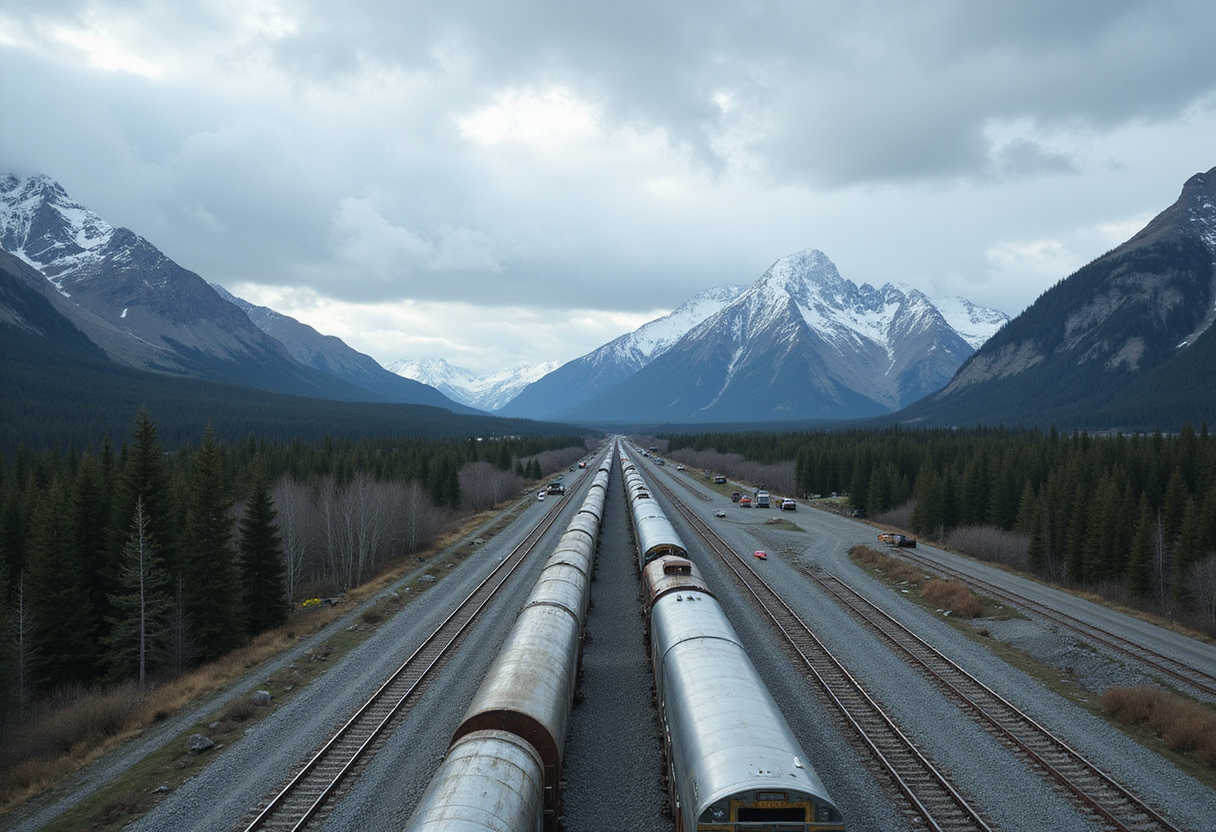
Canada has designated a proposed 1 million b/d crude pipeline from the Alberta oil sands to the Pacific Coast a project of national interest, kicking off an accelerated approval track aimed at first oil around 2032-33. Prime Minister Mark Carney announced the decision Thursday in Fort McMurray alongside Alberta Premier Danielle Smith, using legislation his government enacted to speed major infrastructure projects.
The pipeline, now named Pacific Link, would run 1,250 km (775 miles) from Bruderheim, northeast of Edmonton, to a deepwater port near Delta, British Columbia, largely following the existing Trans Mountain corridor. Tankers would load at the terminal for global markets.
Carney framed the project as a structural fix to Canada's export concentration. "Today, 90% of Alberta's oil goes to the United States," he said. "Pacific Link will materially reduce that dependence by allowing Canada to export an additional 1 million barrels a day to growing markets in Asia."
The numbers back him up. Government figures show 90.1% of Canadian crude exports went to the US last year, a reliance on US-bound pipeline infrastructure Ottawa now calls a "structural vulnerability." Combined with optimization of the Trans Mountain system, Pacific Link could cut Canada's fixed pipeline dependence on US capacity from roughly 82-83% to 65-70%, according to the government's analysis.
Sanctioned acceleration, unsanctioned economics
The designation separates regulatory speed from commercial sanction, and the latter remains unresolved. The project carries an estimated cost of $25-31 billion and still faces major questions on financing and producer commitment.
Ottawa and Alberta expect to fund the initial billions of dollars in engineering, regulatory and development work over the next year. Calgary-based Pembina Pipeline Corp. holds a 10% economic interest but has not yet committed its share of construction costs; a federal official said Pembina will make that decision at or before final investment decision.
An open season to gauge how much capacity producers will contract is expected next spring. Officials point to significant interest but concede that fast-tracking approval does not guarantee sufficient shipper commitments or financing. A senior government official argued that proving Canada can approve the project quickly could draw additional private investment, while Asian market access would give producers pricing leverage currently constrained by a single export destination.
The precedent is instructive: the Trans Mountain expansion took 14 years from project launch in 2010 to first oil in 2024.
Indigenous opposition and carbon conditions
The project faces significant Indigenous and environmental hurdles. The government acknowledged that most Indigenous communities consulted were not prepared to support the project listing on available information, citing unanswered questions on routing, engineering and design, environmental effects, marine shipping, spill response and impacts on Aboriginal and treaty rights. Officials expect legal challenges. Canada, Alberta and the project owners have committed to offering Indigenous communities a minimum 10% ownership stake.
Carney added a climate condition: construction of the Pathways carbon-capture project would be a prerequisite for Pacific Link. The government says Pathways and other measures would cut oil sands emissions by 16 million metric tons annually, while acknowledging the pipeline itself would drive increased production and additional emissions.
Political backdrop
The announcement comes weeks before Alberta's Oct. 19 public vote on whether to hold a referendum on leaving Canada. Smith, who has blamed the previous federal government for hindering the province's energy industry, welcomed the move. "For too long, we've watched projects with enormous transformative potential get mired down in uncertainty and delay, and today we're turning the page," she said. Carney stressed that Canada is "bigger, stronger and more prosperous when we are united." He has set a broader goal of doubling Canada's non-US exports over the next decade.
Watch items
The timeline: final regulatory conditions targeted by September 2027, clearing the way for construction, with operations around 2032-33. Before that, watch the open season next spring for shipper commitments — the clearest early signal of whether Pacific Link reaches FID — plus Pembina's investment decision and the first Indigenous legal challenges.
via apnews.com (Original)
More from Elena Vasquez
Adjoining reports
- Canada Designates 1 Million bpd Pacific Link Pipeline as National Interest Project
- Carney Fast-Tracks 1 Million-bpd Pacific Link Pipeline to BC Coast
- Ottawa Names Pacific Link Pipeline Canada's First National Interest Project
- Ottawa Designates 1 Million bpd Pacific Link Pipeline in National Interest
- Ottawa Designates One-Million-bpd Pacific Link Pipeline as First National-Interest Project