Well report No. RR-8252 · T18N · R13W · SEC 18 · filed October 1, 2026
Midstream & PipelinesWell report
Canada Fast-Tracks Pacific Oil Pipeline as US Reliance Questioned
Canada is fast-tracking a Pacific oil pipeline to cut reliance on the US export market, with the timetable now shadowed by Alberta's approaching separation vote.
Field notes
- Canada is fast-tracking a Pacific oil pipeline to reduce dependence on the US as the sole export market.
- The acceleration comes as Alberta faces a separation vote.
- Capacity, route, and schedule details have not been published; the project remains early-stage rather than sanctioned.
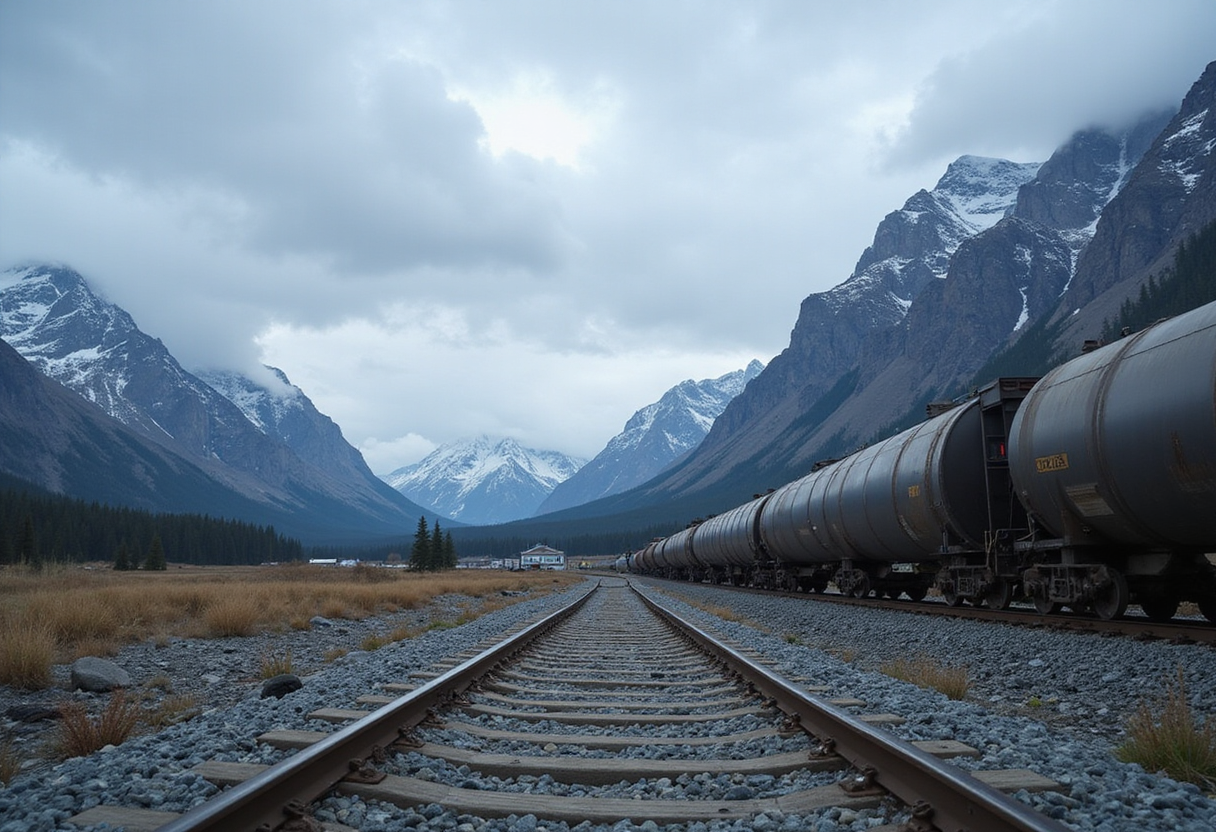
Canada is fast-tracking a new Pacific oil pipeline, moving to reduce the country's dependence on the US export market as a separation vote in Alberta draws near.
The reported acceleration puts pipeline capacity back at the centre of Canadian energy policy. For years, virtually all Canadian crude exports have flowed to a single buyer — the United States — because of limited access to tidewater on the west coast. That concentration has long been flagged by producers and provincial officials as a structural discount on Canadian barrels, and it is the operational problem the fast-tracked project is meant to address.
The political calendar adds urgency. Alberta, home to the bulk of Canada's oil production, faces a separation vote, and the prospect of that ballot has sharpened debate in Ottawa over how quickly the federal government can demonstrate that Alberta's crude has routes to markets beyond the US. The pipeline fast-track, as reported by WFMZ, sits squarely in that context: an infrastructure decision with an explicit political deadline attached.
For refiners and traders, the operative question is capacity and timing — how many barrels per day a new Pacific line could move, where it would load, and which Asian refiners would take the volumes. Those specifics were not part of the initial report. Until the sponsoring company or the federal government publishes a route, a capacity figure, and a regulatory schedule, the project belongs in the early-stage column rather than alongside sanctioned infrastructure.
The distinction matters. Canada's recent pipeline history is defined by long regulatory timelines and cost overruns on major crude lines, and any new Pacific export route would have to move through the same approval machinery the government now says it wants to accelerate. Whether "fast-track" translates into a compressed hearing schedule, a cabinet designation, or simply stronger language remains to be seen.
Market participants have argued for years that additional tidewater access would let Canadian producers price barrels against a broader slate of buyers rather than a single continental market. That argument is analysis, not established fact: netbacks would depend on pipeline tolls, tanker freight, and the willingness of overseas refiners to pay for the heavy blends Western Canada produces. Any uplift in realized prices should be treated as a projection attributed to producers and their analysts until volumes actually load.
The Alberta vote compounds the uncertainty. A separation ballot, whatever its outcome, injects questions about provincial-federal jurisdiction over resource development, Crown land access, and who ultimately holds title to the barrels and the infrastructure moving them. Companies weighing commitments to a Pacific route will want clarity on those points before sanctioning spending.
For downstream buyers, the immediate calculus is unchanged: Canadian crude keeps moving to US refineries, which remain the natural outlet for heavy Canadian supply given freight economics and coking capacity built to run those grades. A Pacific pipeline would expand the option set over time, not overnight — construction of a new long-haul crude line runs to years, not months, even under an accelerated schedule.
Watch items from here: the formal project description and capacity number from the sponsoring entity; the federal instrument Ottawa uses to define "fast-track"; the date of the Alberta separation vote; and any indication that Asian refiners have signed preliminary offtake commitments. The margin to watch is the discount on Canadian heavy crude against US benchmarks — a sustained narrowing would signal that markets are pricing in credible new egress.
via Google News: Pipelines and midstream (Source)
More from Elena Vasquez
Adjoining reports
- Ottawa Fast-Tracks Pacific Oil Pipeline as Alberta Separation Vote Nears
- Ottawa Fast-Tracks Pacific Oil Pipeline as Alberta Separation Vote Nears
- Ottawa fast-tracks Pacific oil pipeline as Alberta separation vote nears
- Ottawa Moves to Fast-Track Oil Pipeline Aimed at Non-US Markets
- Ottawa Accelerates Pacific Oil Pipeline Review