Well report No. RR-9629 · T17N · R45W · SEC 17 · filed October 2, 2026
Midstream & PipelinesWell report
Ottawa Fast-Tracks Pacific Oil Pipeline as Alberta Separation Vote Nears
Canada is fast-tracking a Pacific Coast oil pipeline to cut dependence on US buyers, goshennews.com reports, as Alberta moves toward a separation vote that frames the debate.
Field notes
- Canada is fast-tracking a Pacific oil pipeline to reduce dependence on the US export market, goshennews.com reports.
- The push comes as Alberta nears a separation vote, raising the political stakes for diversified market access.
- The report names no proponent, capacity, route, or in-service date for the project.
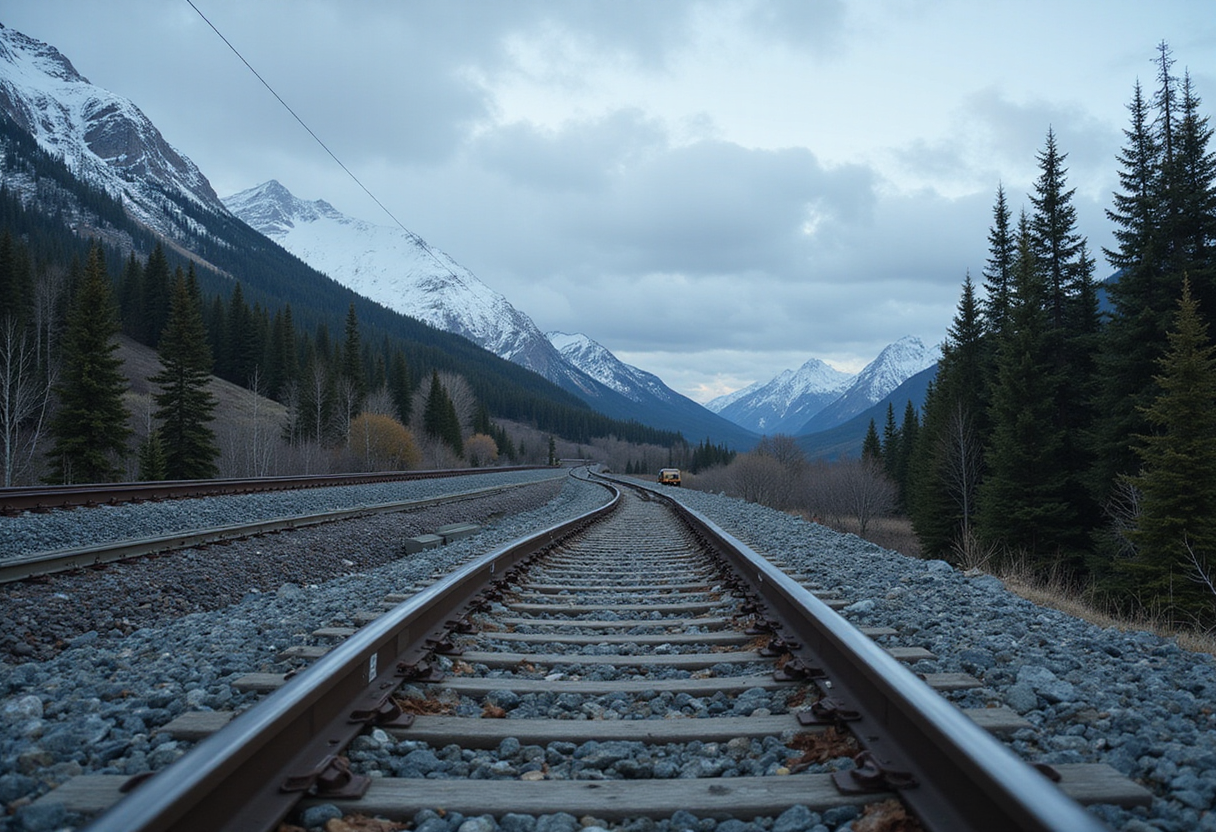
Canada is fast-tracking a new oil pipeline to the Pacific Coast, according to a report from goshennews.com, with the effort aimed squarely at reducing the country's dependence on the US export market — a market that currently absorbs nearly all of Canada's crude production.
The reported acceleration carries a political clock. Alberta, the source of the bulk of Canadian crude output, is moving toward a separation vote, and the pipeline push lands in the middle of that debate. The timing signals that Ottawa intends to demonstrate concrete economic options for the province's energy sector beyond the existing southbound corridor to US refineries.
The logic behind the move is structural. Canada's takeaway infrastructure has long funneled crude almost exclusively to US destinations, leaving producers exposed to pricing at a single set of refining centers and to whatever terms that single buyer relationship permits. A Pacific-facing line would open access to overseas markets — Asia in particular — where demand growth continues to concentrate.
The report does not specify the pipeline's route, diameter, or capacity in barrels per day. Nor does it identify a project proponent, an expected in-service date, or whether Ottawa's fast-tracking involves expedited federal review under the Impact Assessment Act, cabinet designation powers, or legislative exemption of the kind previously debated for other critical corridor projects.
What the headline does establish is direction: the federal government is treating West Coast egress as a priority rather than a proposal, and it is doing so while Alberta's separation referendum advances on its own timeline. The juxtaposition is deliberate. Supporters of the pipeline acceleration frame diversified market access as the most direct answer to the argument — central to the separation case — that Alberta's resource economy is captive to a single buyer.
For downstream watchers, the implications run both directions. New Pacific export capacity would eventually relieve pressure on the US Midwest and Gulf Coast refining complex, which has processed Canadian heavy barrels at a discount for years. US refiners configured for heavy crude, including coking-heavy Gulf Coast units, would face competition for those barrels from export terminals serving Asian buyers. The margin impact would depend entirely on the volume ultimately sanctioned and the differential at which new barrels clear.
History tempers the pace. Trans Mountain's expansion, now in service, took the better part of two decades from concept to first oil and ran through multiple federal reviews, ownership changes, and a construction-phase nationalization before its 2024 startup at roughly 590,000 bpd of added capacity. Any new Pacific line would move through the same regulatory terrain unless Parliament carves a faster path — which is precisely what "fast-track" implies Ottawa is prepared to attempt.
The report also leaves open the question of who builds it. Trans Mountain Corp., whose namesake system now anchors West Coast exports, is an obvious candidate to study expansion or a parallel line, but the goshennews.com report names no proponent.
The watch items are concrete: the Alberta separation vote itself and its margin; any cabinet order or legislation designating the Pacific project for expedited review; and the first disclosure of a route, capacity figure, or commercial backer. Until those land, this remains a sanctioned intention without a sanctioned project.
via Google News: Pipelines and midstream (Source)
More from Elena Vasquez
Adjoining reports
- Canada Fast-Tracks Pacific Oil Pipeline Project
- Canada Fast-Tracks Pacific Oil Pipeline as US Reliance Questioned
- Ottawa Moves to Fast-Track Oil Pipeline Aimed at Non-US Markets
- Canada Moves to Fast-Track Oil Pipeline Aimed at US Diversification
- Ottawa Moves to Fast-Track Oil Pipeline Aimed at US Diversification