Well report No. RR-5157 · T3N · R41W · SEC 27 · filed November 5, 2026
Gas & LNGWell report
QatarEnergy's 7 mtpa of U.S. LNG Deals Make Doha Top American Buyer
QatarEnergy will buy 7 mtpa of U.S. LNG from Cheniere and Woodside, becoming America's largest buyer as Hormuz closures idle 17% of its export capacity.
Field notes
- QatarEnergy signed deals for up to 4 mtpa from Cheniere (2031–2054) and 3 mtpa from Woodside's Louisiana LNG (2030, 20 years), making it the largest buyer of U.S. LNG.
- Iranian missile attacks in March removed 17% of Qatar's LNG export capacity; QatarEnergy estimates $20 billion in lost annual revenue.
- Force majeure on LNG deliveries to Asia and Europe has been extended through the end of December 2026.
- CEO Saad Sherida Al-Kaabi says Qatar can resume normal operations 'within a few weeks' of Hormuz reopening.
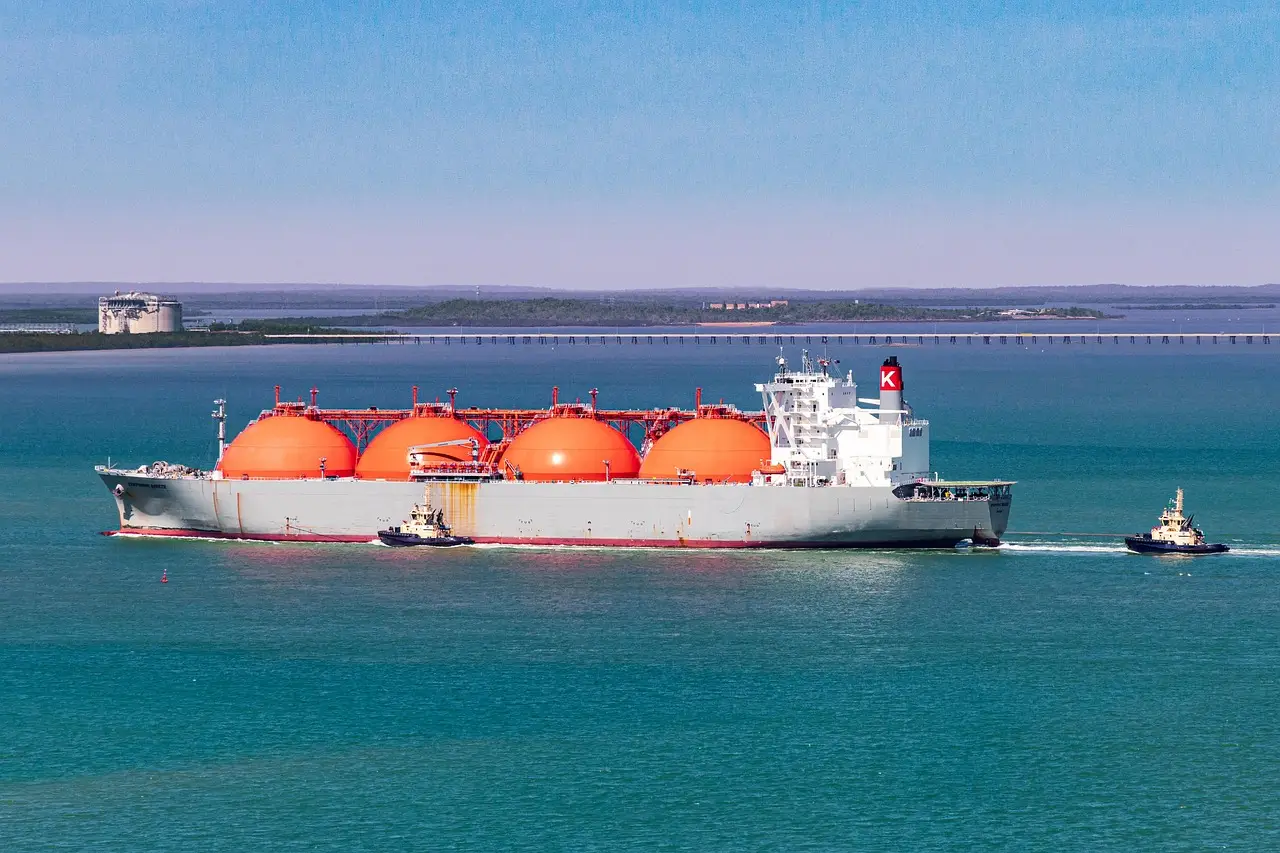
Seven million tons per annum. That is the combined volume QatarEnergy has committed to buy from U.S. LNG producers, enough to make the world's erstwhile second-largest exporter the single largest buyer of American liquefied natural gas.
The shift is not strategy by choice. It is damage control. Iranian missile attacks in March knocked out 17% of Qatar's LNG export capacity, and the closure of the Strait of Hormuz still blocks most of what remains. QatarEnergy put the revenue loss at roughly $20 billion a year in a March statement.
Seven months on, the situation has barely improved. "Very few" cargoes are moving through the strait, according to QatarEnergy's own account.
What has Qatar actually signed?
Two deals, both long-term, both with U.S. suppliers.
- Cheniere Energy: up to 4 million tons per annum (mtpa) from the Sabine Pass and Corpus Christi export plants, with deliveries running from 2031 through 2054.
- Woodside Energy: 3 mtpa from the Louisiana LNG project, now under construction, on a free-on-board basis (FOB, meaning the buyer takes ownership at the loading terminal and controls shipping). Deliveries start in 2030 and run 20 years.
The arithmetic is blunt. Volumes do not land until 2030 and 2031 — years after the crisis began. These deals hedge the next decade, not the next quarter.
"These additional volumes make QatarEnergy the largest buyer of LNG from the U.S., and place us in a stronger position to meet the global growing needs for LNG," QatarEnergy President and CEO Saad Sherida Al-Kaabi said.
He also flagged the Golden Pass LNG project, the Qatari-majority-owned export terminal under development on the U.S. Gulf Coast, as part of the same diversification push.
Takeaway: Doha is buying molecules from the rival that displaced it as top exporter earlier this decade.
How bad is the Hormuz squeeze?
Bad, and formally documented. QatarEnergy has declared force majeure (a contract clause excusing delivery failures caused by events beyond a supplier's control) on some long-term contracts — for up to five years. Last week it extended force majeure on deliveries to Asia and Europe by another month, through the end of December 2026.
The exposure is structural, not incidental. Unlike oil, gas cannot simply switch to a pipeline workaround.
"The problem is that LNG, our main export commodity, cannot be transported by pipelines. We will have to transport it by pipelines as gas and then liquify it at receiving terminals wherever that may be," Al-Kaabi said at the Qatar Economic Forum Special Edition in New York in September.
"This means we are building redundant facilities to the ones we are already building in Qatar as part of the North Field expansion project. This makes no economic sense," he said, adding: "We have decided not to use pipelines as an alternative based on commercial and technical criteria."
Note what that means. Qatar's flagship North Field expansion — the mega-project meant to lock in Gulf dominance for the rest of this decade — now sits behind a chokepoint it cannot defend or reroute.
Some cargo traffic persists, barely. "Some shipments are going through the Iranian road to Pakistan, and some are going through the U.S. road to other destinations, but it's just a few ships that were able to pass through the Strait, but it's not much," Al-Kaabi said.
Takeaway: force majeure through end-2026 tells you Doha itself sees no quick reopening.
Can Qatar restart quickly if Hormuz clears?
Yes, in the company's telling. "Qatar is ready to resume normal operations within a few weeks of the reopening of the Strait of Hormuz," Al-Kaabi said in September.
Treat that claim carefully. It rests on missile-damaged facilities being fully repaired and on insurers and charterers accepting strait transits again. The CEO's statement covers neither condition. What the claim does signal is that the plants, not the wells, are the gating item — and that repair work at the terminals damaged in March is far enough along for Doha to put a weeks-not-months figure on restart.
The bigger loss may be reputational. Tens of billions of dollars in missed sales hurt, but the perception of Qatar as a dependable term supplier has taken the real hit — the Woodside deal, in QatarEnergy's words, reflects a push toward "a flexible, diversified and globally competitive LNG portfolio" after the war changed the global supply market in both availability and reliability.
Takeaway: restart speed is a promise; the reliability question will outlast any reopening.
What to watch
The next force majeure decision. QatarEnergy extended coverage through December 2026 last week; each monthly extension is a fresh signal of how long Doha expects Hormuz to stay effectively shut. Beyond that, watch first cargo dates — Louisiana LNG in 2030, Cheniere volumes in 2031 — and any movement on Golden Pass. The margin story sits with Asian and European buyers, who are now pricing supply risk that Qatari term contracts once absorbed.
via qatarenergy.qa (Original)
More from Priya Raman
Show full bio
Senior reporter covering technology and product news in Oil and gas industry operations and markets at Rig & Refinery.
610 articles