Well report No. RR-7275 · T3N · R42W · SEC 3 · filed October 10, 2026
OffshoreWell report
Rockhopper lines up second FPSO for Sea Lion development
Rockhopper has agreed to acquire a second FPSO for the Sea Lion project in the North Falkland Basin, adding a second floating production unit to the development scheme offshore the Falkland Islands.
Field notes
- Rockhopper has agreed to acquire a second FPSO vessel for the Sea Lion project in the North Falkland Basin.
- The Sea Lion field sits offshore the Falkland Islands and has been under appraisal and study since its original discovery.
- The first FPSO under contract was sized for an initial development phase; the second unit broadens the development envelope.
- Hull identity, conversion yard selection, and updated capex guidance have not been disclosed in the public announcement.
- Final investment decision timing and first-oil target under the revised scheme are not specified.
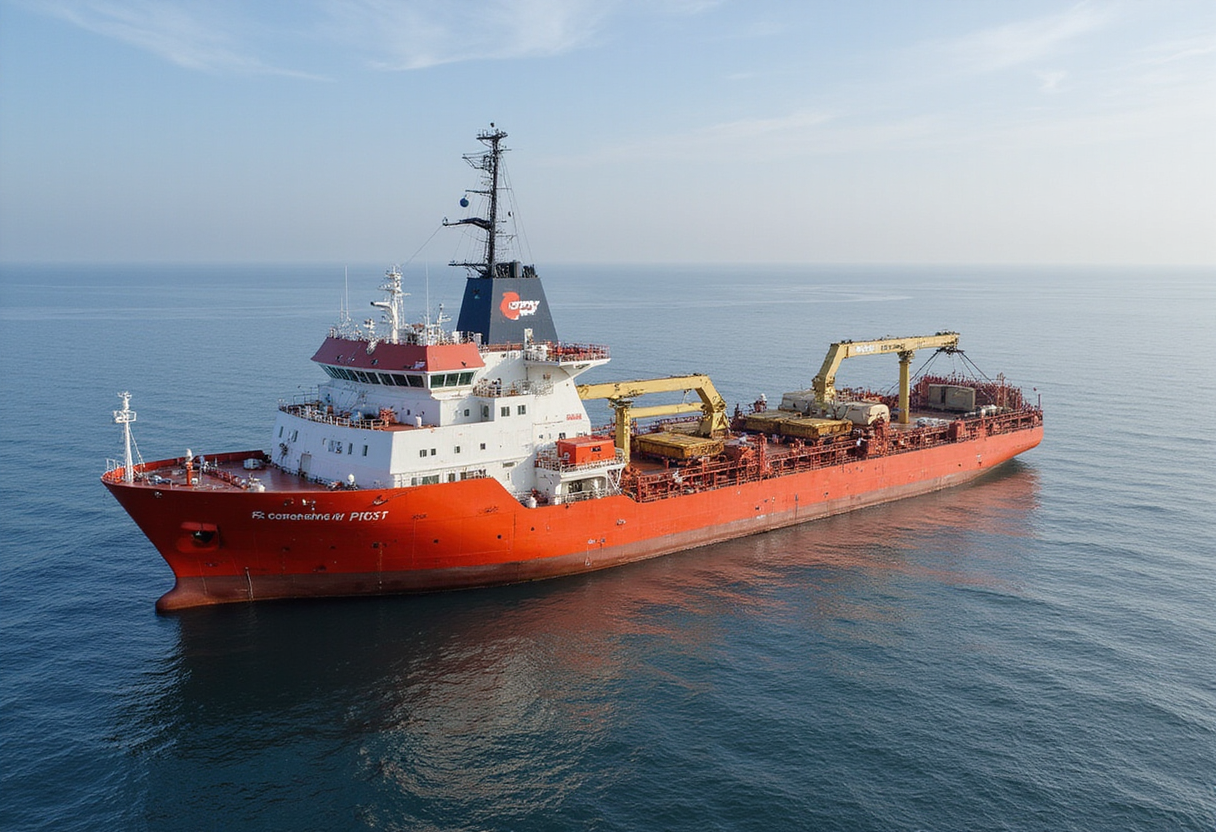
Rockhopper has agreed to acquire a second floating production, storage and offloading (FPSO) vessel for its Sea Lion project. The agreement adds a second floating production unit to the development scheme offshore the Falkland Islands, where the field has been under appraisal and development study since its original discovery.
The Sea Lion find opened the North Falkland Basin play and established Rockhopper as a frontier operator. The project has cycled through multiple partnership and commercial reworkings since the original find.
A second FPSO acquisition at this stage suggests the operator is preparing a multi-phase development, with the first vessel already lined up for an initial phase and a second unit pencilled in for subsequent phases or adjacent reservoirs.
The first FPSO under contract was sized for an initial development phase. Adding a second unit broadens the development envelope and points toward expansion of recoverable volumes beyond the originally sanctioned scope. The two-vessel structure also reduces reliance on a single production hub during the operating phase, an attractive feature for a remote basin where supply logistics carry a premium.
Why a second FPSO at this stage
FPSOs remain the standard production solution for deepwater and frontier basins where pipeline tieback to shore is uneconomic. Each unit handles produced fluids through separation, treatment, and storage before offloading to shuttle tankers. Conversion cycles run multiple quarters at approved shipyards, with global conversion capacity concentrated in Asia and the Middle East.
Lead times have stretched in recent years as offshore project sanctions accelerated and shipyard queues tightened. Operators that contract late typically absorb higher conversion costs and longer yard waits. For a project at Sea Lion's maturity, locking in a second vessel ahead of final investment decision reduces schedule exposure and gives Rockhopper optionality on the path to first oil.
Hull availability has emerged as the binding constraint on several sanctioned deepwater projects in recent years. Securing a second vessel ahead of FID typically lowers all-in project cost by removing conversion queue risk from the critical path. A remote basin with limited local fabrication capacity carries an even higher cost for any schedule slip.
What the announcement does not confirm
The hull identity, conversion yard selection, and updated capex guidance have not been released in the public announcement. Partner alignment under the revised development scheme also remains to be confirmed. Rockhopper's working interest and operator status have evolved through several transactions since the original discovery; the second FPSO acquisition will require alignment with current co-venturers and may trigger pre-emption or carry discussions.
The Sea Lion project has previously been studied under both a single-vessel tieback and a multi-phase expansion with separate hubs. The acquisition of a second FPSO points toward the latter, though the announcement does not specify which reservoir block the new vessel will serve or whether the conversion contract has been signed.
The timing of final investment decision and first-oil target under the revised scheme are not specified. Rockhopper has not confirmed whether the second FPSO will be acquired outright, chartered, or contracted under a production-sharing structure with the yard. Operator role continuity through the conversion period also remains to be clarified.
Watch items:
- Hull identity and conversion yard contract for the second FPSO
- Updated capex disclosure and partner alignment under the revised scheme
- Final investment decision timing
- First-oil window for the second vessel and integration schedule with the first
- Operator's stated working interest and role post-acquisition
- Trigger of any pre-emption rights under existing joint venture agreements
via Google News: Offshore drilling and FPSOs (Source)
More from Priya Raman
Show full bio
Senior reporter covering media and advertising at Rig & Refinery.
381 articles