Well report No. RR-1104 · T14N · R8W · SEC 2 · filed October 10, 2026
Midstream & PipelinesWell report
Saudi Arabia's key oil pipeline restarts exports after repairs
Saudi Arabia's key oil pipeline has resumed exports after repairs, The Edge Malaysia reports, restoring a critical crude evacuation route as OPEC+ output policy looms.
Field notes
- A key Saudi oil pipeline has restarted exports following repairs, The Edge Malaysia reports.
- The report does not specify the pipeline's name, capacity, or the restart date.
- Saudi Arabia's production capacity stands at roughly 12 million bpd, underscoring the weight of its export infrastructure.
- Terminal loading data over the next four to six weeks will indicate whether volumes have normalized.
- The next OPEC+ meeting will shape how much crude the repaired line is asked to carry.
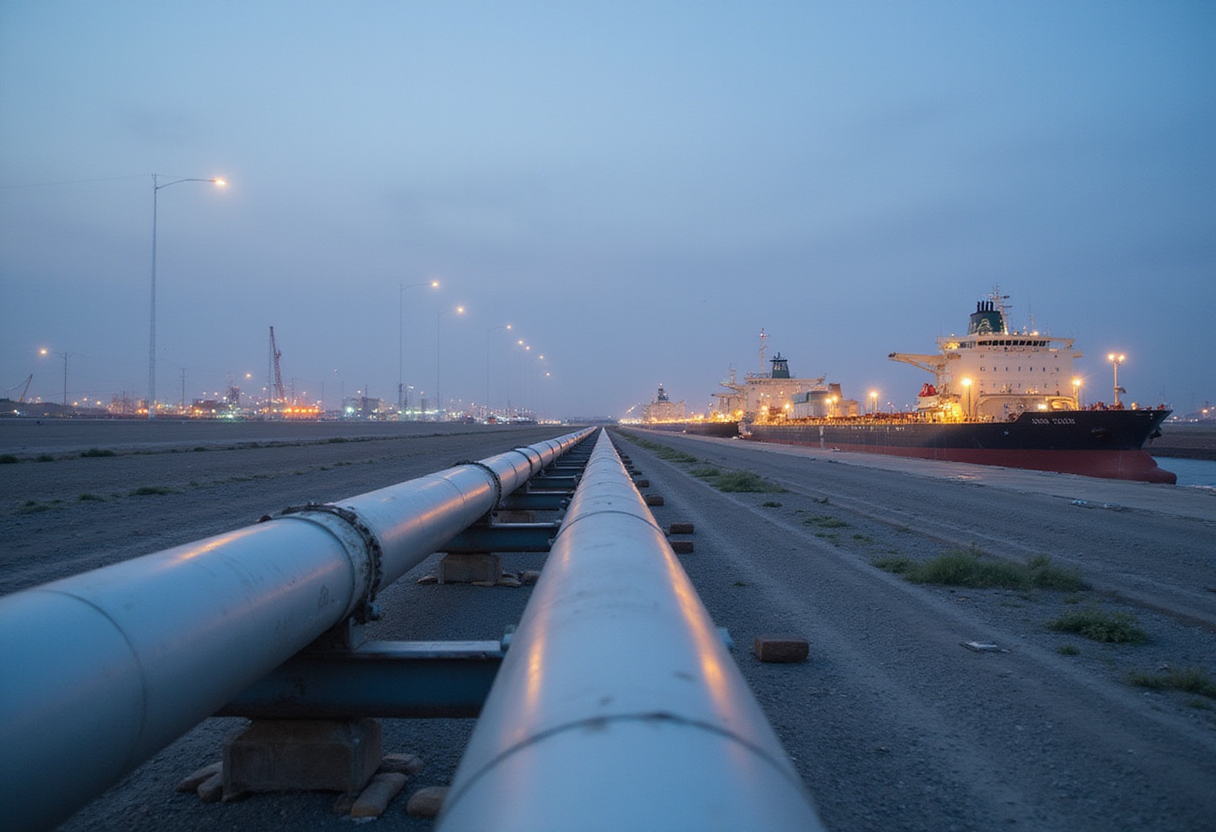
Saudi Arabia's key oil pipeline has resumed export operations after completing repairs, The Edge Malaysia reported, restoring a critical link in the kingdom's crude evacuation network and removing, at least temporarily, one of the supply-side question marks that traders had been watching.
The report is brief and does not specify the pipeline's name, its throughput capacity in barrels per day, the nature of the damage or fault that prompted the repairs, or the exact date loadings resumed. Until Saudi Aramco or the Saudi energy ministry publishes an operational statement, the line's identity and the scale of the outage should be treated as unconfirmed by primary sources.
For a producer of Saudi Arabia's size, pipeline availability is not a marginal concern. The kingdom's export infrastructure — including its principal crude arteries to Red Sea and Gulf loading terminals — underpins both its official production capacity of roughly 12 million bpd and its role as the swing supplier within OPEC+. Any interruption on a major line forces operators to reroute barrels, and rerouting capacity is finite.
Why does one pipeline move the market?
Saudi Arabia exports the bulk of its crude through a small number of high-capacity systems. When one of them goes down for repairs, the effect is immediate and mechanical: barrels that would have moved to a terminal must either wait in tanks, flow through alternative lines, or slip from the export program entirely.
That is why single-line outages in the kingdom routinely register in freight and crude markets even when headline production is unchanged. Terminals fill, chartering schedules shift, and the differentials on grades tied to the affected route move.
The restart now reported reverses that calculus. With the line back in service, barrels can again move to port, and the export program can return to its planned loading schedule — assuming, as the report implies, that the repair work is complete rather than partial.
Sanctioned fact versus appraisal-stage speculation
What is confirmed, on the basis of the report:
- A key Saudi oil pipeline has started exports again.
- The restart follows a period of repair work.
- The information was published by The Edge Malaysia; no Saudi Aramco statement accompanies it in the available text.
What remains unconfirmed:
- The identity of the pipeline.
- Its capacity in bpd and the volumes affected during the outage.
- The cause of the damage and the duration of the repairs.
- Whether the restart is at full or reduced throughput.
Any market commentary drawn from the restart — for instance, that it eases supply risk premia or supports Saudi export volumes in coming months — is analysis, not fact, and belongs to the analysts making it, not to the operational record.
What does the restart change for balances?
The practical effect depends almost entirely on volumes. A brief outage on a line with spare rerouting capacity barely registers in monthly export data. A longer outage on a main artery shows up quickly in terminal loadings and in the kingdom's observed seaborne exports, which trackers such as Kpler and Vortexa publish with a lag.
Saudi Arabia has demonstrated in past disruptions that it can redirect crude between coasts — its East-West system in particular exists partly to give the kingdom two export outlets, on the Gulf and the Red Sea. The kingdom has historically used that flexibility to keep exports flowing when one corridor is compromised.
The restart also lands against a backdrop of OPEC+ production decisions. The group's voluntary cut unwind schedule, and Saudi willingness to bring barrels back as quotas ease, determines how much crude the kingdom wants to move in any given month. A repaired pipeline does not by itself mean higher exports; it means the option to export is restored.
Watch items
Three things will firm up this story:
- A Saudi Aramco or ministry statement naming the line, the cause, and the restart date.
- Terminal-level loading data over the next four to six weeks, which will show whether volumes through the affected route have normalized.
- The next OPEC+ meeting, where the group's output policy will shape how much crude the repaired line is actually asked to carry.
via Google News: Pipelines and midstream (Source)
More from Olivia Hart
Adjoining reports
- Saudi Crude Pipeline Resumes Export Loadings After Repair
- Saudi Arabia Reportedly Restarts East-West Crude Pipeline Operations
- Saudi Arabia Restarts Key Oil Pipeline After Drone Damage
- Saudi Arabia Restarts Crude Flows on Key Pipeline After Attack
- Oil Falls as Saudi Arabia Raises Throughput on East-West Pipeline