Well report No. RR-8148 · T18N · R19W · SEC 6 · filed October 12, 2026
Midstream & PipelinesWell report
Saudi Arabia Targets 10 Million b/d of Oil Pipeline Capacity
Saudi Arabia is targeting 10 million b/d of oil pipeline capacity, a build-out that would let the kingdom route its crude exports around the Strait of Hormuz via Red Sea terminals.
Field notes
- Saudi Arabia is pursuing 10 million b/d of oil pipeline capacity.
- The target matches the kingdom's total crude output of roughly 9-10 million b/d.
- Expanded East-West pipeline capacity would route exports to Red Sea terminals at Yanbu, bypassing the Strait of Hormuz.
- No investment figure, engineering scope, or startup timeline was disclosed.
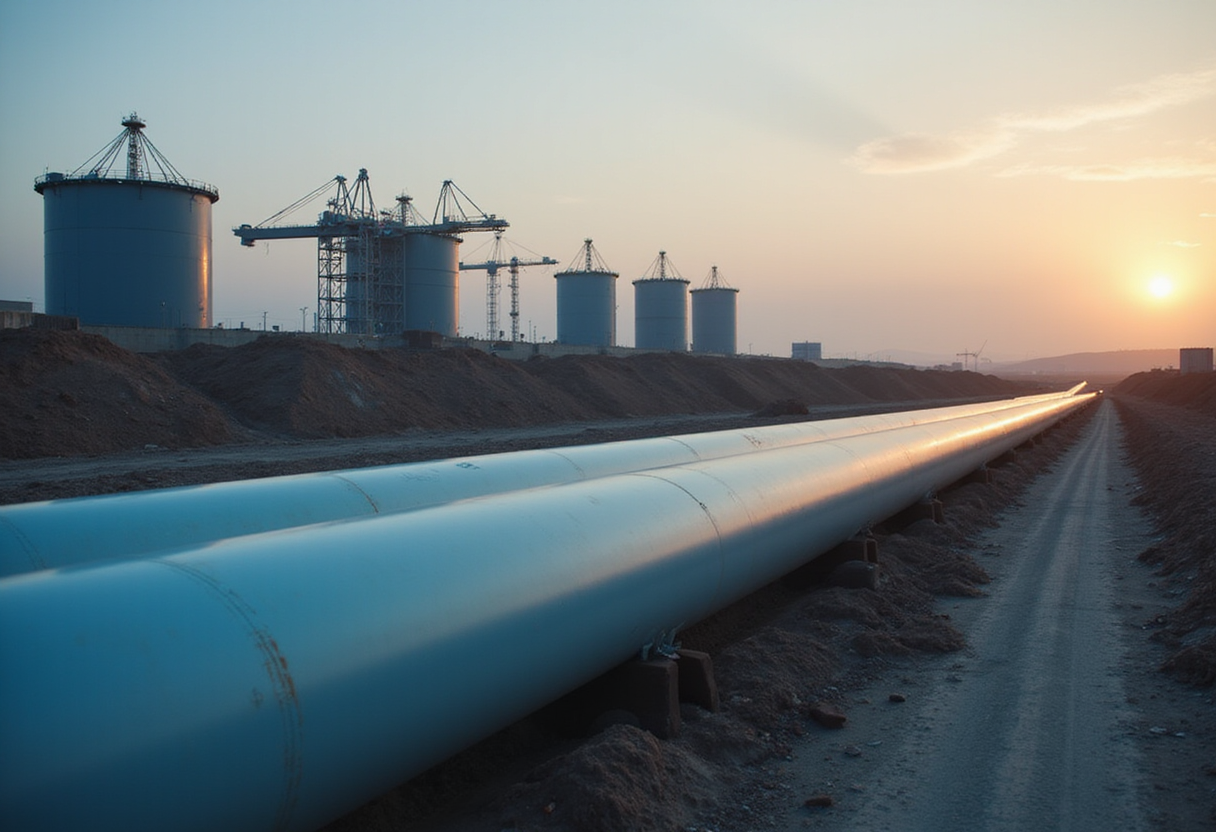
Saudi Arabia is pursuing pipeline capacity of 10 million b/d, a scale-up that would let the kingdom move the bulk of its crude exports overland and around the Strait of Hormuz, gCaptain reports.
The figure marks the operational heart of the story. Saudi Arabia currently pumps roughly 9-10 million b/d of crude in total, so a 10 million b/d pipeline system would, if fully utilized, match the kingdom's entire production and remove the Strait of Hormuz chokepoint from its export equation.
Why does the East-West pipeline matter?
The kingdom's key overland route is the East-West pipeline, which runs from Abqaiq in the Eastern Province across to Yanbu on the Red Sea. Crude loaded at Yanbu bypasses Hormuz entirely, giving Saudi Aramco a physical hedge against any blockade or attack in the Gulf.
That hedge has precedent. Attacks in 2019 on Abqaiq and Khurais knocked out roughly half of Saudi output overnight, and periodic tanker incidents in the Strait of Hormuz since then have kept the bypass question live for exporters, insurers, and Asian refiners alike.
What changes with 10 million b/d of capacity?
At 10 million b/d of pipeline throughput, the kingdom could in principle route nearly all of its crude exports to Red Sea terminals. That shifts the security calculus for Gulf crude flows:
- Crude moving through Hormuz falls sharply, reducing exposure to a chokepoint that carries about a fifth of globally traded oil.
- Red Sea terminal utilization at Yanbu rises, with knock-on demand for tankers on the long Suez route to Europe and Asia.
- Spare pipeline capacity becomes a strategic signal to buyers that Saudi barrels cannot be easily interdicted.
Who is behind the plan?
The effort is a Saudi state initiative, with the kingdom's leadership framing expanded pipeline capacity as a national security and export-reliability measure. Specific investment figures, engineering timelines, and contractor scope were not disclosed in the report.
What is the watch item?
The open questions are funding and timing. Watch for Saudi Aramco or the energy ministry to confirm the capacity target, name the expansion projects involved, and attach a startup window. Until then, 10 million b/d remains an ambition — a declared ceiling for the kingdom's overland crude network rather than a sanctioned engineering program with a schedule attached.
via Google News: Pipelines and midstream (Source)
More from Priya Raman
Show full bio
Senior reporter covering media and advertising at Rig & Refinery.
418 articles