Well report No. RR-4126 · T18N · R19W · SEC 6 · filed October 12, 2026
Midstream & PipelinesWell report
Saudi Arabia Targets 10 Million bpd Pipeline Export Capacity
Saudi Arabia is studying an increase in pipeline crude export capacity to 10 million bpd, Energy Minister Prince Abdulaziz bin Salman said, eyeing a hedge against Gulf shipping disruptions.
Field notes
- Saudi Arabia is studying pipeline oil export capacity of 10 million bpd, per Energy Minister Prince Abdulaziz bin Salman.
- The expansion centers on routing crude overland to Red Sea export terminals, bypassing the Strait of Hormuz.
- No budget, timeline or contractor scope accompanied the announcement; the project remains at study stage.
- The kingdom's East-West Petroline has nameplate capacity of around 5 million bpd.
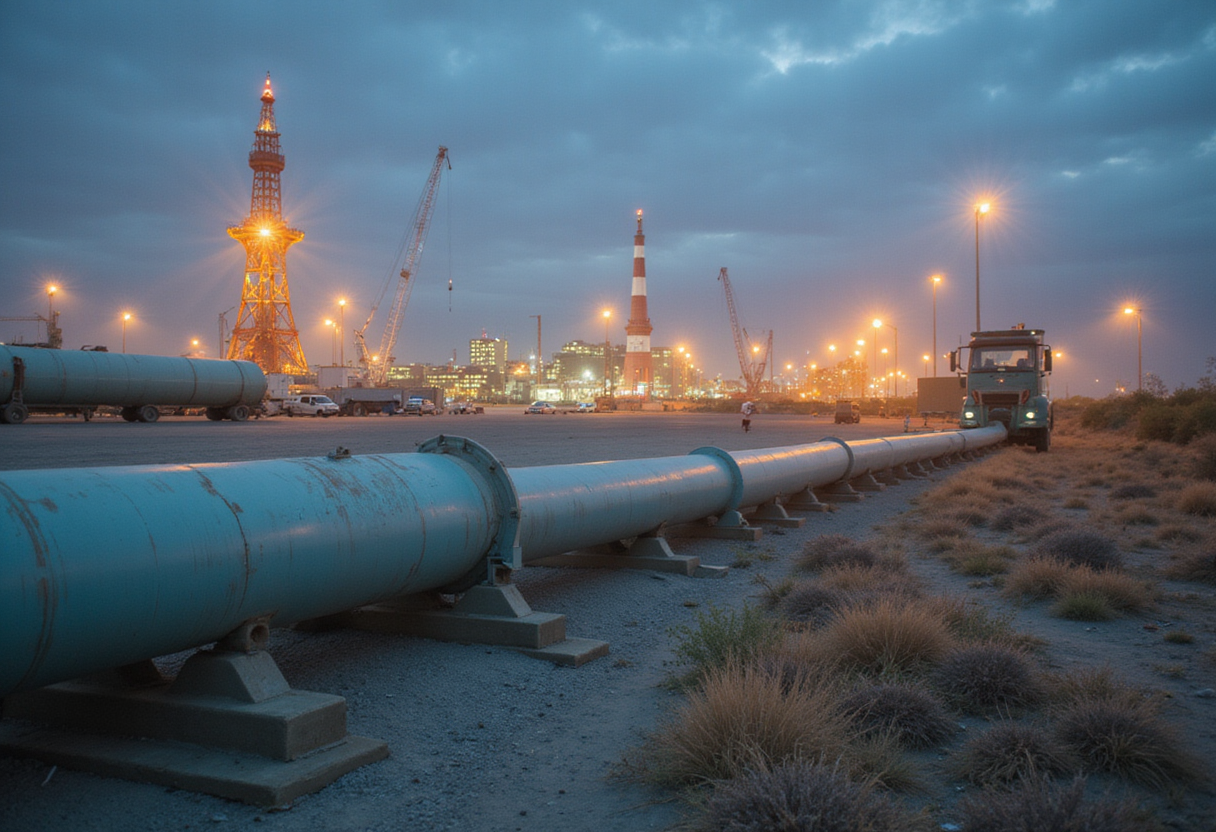
Saudi Arabia is studying an increase in its pipeline crude export capacity to 10 million bpd, Energy Minister Prince Abdulaziz bin Salman said, signalling a potential expansion of the kingdom's East-West pipeline system as it weighs how to move barrels if Gulf shipping lanes are disrupted.
The 10 million bpd figure marks a step up from the roughly 5 million bpd of throughput the East-West line — the 1,200 km Petroline system running from Abqaiq across the peninsula to Yanbu on the Red Sea — has handled in recent years. The minister's statement confirms Riyadh is positioning pipeline redundancy as a strategic hedge against maritime chokepoints, notably the Strait of Hormuz and the Bab al-Mandeb corridor.
What does the capacity increase target?
The stated goal is straightforward: give Saudi Aramco the ability to export up to 10 million bpd of crude through pipelines rather than tankers transiting the Gulf. Key elements of the plan as framed by the minister:
- Raise pipeline export capacity to 10 million bpd as a ceiling the kingdom can call on when sea routes are blocked or threatened.
- Preserve the option to load cargoes on the Red Sea coast at Yanbu, bypassing Hormuz entirely.
- Keep the expansion at the study stage for now, with no sanctioned timeline, contractor awards or budget disclosed.
Energy ministers rarely attach price motives to infrastructure decisions, and Prince Abdulaziz framed the move in logistical rather than market terms. The capacity is a contingency asset — insurance against a closure of shipping lanes rather than a plan to lift exports in normal conditions.
How does the East-West pipeline fit in?
The Petroline system, built in the 1980s and expanded after the 2019 attack on Abqaiq and Khurais, gives Saudi Arabia its principal overland route from Eastern Province production to Red Sea terminals. Its nameplate capacity has been quoted at around 5 million bpd, with utilization well below that in most years because tanker loading through Ras Tanura and Ju'aymah is cheaper.
Pushing export capacity toward 10 million bpd would imply a substantial debottlenecking program — additional pumping stations, looped segments and expanded terminal storage at Yanbu. No engineering scope, cost estimate or completion date accompanied the minister's remarks, placing the project firmly in the appraisal and planning category rather than among sanctioned developments.
What is the watch item?
The unanswered questions are scope and schedule. Traders and shipowners will look for Aramco to confirm whether the 10 million bpd target covers crude only or includes condensate and products moved on parallel lines. A capital sanction from Aramco, with an engineering, procurement and construction award and a dated startup, would move the project from strategic signalling to execution.
Until then, the 10 million bpd figure functions as a policy marker: Riyadh wants producers and buyers to know it can route around Hormuz at scale. The next concrete signals to watch are any tender activity for pipeline expansion work, revised guidance in Aramco's results or capital program filings, and the pace of loading growth at Red Sea terminals.
via Google News: Pipelines and midstream (Source)
More from Olivia Hart
Show full bio
Correspondent covering technology and product news in Oil and gas industry operations and markets at Rig & Refinery.
403 articles
Adjoining reports
- Saudi Arabia Targets 10 Million bpd Pipeline Export Capacity
- Saudi Arabia Targets 10 Million Bpd of Oil Pipeline Capacity
- Saudi Arabia eyes 10 million bpd pipeline export capacity
- Saudi Arabia Targets 10 Million bpd Oil Pipeline Capacity
- Saudi Arabia Restores East-West Pipeline Capacity to 5.8 Million bpd