Well report No. RR-1401 · T15N · R6W · SEC 15 · filed October 10, 2026
Midstream & PipelinesWell report
Saudi East-West pipeline flows as normal, Bloomberg reports
Bloomberg, citing unnamed sources familiar with operations, reports Saudi Arabia's 1,200-km Petroline is flowing at normal rates, with no disruption cited at the Yanbu terminal.
Field notes
- Saudi Arabia's East-West pipeline is flowing as normal per Bloomberg, citing unnamed sources familiar with operations.
- The roughly 1,200-km Petroline runs from the Abqaiq area in the Eastern Province to the Yanbu terminal on the Red Sea.
- Public industry filings put the nameplate capacity at around 5 million barrels per day.
- Saudi Aramco operates the line; the Bloomberg report did not cite an Aramco spokesperson or a Saudi Ministry of Energy statement.
- Newsquawk carried the Bloomberg report without specifying throughput or a date for the source briefing.
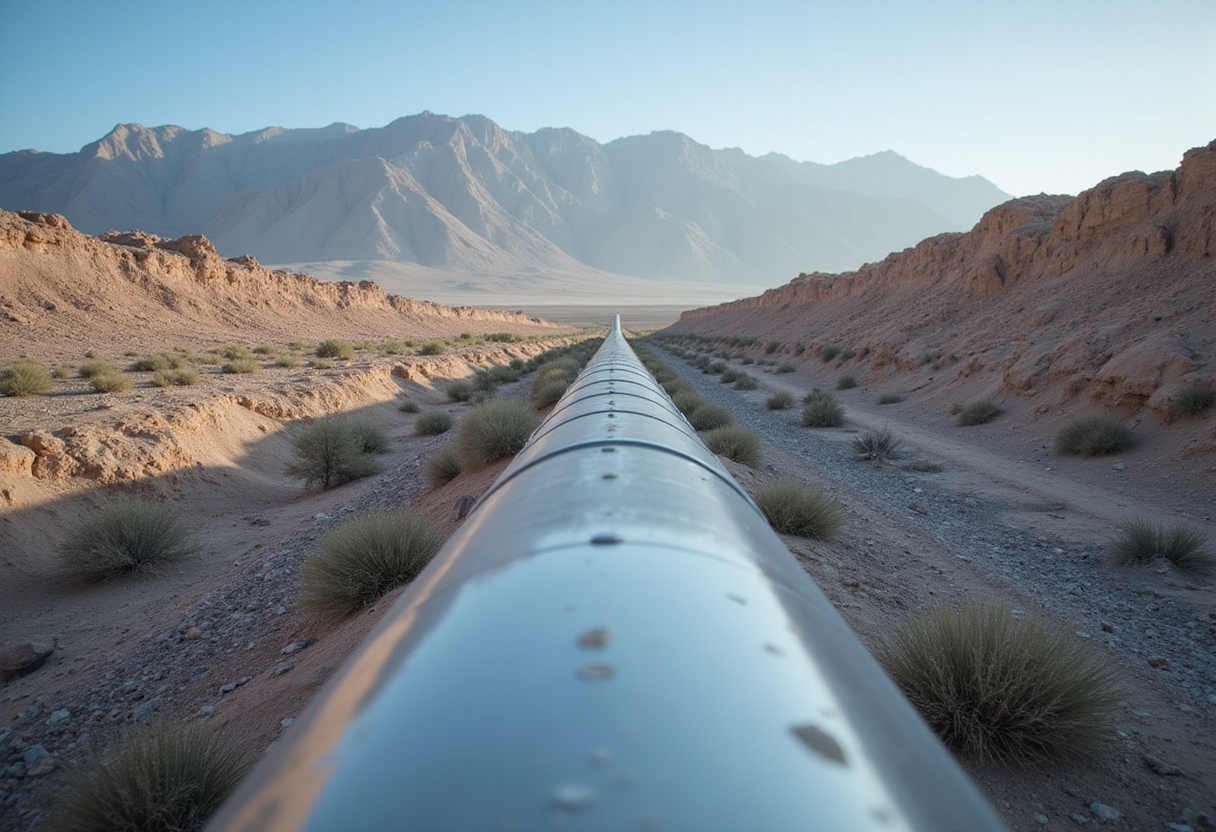
Saudi Arabia's East-West crude pipeline is flowing as normal, Bloomberg reported, citing sources familiar with the matter. The headline reached market terminals via the Newsquawk newswire.
"The pipeline is flowing as normal," Bloomberg cited its sources as saying.
The pipeline, formally known as Petroline, runs roughly 1,200 km from the Abqaiq processing area in the Eastern Province to the Yanbu export terminal on the Red Sea. Saudi Aramco operates the line.
Public industry filings put the system's nameplate capacity at around 5 million barrels per day, making it one of the largest crude arteries in the Middle East. The line carries Arabian Light and medium grades to Yanbu, where they load onto VLCCs and Suezmaxes for Mediterranean, European and Asia-Pacific lifters.
Why does the pipeline's status move the market?
The East-West system serves two functions for Saudi Arabia and the wider OPEC+ group:
- Throughput offers traders a read on Saudi production and storage activity. A jump in flows points to higher output; a drop points to maintenance or storage build.
- The line offers a Hormuz-bypass route. Westbound flows allow Saudi crude to reach Red Sea loaders without transiting the Strait of Hormuz.
An unplanned outage would tighten the seaborne crude market by concentrating cargoes onto the Persian Gulf terminals at Ras Tanura and Ju'aymah. Refiners in the Mediterranean, the Red Sea and Asia-Pacific who routinely lift Yanbu barrels would face rerouting or replacement cargoes. Such an event typically lifts Brent and Dubai timespreads within hours and adds freight cost for replacement barrels routed via the Cape of Good Hope.
What did the Bloomberg report actually say?
Bloomberg used the word "normal" without specifying throughput or providing a date for the source briefing, according to Newsquawk's relay. That phrasing leaves a wide band — from reduced maintenance rates to nameplate capacity.
Bloomberg did not cite an Aramco spokesperson, a Saudi Ministry of Energy statement, or a ship-tracking dataset in the report relayed by Newsquawk. Traders should treat the headline as a status confirmation rather than a throughput update.
Bloomberg's sources asked not to be identified, in line with the standard newswire format.
What is the regional context?
The Bloomberg-cited normality arrives against a backdrop of periodic Houthi attacks on Saudi infrastructure and periodic Strait of Hormuz transit incidents. The East-West line is one of the few pipelines globally that offers an alternative loading point outside the Persian Gulf.
Saudi Aramco has historically cited Yanbu's role as a swing export channel in its investor presentations. The line also feeds domestic refineries on the western side of the kingdom, including the Yanbu complex. Both functions depend on routine well or pipeline maintenance, which Aramco schedules on a multi-year cycle. The Bloomberg report did not detail whether the current 'normal' reading includes or excludes scheduled maintenance windows.
How does this fit the broader OPEC+ picture?
The East-West pipeline has surfaced repeatedly in periods of regional tension and during episodes of OPEC+ supply management. Saudi Arabia has used the line as a visible tool to demonstrate export continuity when Persian Gulf transit risks have risen.
Aramco did not, as of Newsquawk's report, issue a public statement on the pipeline. Saudi Ministry of Energy weekly statements have not, in the current cycle, addressed the East-West system specifically. The Bloomberg-cited normality therefore stands without official corroboration at the time of writing.
What is the watch item?
The watch item is the next official Aramco or Saudi Ministry of Energy communication. Several signals would either corroborate or contradict the Bloomberg-cited snapshot:
- A fresh Yanbu loading programme from Aramco's trading arm
- A ship-tracking dataset covering westbound movements
- A fresh OPEC+ production table
The pipeline's status returns to market focus each time regional security headlines, OPEC+ quota adjustments, or Hormuz transit news surface. For now, the Bloomberg-sourced reading is operational: the East-West pipeline is flowing as normal. The next Saudi energy ministry bulletin is the cleanest test of whether the snapshot holds.
via Google News: Pipelines and midstream (Source)
More from Priya Raman
Show full bio
Senior reporter covering media and advertising at Rig & Refinery.
395 articles