Well report No. RR-5557 · T9N · R46W · SEC 21 · filed October 10, 2026
Refining & PetrochemicalsWell report
Saudi Refinery Fire Reported as Attack Claims Surface
An unverified Saudi refinery fire report has surfaced alongside circulating attack claims. The alert names no facility, throughput, or operator. Watch items: Aramco statement, FIRMS data, and the Brent-Dubai spread.
Field notes
- Fire reported at an unnamed Saudi refinery; attack claims circulating alongside the alert
- OilPrice.com is the originating outlet; no operator or Saudi government confirmation has surfaced at publication
- Alert does not name the facility, throughput figure, unit origin, or extent of damage
- Saudi domestic refining capacity totals roughly 2.9 million bpd across operating assets and joint ventures
- Watch items: Aramco or operator statement, NASA FIRMS satellite thermal data, and Brent-Dubai spread movement
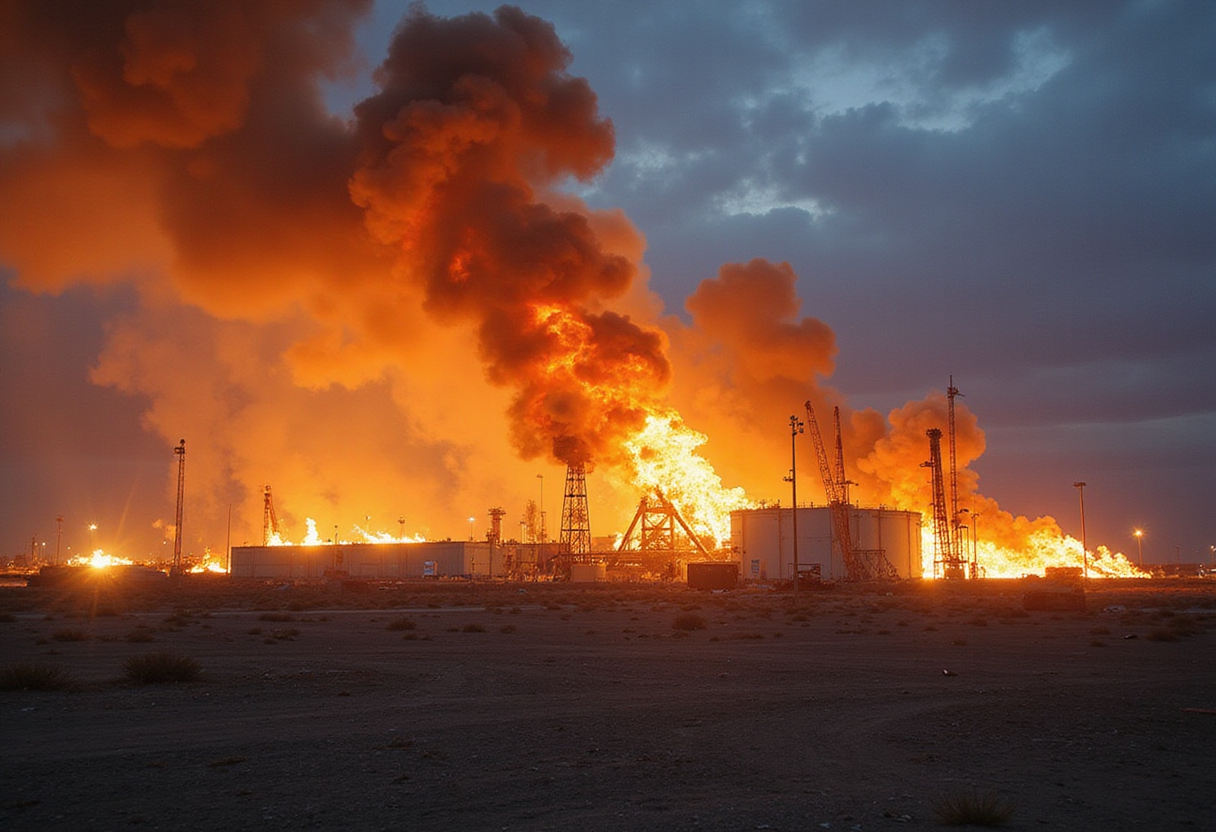
A fire has been reported at a Saudi Arabian refinery as unverified attack claims circulate through energy news desks and social media.
The brief alert, carried by OilPrice.com, did not name the affected facility, cite any throughput figure, identify the unit origin, or carry operator confirmation. It also did not specify injuries, evacuation status, or the cause of the fire.
What does the source actually confirm?
The reporting carries three datapoints: a fire at a Saudi refinery, claims of an attack attached to the incident, and — so far — the absence of any official Saudi confirmation or statement from the operating company.
Until the Saudi Press Agency, the operator, or Saudi state media publish a parallel account, the item sits in the unverified column. Markets generally do not price unverified reports of this kind.
Where does this report sit in the news cycle?
Energy-infrastructure headlines in the Gulf have followed a consistent pattern over recent years. Early reports surface on conflict-monitoring channels or specialized energy desks, then move through broader trading and wire outlets as verification arrives or fails.
That is the point at which a trade-press outlet either carries the item with attribution or parks it as a watchboard entry.
What is missing from the report?
Any operator, refiner, or trader would treat the following datapoints as material, and the source provides none of them:
- The name of the affected refinery
- The unit origin (process unit, tank farm, flare system, utility area) and scale of the fire
- The current status of normal operations
- Any injuries, evacuation, or emergency response underway
- A throughput figure that would anchor the supply impact
Without those elements, the headline triggers a watching brief rather than a price move.
Why does a refinery report move prices before an upstream one?
Downstream assets concentrate flammable inventory across process units, atmospheric and pressure storage, and flare systems. A single process-unit fire can shut a crude distillation unit, hydrocracker, or reformer for weeks without affecting upstream production.
That structural detail is why downstream fire reports typically clear the trading screen quickly when the source is unconfirmed. The market's prior on a localized refinery fire without external causation is high. The prior on a credible attack against a major Saudi asset is lower per single report.
What should traders watch next?
Three signals will move this story from "reported" to "tradable":
- A statement from Saudi Aramco, or from another operator if the asset sits outside Aramco's portfolio
- Satellite thermal imaging from services such as NASA's FIRMS, which confirms hotspot location and persistence in near real time
- Front-month Brent versus Dubai spreads, which historically widen on credible Saudi supply risk
If the operator confirms a process-unit fire at a major asset, watch for turnaround timing, feedstock rerouting notices, and any product allocation shifts.
What's the downstream angle for refinery readers?
Saudi domestic refining capacity totals roughly 2.9 million barrels per day across operating assets and joint ventures. Even a brief outage at a single facility can shift regional product balances, particularly for diesel and jet fuel during peak demand windows.
Until the operator names the unit and the fire origin, the story remains on the watchboard, not the trading screen.
via Google News: Refineries and petrochemicals (Source)
More from Priya Raman
Show full bio
Senior reporter covering media and advertising at Rig & Refinery.
381 articles
Adjoining reports
- Sabereen reports massive fires on Saudi oil export pipeline
- Saudi Pipeline Shutdown Blamed on Iran-Backed Iraqi Militias
- Yeni Şafak: Saudi pipeline operations normal after attack report
- Houthi Attacks Kill Seven in Yemen; Saudi Refinery Targeted
- Ukraine's Strikes on Russian Energy Infrastructure: What Has Been Hit?