Well report No. RR-8561 · T3N · R11W · SEC 3 · filed October 30, 2026
Upstream Drilling & ProductionWell report
Syria Plots Energy Rebuild From 380,000 bpd Baseline Lost to War
Syria's pre-war 380,000 bpd output fell 80% during conflict; sanctions relief and a Chevron-led offshore bid now anchor a rebuild reliant on foreign investment.
Field notes
- Pre-2011 Syria produced 380,000 bpd of crude and 900 MMcf/d of gas; conflict cut oil output 80% and gas by half (Wood Mackenzie).
- May announcement: first deep-water exploration project with Chevron, UCC Holding and Syrian Petroleum Company.
- June 2025: $7 billion power-sector deal adds 5 GW — four gas plants and a 1 GW solar park, nearly half of electricity demand.
- Off-grid solar grew from ~250 MW in 2022 to over 2 GW in 2025.
- October EOI: $1.16 billion Halibiya-Zalabiya project — 81-MW hydro plant and 1.2-GW pumped storage.
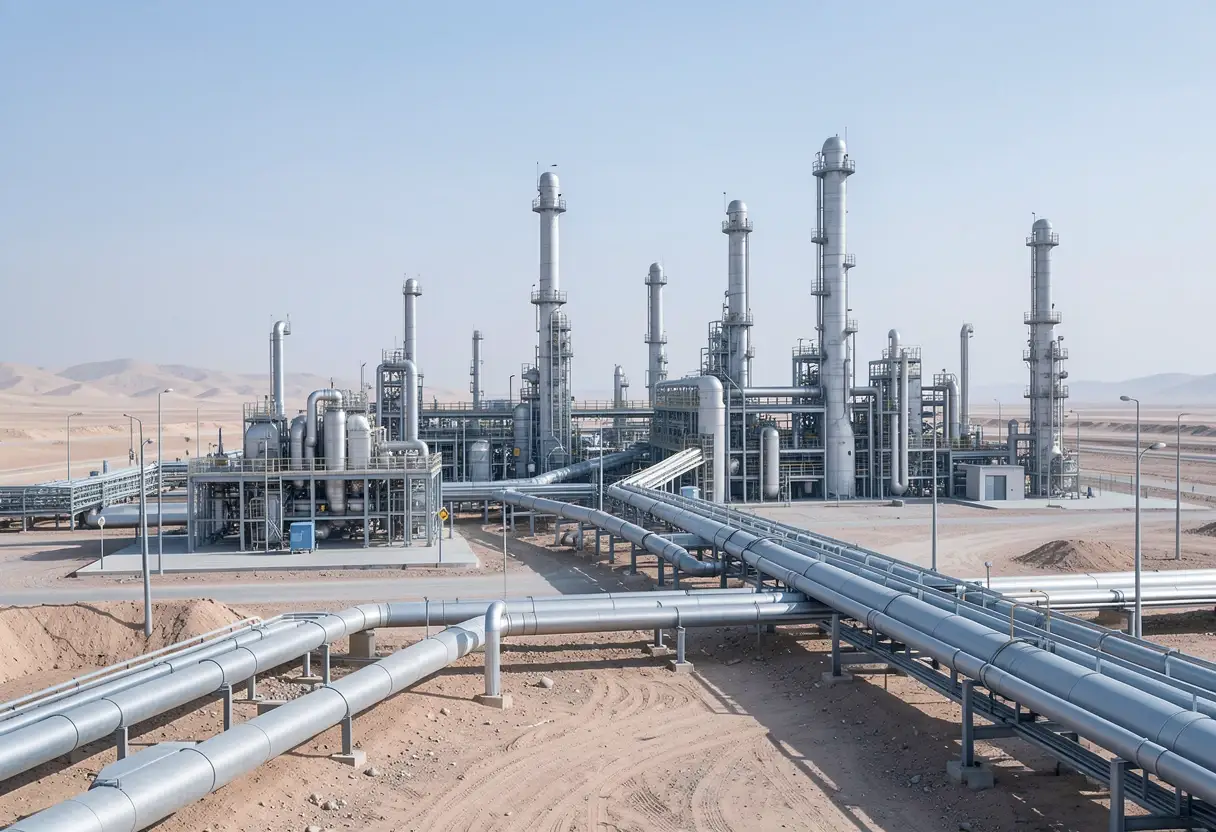
Syria produced an average of 380,000 bpd of crude and 900 million cubic feet of gas before 2011. Conflict cut oil output by 80% and gas by half, according to Wood Mackenzie figures — that is the gap Damascus now wants foreign capital to close.
The transitional government formed by President Ahmed al-Sharaa on March 29, 2025, has taken control of key assets including the Omar oil field and the Tabiyeh gas complex. For more than a decade, Syria's energy sector was split, with Damascus far from the oil-rich northeast and stripped of some of its largest production sites while retaining oversight of gas output in the central region.
What has changed for investors?
Three shifts matter for practitioners.
- A 2026 agreement between the transitional government and the Kurdish-led Syrian Democratic Forces could integrate SDF forces into state structures, further unifying energy governance.
- The United States and European Union lifted sanctions on Syria following the fall of the Assad regime.
- The relaunch of the SWIFT transfer system has made it easier for international companies to invest in the country.
The resource base remains in place: an estimated 1.3 billion barrels of oil equivalent in reserves, vast unexplored onshore acreage and an entirely untapped offshore sector.
Which projects are on the table?
In May, Syria announced an offshore site for its first deep-water oil and gas exploration project, to be developed by Chevron, Qatar's UCC Holding and the Syrian Petroleum Company. Other U. oil and gas firms have also expressed interest in Syrian projects under the transitional government.
Iran's restrictions on energy trade through the Strait of Hormuz have spurred interest in Syria as a transit route for Persian Gulf hydrocarbons to the Mediterranean. Syria's border with Turkey offers access to major pipeline networks that could move Middle East oil and gas to Europe. With greater investment, Syria could serve as an "energy land bridge" for Hormuz-bypass pipelines, according to the Baker Institute. That is analysis, not sanctioned engineering — no bypass line has reached final investment decision.
How large is the power build-out?
The renewable push is more concrete than the transit-route talk.
- Off-grid solar capacity grew from around 250 MW in 2022 to over 2 GW in 2025, by estimate.
- In June 2025, Damascus signed a $7 billion deal with a Qatari-Turkish-U.S. consortium to rebuild the power sector: four gas-fired plants plus a 1 GW solar park, expected to add 5 GW of capacity — nearly half of current electricity demand.
- In September 2025, the government signed a Joint Development Agreement with Saudi Arabia's ACWA Power targeting 1 GW of solar PV, roughly 1.5 GW of wind and utility-scale battery storage, with site identification still under way.
- In February, the Ministry of Energy signed with Dubai-based Marv Energy for a 700-MW wind farm using 140 locally manufactured turbines, built at a factory in Homs, on a five-to-seven-year schedule.
- In October, the ministry issued a request for expressions of interest for the Halibiya-Zalabiya Dam on the Euphrates: an 81-MW hydropower plant with three 27-MW turbines and a 1.2-GW pumped-storage facility, requiring a 1,200-metre-long, 23-metre-high dam, at an estimated cost of $1.16 billion.
The national strategy rests on institutional reorganisation, security integration, economic stabilisation and transitional justice ahead of elections planned for 2030 — the political frame within which every energy contract now sits.
What is the watch item?
Syria's hydrocarbon and renewables ambitions remain hostage to foreign capital, and the country carries the recovery math on its sleeve: every deal signed since mid-2025 is an option, not a startup. Watch the Chevron-led deep-water exploration commitment and the $7 billion power consortium's first concrete spend — either converts paper capacity into barrels and megawatts, or it does not.
via esthinktank.com (Original)
More from James Calloway
Show full bio
Staff writer covering people, launches and day-to-day practice in Oil and gas industry operations and markets at Rig & Refinery.
595 articles