Well report No. RR-2793 · T13N · R28W · SEC 25 · filed October 30, 2026
OffshoreWell report
Ten New FPSOs to Lift Southeast Asian OSV Demand by 2030
MSI forecasts 14 new floating production units in Southeast Asia by 2030, 10 of them FPSOs, lifting AHTS demand up to 4% — if delayed FIDs such as Tangkulo finally land.
Field notes
- MSI forecasts 14 new floating production units in Southeast Asia by 2030, 10 of them FPSOs, growing the fleet to ~80 units.
- AHTS demand is expected to grow ~2% by 2030, or ~4% if FID-pending projects are sanctioned.
- Bahtera Haluan Lestari, Southeast Asia's largest FPSO, targets first gas in Q4 2028 with 1 Bscf/d gas capacity.
- Mubadala Energy's Tangkulo FPSO missed FID deadlines in June and September 2026.
- The Sepat FPSO was steel-cut on 21 July 2026 at Nantong Strongwind Shipyard, targeting mid-2029 production.
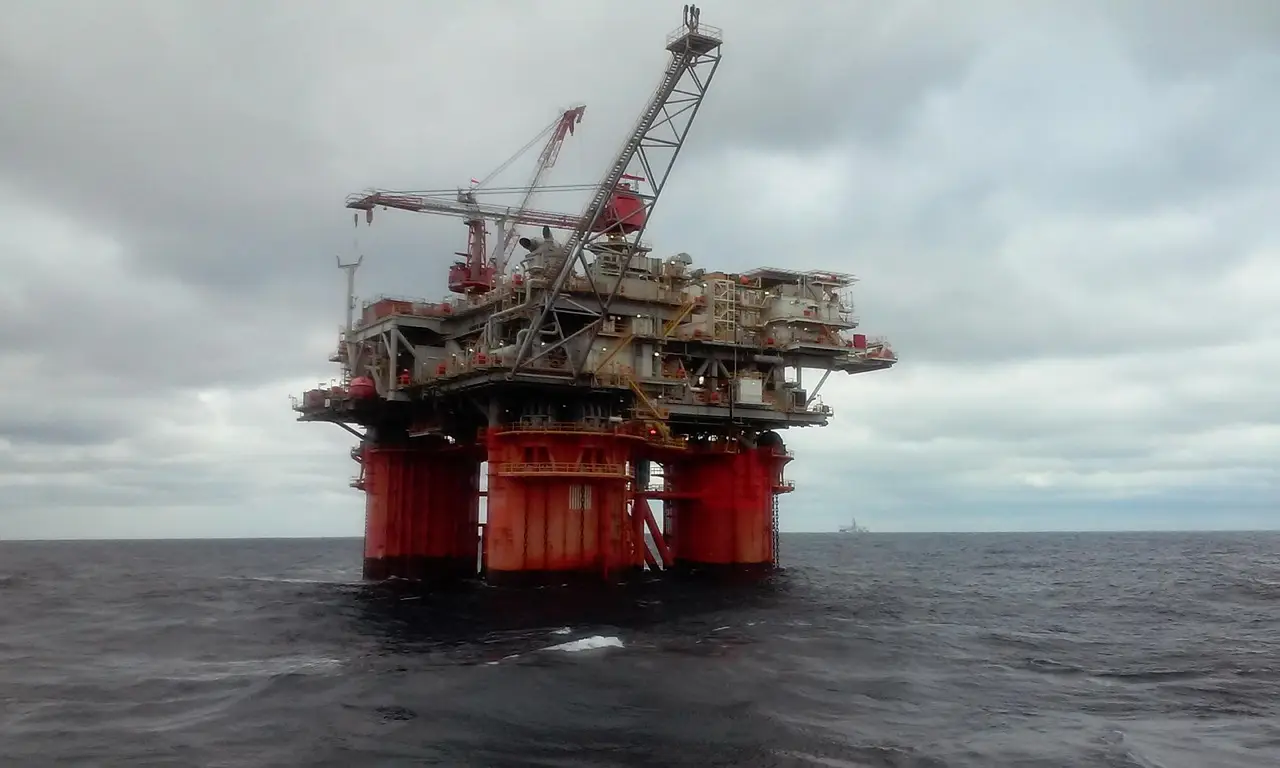
Southeast Asia will add 14 floating production units by 2030, 10 of them FPSOs (floating production, storage and offloading vessels), lifting the regional fleet to roughly 80 units and underpinning steady growth in offshore support vessel (OSV) demand. The forecast comes from Maritime Strategies International (MSI) associate director Todd Jensen, speaking at the 2026 Offshore Support Journal Asia Conference.
MSI expects demand for anchor-handling tug/supply (AHTS) vessels — the workhorses that tow and position rigs and floating units — to grow around 2% by 2030. If projects still awaiting final investment decisions (FIDs) get sanctioned, that growth could reach 4%. Jensen offered a caveat: owners should not expect a significant increase in charter rates.
What drives the outlook?
Jensen opened with MSI's oil price view. Despite Middle East disruptions, MSI still expects a supply glut once the war there ends, though it now sees that glut emerging in 2027. Global crude production is forecast to rise through 2030. Southeast Asian output is forecast to decline, and that decline is precisely why the region keeps ordering new FPSOs, plus replacement units and FSOs (floating storage and offloading platforms).
"All of these projects will impact demand for OSVs," Jensen told delegates. He described the AHTS market in the region as 'strong', with high utilisation likely to persist. Few newbuilds in recent years support that view. Some laid-up vessels remain, but their age makes reactivation unlikely. The platform supply vessel (PSV) market does not enjoy the same utilisation. Jack-up vessel demand is good and should rise as the floating fleet grows.
For context, Brazil remains the benchmark FPSO market: around 20 new units are required there through the early 2030s, with more planned later.
Which projects anchor the numbers?
Sanctioned and under-construction work dominates the near-term pipeline across Indonesia, Malaysia, Vietnam and Brunei.
- Bahtera Haluan Lestari (Indonesia). The largest FPSO in Southeast Asia once onstream, serving the Geng North and Gehem fields. Capacity: 1 billion standard cubic feet per day (scf/d) of gas, 80,000 barrels per day (bpd) of condensate, 1.4 million barrels of storage. The 300-metre vessel will work in water depths up to 2,000 m. Operator Searah, an Eni-Petronas joint venture, targets first gas in Q4 2028.
- Kikeh replacement (Malaysia). PTTEP has announced an engineering, procurement and construction deal for a tanker-conversion FPSO. The existing unit has served the Kikeh field since first oil, but its hull is nearing 50 years old. The new vessel, due onstream in Q1 2028, will handle roughly 40,000 bpd of oil and up to 90 million scf/d of gas.
- Sepat (Malaysia). Steel was cut on 21 July 2026 at Nantong Strongwind Shipyard in China. Designed for a 20-year life, the FPSO will process 25,000 bpd and store over 450,000 barrels. It anchors the Sepat Integrated Redevelopment Project in Block PM313, offshore Terengganu, with production expected mid-2029.
- Lac Da Vang (Vietnam). An FSO due onstream by end-2026, with 500,000 barrels of storage.
- Kelidang North East / Keratau (Brunei). An FPSO under construction for 2028 startup, designed for 450 million scf/d of gas and 300,000 barrels of condensate storage.
Two Vietnamese-adjacent items remain less firm. The FPSO for the Nam Du and U Minh fields, with a design capacity of 100 million cubic feet per day, is still in EPC tender — no contractor, no schedule. That project sits firmly in the appraisal-procurement stage, not the sanctioned column.
What remains unresolved?
The Tangkulo FPSO in Indonesia illustrates the FID risk behind MSI's upside case. Mubadala Energy originally targeted an FID in June 2026. A revised September 2026 deadline also passed without formal sanction, though Jensen said a decision is expected shortly. The unit, destined for the Tangkulo field, would process more than 500 million scf/d of gas and over 15,000 bpd of condensate, with production due in Q4 2028.
The takeaway: the sanctioned fleet alone supports modest OSV demand growth, but the jump from 2% to 4% hinges on paperwork, not steel.
via Google News: Offshore drilling and FPSOs (Source)
More from Priya Raman
Show full bio
Senior reporter covering technology and product news in Oil and gas industry operations and markets at Rig & Refinery.
585 articles
Adjoining reports
- 1990-Built FPSO Secures Vietnam Work Through End-2027
- Global FPSO Activity Advances Across Development, Execution and Operations
- Chinese Yard Lands Multimillion-Dollar FPSO Contract Award
- Saipem secures $2 billion FPSO contract from Eni–Petronas venture
- High Freight Costs Redirect More U.S. LNG Cargoes to Europe