Well report No. RR-9273 · T23N · R17W · SEC 23 · filed October 10, 2026
Midstream & PipelinesWell report
Third pipeline sabotage attack hits Syrian oil network in 10 days
Syrian Petroleum Company reports the third pipeline sabotage attack in northeast Syria in about 10 days, damaging a crude line with no repair timeline yet disclosed.
Field notes
- Syrian Petroleum Company reported a "sabotage attack" damaging an oil pipeline in northeast Syria.
- It is the third such sabotage incident on Syrian pipeline infrastructure in about 10 days.
- SPC has not disclosed the pipeline's throughput, location details, repair timeline, or a perpetrator.
- Syria's pre-war peak production was about 380,000 bpd; the northeast holds most remaining output.
- The Homs and Banias refineries, with roughly 240,000 bpd combined nameplate capacity, depend on pipeline-fed crude.
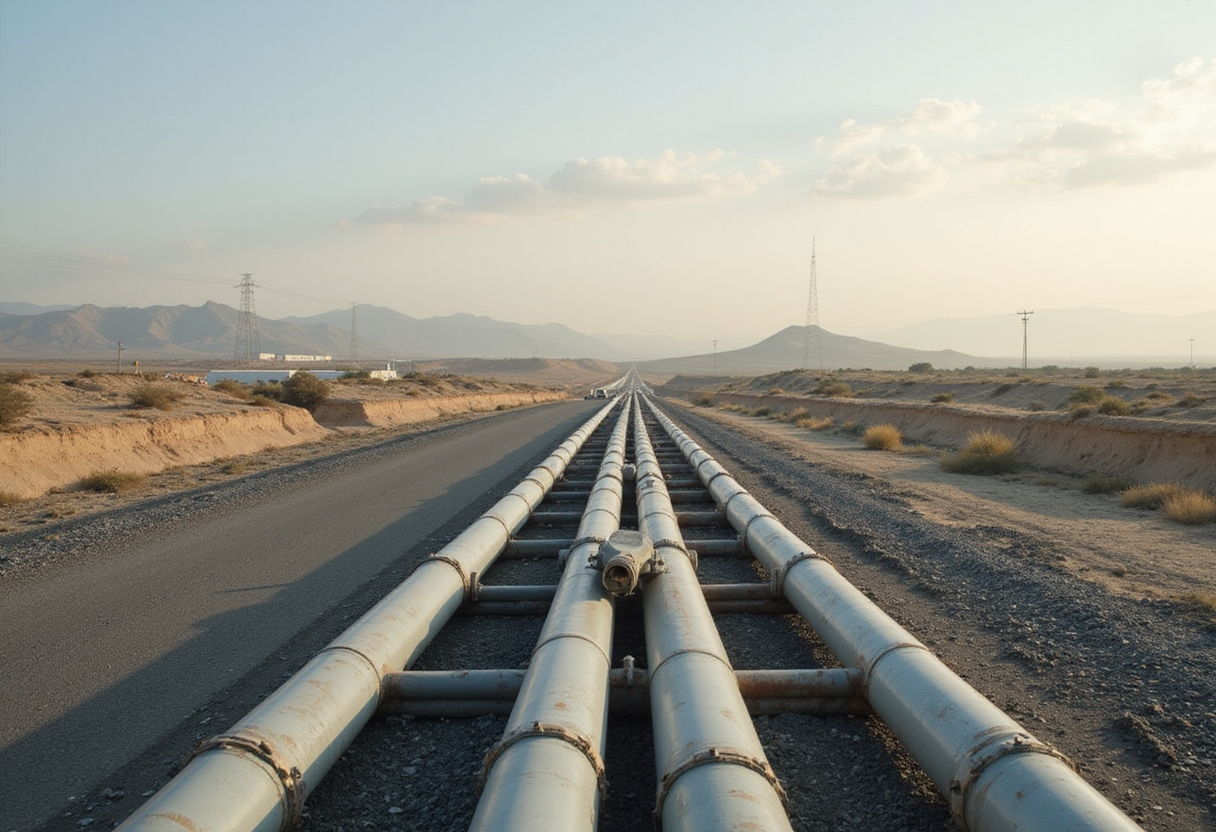
Syrian Petroleum Company (SPC) has reported a "sabotage attack" on an oil pipeline in northeast Syria that caused damage to the line — the third such incident in roughly 10 days, according to the state producer.
The company disclosed the attack without specifying the pipeline's diameter, throughput, or the volume of crude affected. SPC also did not name the exact province or field infrastructure served by the line, and it gave no timeline for repairs. What the statement does establish is a pattern: three attacks on petroleum infrastructure within about 10 days, all classified by SPC as deliberate sabotage rather than operational failure.
What happened on the ground?
The damaged pipeline sits in Syria's northeast, the country's most oil-rich corridor. Before the war, Syria produced around 380,000 bpd at peak, with the bulk of output and much of the gathering and transit infrastructure concentrated in the Deir ez-Zor and Hasakah regions. SPC controls what remains of the state-run refining and transport system, while Kurdish-led authorities administer most producing fields in the northeast.
Pipeline attacks hit this system twice over. A breached crude line takes throughput offline for days or weeks depending on repair crew access, and spilled crude adds environmental and security complications to any remediation work. SPC has not said whether the latest attack halted flows entirely or reduced them.
The company has also not identified a perpetrator. No group claimed responsibility for the attack at the time of reporting.
Why does the frequency matter?
Three attacks in 10 days marks an acceleration, not an anomaly of war-era damage. Syria's hydrocarbon infrastructure has absorbed more than a decade of conflict-related disruption, but repeated strikes on the same network within a single month point to either a coordinated campaign or a collapse of physical security along the pipeline right-of-way.
For SPC, the operational arithmetic is unforgiving. Each incident forces:
- Emergency shutdown and inspection of the affected segment
- Deployment of repair crews and materials into areas where security is contested
- Loss of crude supply to Syrian refineries, which already run well below nameplate capacity
- Diversion of limited maintenance budgets from rehabilitation to patch repairs
Syria's two main refineries — Homs and Banias, with combined nameplate capacity of roughly 240,000 bpd — have struggled with feedstock shortfalls and outdated units for years. Interrupted pipeline flows compound that feedstock problem directly.
Who is saying what?
SPC's statement, as relayed in the reporting, was direct: the pipeline was "subjected to a sabotage attack" that "caused damage." The company offered no further operational detail, no injury report, and no estimate of lost production.
That reticence is standard for Syrian state energy announcements, which rarely quantify throughput losses or attribute attacks. Analysts tracking the sector should treat the reported damage as confirmed but unquantified until SPC or an independent monitor publishes repair or flow data.
What is the wider recovery context?
Syria's oil sector has featured in post-conflict reconstruction discussions for years, with pre-war output around 380,000 bpd cited as a benchmark for what international investment might theoretically restore. Current national production is a fraction of that figure, and the northeast — where this attack occurred — holds most of the remaining proven reserves and producing wells.
Repeated sabotage works directly against any recovery case. Investors and trading partners price political risk and physical security into every barrel of Syrian crude, and a ten-day cluster of pipeline attacks raises both. It also complicates any plans to restart idle gathering lines or rehabilitate refinery feedstock routes, since each new incident resets the risk assessment.
The pattern carries regional implications as well. Northeast Syria borders Iraqi pipeline routes and Turkish transit infrastructure, and instability along those borders has historically spilled into cross-border energy logistics.
What comes next?
The watch items are concrete. First, whether SPC confirms repair timelines and flow restoration on the damaged segment — silence will suggest prolonged outage. Second, whether a fourth attack follows within the same month, which would confirm a sustained campaign rather than opportunistic strikes. Third, any claim of responsibility, which would clarify whether the threat is insurgent, criminal (fuel theft syndicates operate in the region), or factional.
For now, the number that defines the story is three: three sabotage attacks, ten days, one pipeline network — and no published estimate of the barrels lost.
via Google News: Pipelines and midstream (Source)
More from James Calloway
Show full bio
Staff writer covering industry trends and analytics at Rig & Refinery.
384 articles
Adjoining reports
- Syria reports 'sabotage attack' on oil pipeline, arrests suspects
- Damaged Pipeline in Northeastern Syria Halts Flow
- Syrian authorities arrest suspects in oil pipeline sabotage
- Syria Confirms Sabotage Attack on Northeast Transmission Pipeline
- Explosion damages oil pipeline near Tal Hamis in Syria's Hasakah