Well report No. RR-3392 · T12N · R24W · SEC 24 · filed October 10, 2026
Gas & LNGWell report
Three FPSO Contractors Join Forces in Floating LNG Push
Three FPSO contractors have formed a consortium to pursue floating LNG work, according to Upstream Online. The publication has not named the participating firms. Watch the first sanction and the FEED award.
Field notes
- Three FPSO contractors have formed a consortium to pursue floating LNG work
- Upstream Online disclosed the alliance in a brief headline item this week
- FLNG contracting has historically been dominated by a single supplier
- The three participating contractors have not yet been publicly named
- The consortium must now demonstrate capability in licensor selection and refrigerant package integration
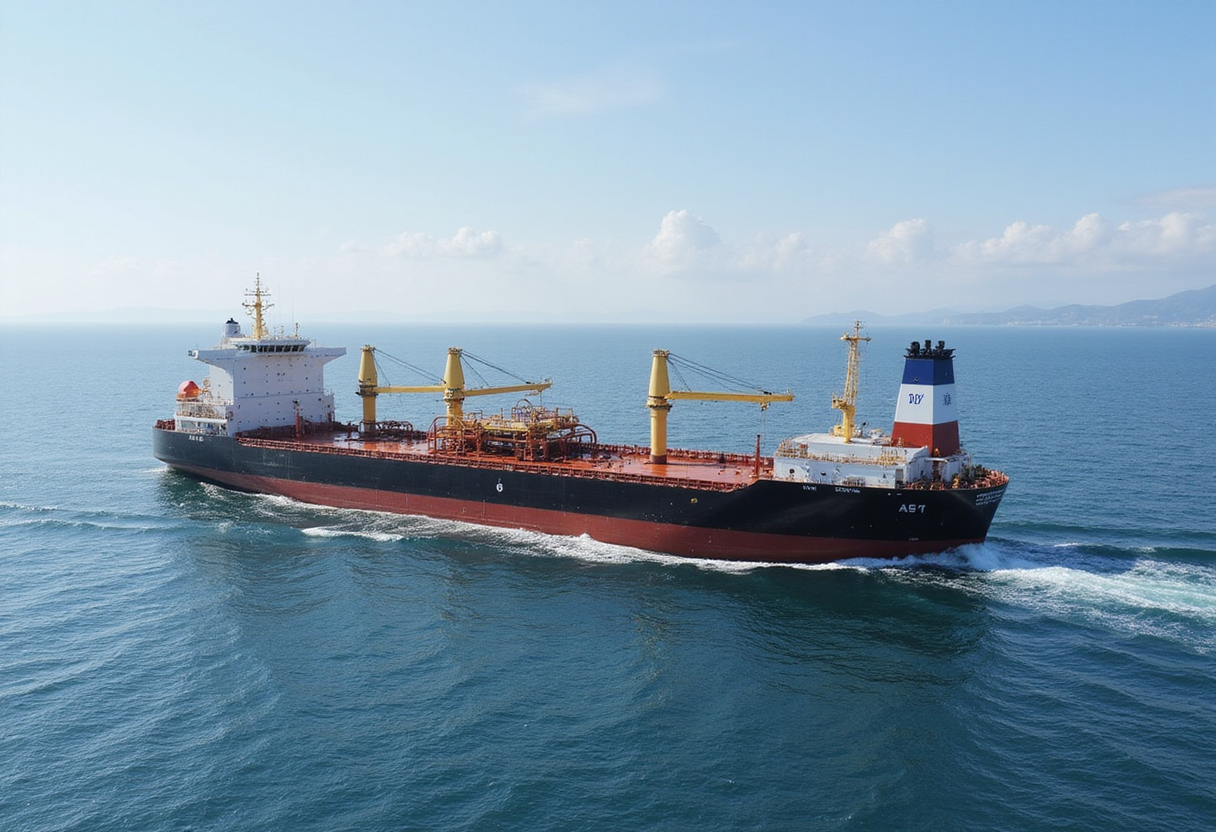
Three floating production, storage and offloading (FPSO) contractors that have spent the last decade competing head-to-head for offshore oil and gas developments have formed a consortium to pursue floating LNG (FLNG) work, Upstream Online reported this week.
The trade publication disclosed the alliance in a brief headline item; further details on the participating contractors and the lead partner have not yet been released publicly.
What makes the consortium different?
FLNG has, to date, remained effectively a one-supplier market. Floating liquefaction requires a skills stack that few yards have delivered at commercial scale — process trains, refrigerant compression, cryogenic storage, and gas-metering skids sized to merchant rather than pipeline offtake.
A consortium structure spreads execution risk across three balance sheets instead of one, and trims interface friction between hull builder and topsides integrator. For a developer evaluating a stranded gas discovery, that risk-sharing can materially improve bankability under a non-recourse project finance structure. Lenders who would underwrite a single-contractor FLNG at conservative completion risk often apply different terms to a multi-party consortium.
Why FPSO contractors view FLNG as the next growth leg
FPSO hulls and FLNG vessels share a basic engineering lineage. Both depend on turret mooring, topsides process modules, and storage that decouples the facility from fixed pipeline infrastructure. The transfer of capability is mechanical for any contractor that has been delivering FPSOs for two decades.
What changes is the commodity and the downstream offtake chain. LNG involves a regasification terminal or FSRU receiving point, a long-term offtake agreement, and shipping logistics — all of which must align before a project moves to final investment decision. The FLNG contractor group therefore enters a market where the engineering overlaps with FPSO, but the commercial envelope resembles an LNG plant more than an oil-producing vessel.
Where the consortium still has to prove itself
FPSO contractors carry strong credentials in hull design, turret mooring, and topsides integration. They carry thinner records on licensor selection, refrigerant package integration, and storage tank metallurgy for cryogenic service.
Each of those sits outside the standard FPSO scope. The consortium must clarify early in any bid whether it will license a process technology from an external licensor or bring one in-house. Procurement lead times on cold-box equipment and main refrigerant compressors typically sit on the schedule-critical path of FLNG, not the hull.
The investment-cycle backdrop
The consortium announcement lands against a thin pool of sanctioned FLNG projects. Industry consultancies have each, in recent years, sized the floating-liquefaction pipeline well below the level of interest from gas-resource holders.
Most commentary expects the sanction cadence to remain modest, with only a handful of FLNG decisions each year. That pace would not saturate a multi-supplier market, leaving room for incumbents and new entrants to bid selectively.
What to watch this quarter
The first competitive bid on a sanctioned FLNG tender marks the shift from announcement to execution. Items desk editors will track:
- FID announcements on stranded-gas fields off West Africa or Latin America — the assets where FLNG remains the most commercially logical monetisation route.
- Front-end engineering and design (FEED) awards — these signal which yards will book conversion slots for back-end construction.
- Partner disclosure — Upstream Online has not yet named the three contractors. Trade press sourcing on FLNG has historically pointed to a handful of European, Korean, and Brazilian yards as likely participants.
- Liquefaction-process licensor selection — the chosen licensor often dictates yard capability and the consortium's working-share split.
Wider context
Floating LNG sits at the intersection of two trends that have shaped upstream oil and gas this decade: a sharper focus on stranded-gas resources that pipeline economics cannot reach, and a contracting environment that increasingly rewards consortia over single points of accountability.
The consortium announced this week reflects that convergence. Upstream Online reported the news as a brief headline item. Further disclosure — including partner identity, working-share splits, and any signed memoranda — is expected in the coming weeks.
via Google News: Offshore drilling and FPSOs (Source)