Well report No. RR-7700 · T18N · R20W · SEC 30 · filed October 10, 2026
OffshoreWell report
FPSO contracting under strain from concept through first oil
New analysis examines FPSO contracting challenges from concept to first oil, focusing on risk allocation, interfaces and schedule exposure across floating production delivery.
Field notes
- Analysis addresses FPSO contracting challenges from concept through first oil
- Coverage focuses on risk allocation between operators, contractors and shipyards
- Piece examines hull-topsides interface management and integration scheduling
- Contracting structure is framed as a direct driver of deepwater project economics
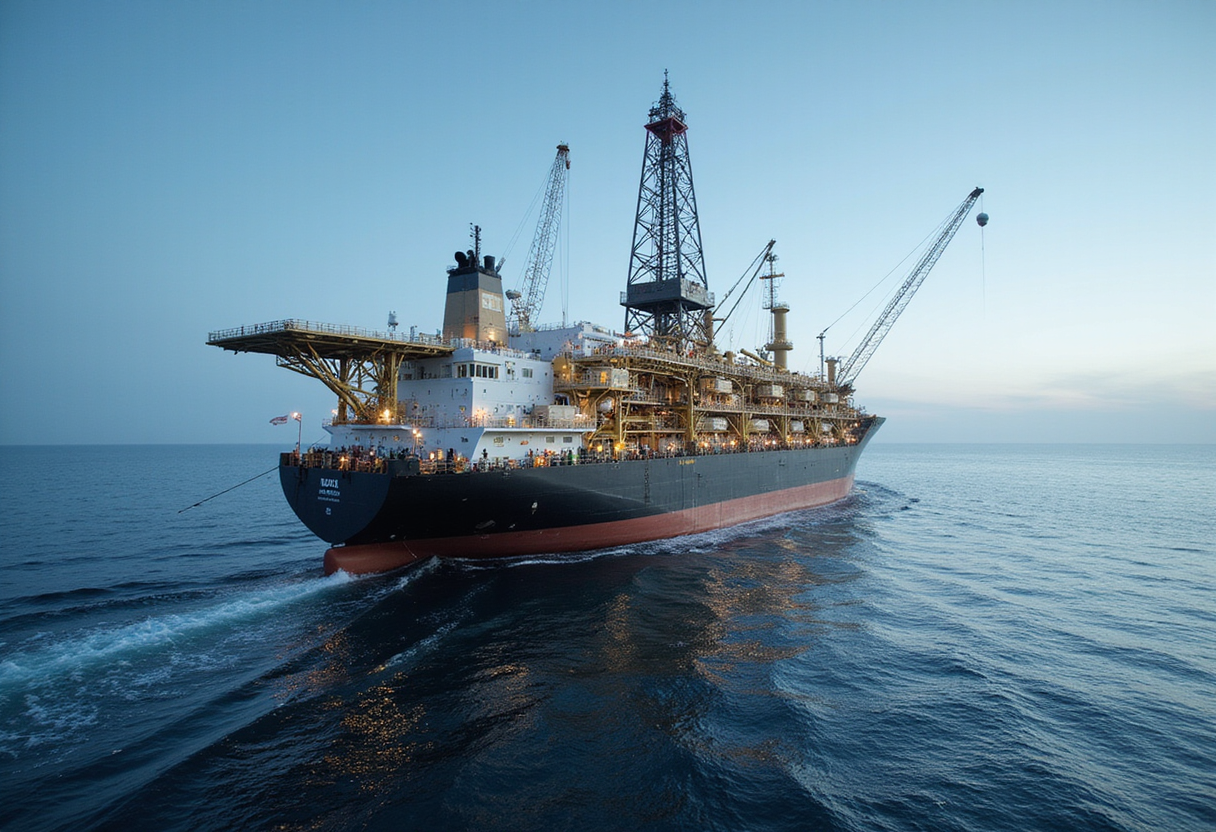
A new industry analysis examines the contracting challenges that run through FPSO projects from initial concept to first oil, highlighting persistent friction between operators, contractors and shipyards across the floating production sector.
The piece, carried by the American Journal of Transportation, focuses on the contractual structures that govern FPSO delivery — a segment of the offshore market where cost overruns and schedule slippage have repeatedly affected deepwater developments in basins that depend on floating production units.
Why do FPSO contracts keep causing problems?
Floating production, storage and offloading vessels sit at the intersection of shipbuilding and process-plant engineering. That hybrid character shapes the contracting problem the analysis addresses: a hull built in a shipyard, topsides engineered as a process facility, and an integration phase where the two must converge on schedule.
The analysis traces the sequence from concept selection through bidding, fabrication, integration, tow-out and first oil — and the contractual pressure points at each stage.
Key friction areas the piece covers include:
- Allocation of risk between operator and FPSO contractor across a multi-year delivery window
- Interface management between hull fabrication and topsides modules
- Scheduling exposure at integration and commissioning, immediately ahead of first oil
- Contract structures that determine who absorbs cost growth and delay
What does the analysis mean for deepwater watchers?
For operators sanctioning deepwater developments, FPSO contracting terms directly shape project economics. The mode of delivery — lease-and-operate versus build-own-operate-transfer, engineering-procurement-construction contracts versus hybrid arrangements — determines how schedule risk and capital exposure distribute across the parties.
The analysis frames these choices as central to whether a project reaches first oil on plan or joins the list of floating production programs that arrive late and over budget.
Trade coverage of FPSO delivery has consistently flagged this gap between sanctioned schedules and actual first-oil dates, and the contracting structure is where that gap is negotiated before steel is cut.
The piece serves as a briefing for operators, contractors and shipyards assessing the floating production pipeline, and for readers tracking how contracting models evolve as the offshore sector works through its current newbuild and conversion cycle.
The watch item: contracting practice on FPSOs now in bid, and whether the structures adopted on the next round of awards tighten risk allocation or repeat the exposure patterns the analysis describes.
via Google News: Offshore drilling and FPSOs (Source)
More from Olivia Hart
Adjoining reports
- Global FPSO Activity Advances Across Development, Execution and Operations
- Chinese Yard Lands Multimillion-Dollar FPSO Contract Award
- BW Offshore wins FPSO FEED on Canada's $12-billion oil project
- Chinese shipyard secures multimillion-dollar FPSO contract
- BW Offshore lands FPSO FEED on Canada's $12B oil project