Well report No. RR-2926 · T2N · R5W · SEC 2 · filed October 9, 2026
OffshoreWell report
Transocean books $1.1 billion in new backlog from Equinor and Shell
Transocean has booked $1.1 billion in new offshore drilling backlog under contracts with Equinor and Shell, extending term commitments for high-spec floaters.
Field notes
- Transocean added $1.1 billion to its offshore drilling backlog.
- The new work comes under contracts with Equinor and Shell.
- The awards extend multi-year term commitments for floating rigs.
- Backlog is a booked contract value, not revenue, and signals forward cash flow visibility.
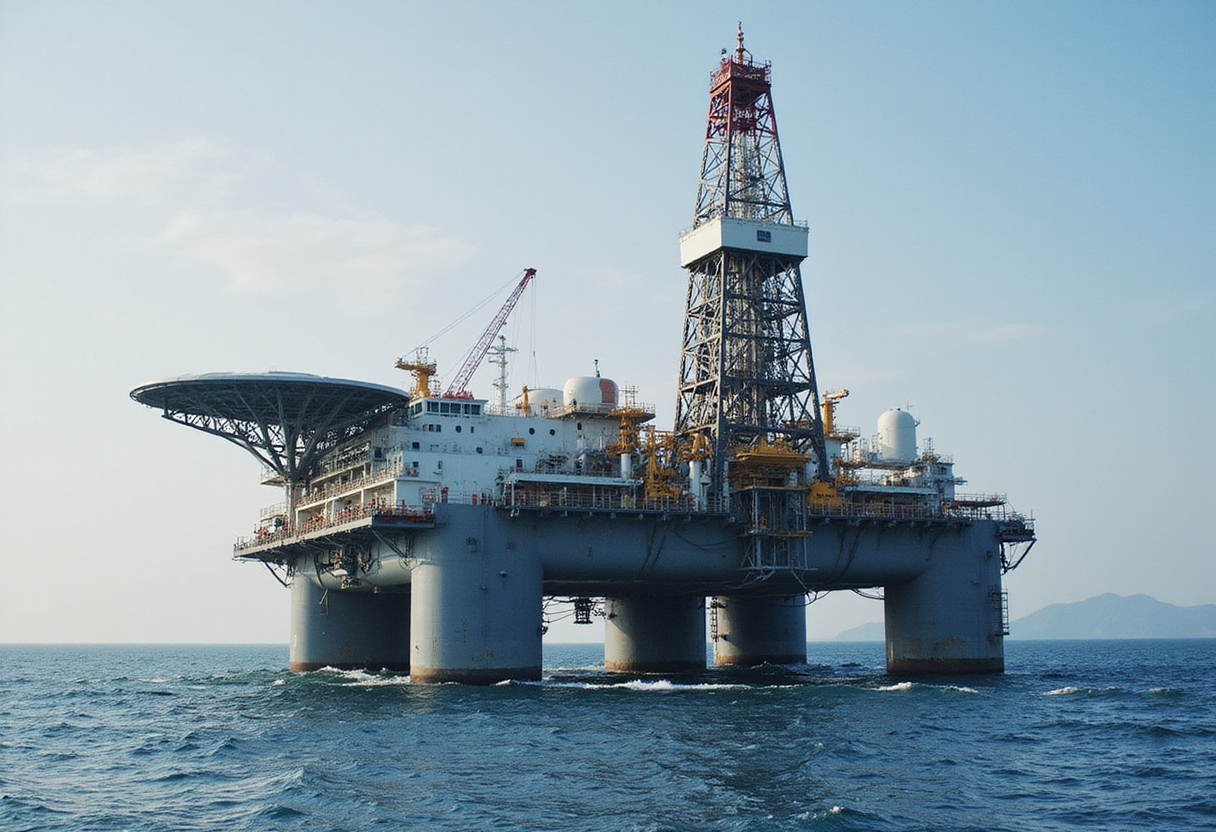
Transocean has added $1.1 billion to its offshore drilling backlog through new contract awards from Equinor and Shell, the rig owner reported, extending a run of deepwater commitments from two of the most active floating-rig customers in the market.
The figure lands in a backlog that already ranks among the largest in the floating segment, and it signals that supermajors and national-equity players are still willing to lock in high-spec drillships and semisubmersibles on multi-year terms rather than rely on spot coverage.
Who is contracting what?
Equinor and Shell, the two counterparties named in the awards, anchor portfolios spanning the Norwegian Continental Shelf, the US Gulf of Mexico, and Brazil's pre-salt corridor — basins where both companies have sanctioned or advanced subsea tieback and standalone developments over the past two years.
For Transocean, the contracts reinforce a customer base concentrated in basins where dayrates for sixth- and seventh-generation floaters have held above the levels that revived newbuild and reactivation interest across the sector.
What does $1.1 billion mean for the backlog?
The $1.1 billion addition is a booked figure, not revenue. Backlog at Transocean and peers such as Valaris and Noble measures the aggregate contract value of committed work, and investors track it as a proxy for forward cash flow visibility and pricing power.
Industry context matters here:
- Offshore drilling backlogs industry-wide have rebuilt steadily since the 2020–21 trough, when cancellations and renegotiations stripped billions of committed work from contractors' books.
- Term awards from Equinor and Shell have been among the largest single additions to that rebuild.
- Backlog growth gives contractors leverage in dayrate negotiations for remaining uncommitted rigs.
The company did not break out the split between the two awards, the rig assignments, or the contract durations in the announcement headline figure.
How does this fit the deepwater cycle?
Contract awards of this size typically reflect operators sequencing development drilling ahead of or alongside sanctioned projects, rather than exploration optionality. Equinor and Shell have both leaned on subsea tiebacks to existing infrastructure as the fastest route to production growth, which requires predictable rig availability over multi-well campaigns.
Analysts covering the offshore sector have attributed the strength in floater demand to tight supply of high-spec capacity — few new drillships have entered the market since the 2014–2020 ordering wave delivered its last units — combined with operators' preference for dual-activity and managed-pressure-drilling capable rigs.
Whether that pricing strength persists depends on how quickly operators convert discovered resources into sanctioned developments, and on whether any idle capacity returns to the marketed fleet.
What comes next?
The watch items are the rig-by-rig contract details — assignment, dayrate where disclosed, and start windows — in Transocean's next fleet status report, plus the pace of further term awards from Equinor and Shell across their respective portfolios. If backlog additions continue at this scale, the floater segment enters 2026 with the tightest forward cover it has held since the last cycle peak.
via Google News: Offshore drilling and FPSOs (Source)
More from Elena Vasquez
Adjoining reports
- Valaris Books Roughly $220 Million in New Offshore Drilling Backlog
- Seadrill Lines Up More Offshore Drilling Work for Three Rigs in US Gulf, Malaysia
- Valaris Books $220 Million in New Offshore Drilling Contracts
- Valaris Lands $220 Million in New Offshore Drilling Awards
- Framo signs Petrobras FPSO fleet service agreement