Well report No. RR-2576 · T14N · R17W · SEC 26 · filed November 4, 2026
Petroleum MarketsWell report
U.S. Crude Stocks Fall 900,000 bbl as Demand Runs 4.2% Above Last Year
U.S. crude stocks fell 900,000 bbl to 409.8 million bbl, 4% below the five-year average, while distillate inventories sit 13% under it and four-week demand runs 4.2% above last year.
Field notes
- U.S. crude inventories fell 900,000 bbl in the week ending Oct. 30 to 409.8 million bbl, 4% below the five-year average
- Distillate stocks dropped 3.6 million bbl and sit 13% below the five-year average
- Four-week total products supplied averaged 21.2 million bpd, up 4.2% year over year
- Brent traded at $100.71/bbl Wednesday morning, down $2.89 on the day and about $15 from a week earlier
- API had estimated a crude draw of 5.267 million bbl for the same week
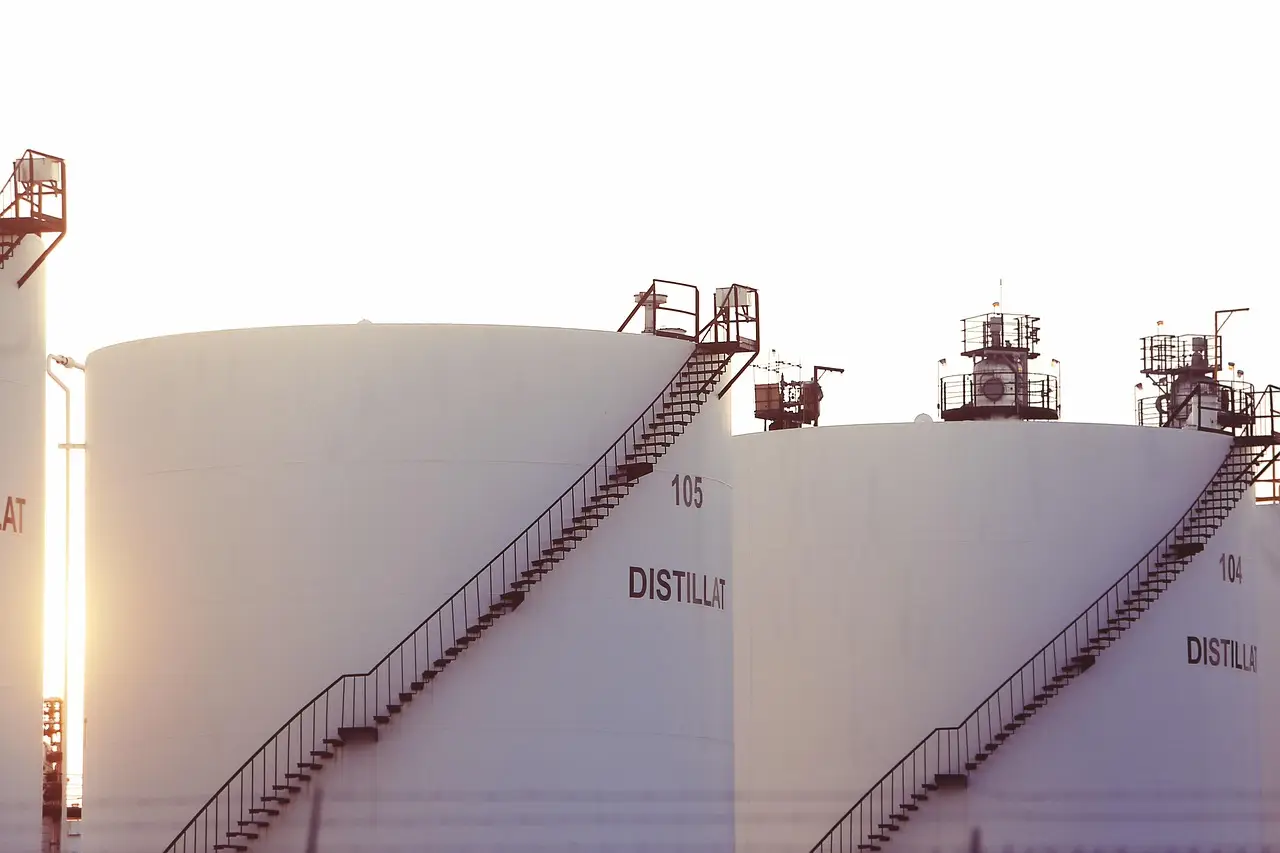
U.S. commercial crude inventories fell 900,000 barrels in the week ending October 30, bringing stockpiles to 409.8 million barrels — 4% below the five-year average for this time of year, according to U.S. Energy Information Administration data released Wednesday.
The draw, reported by the EIA in its weekly petroleum status report, marks a second consecutive signal of tightening U.S. balance. Total commercial petroleum inventories slipped by a far larger 8.2 million barrels over the reporting period.
How does the EIA figure compare with API?
The government number came in well below the private-sector estimate. The American Petroleum Institute reported a day earlier that crude inventories had fallen 5.267 million barrels for the same week.
A gap of more than 4 million barrels between the two surveys is wide but not unusual, and traders typically treat the EIA print as the settlement figure. For practitioners, the takeaway is simple: the direction is confirmed — stocks are drawing — even if the magnitude is smaller than API suggested.
What did refined product stocks do?
The product side carried the real news of the report.
- Gasoline: inventories decreased 200,000 barrels, after building 3.9 million barrels the prior week. Average daily gasoline production rose to 9.7 million barrels.
- Distillates: inventories fell 3.6 million barrels, with production declining to an average of 5.2 million barrels per day. Distillate stocks now sit 13% below the five-year average — the tightest corner of the U.S. barrel.
Falling distillate production alongside a heavy inventory draw points to refineries running hard while middle-of-the-barrel demand absorbs the output. The 13% deficit against the five-year average is the number heating-oil and diesel buyers will watch into winter.
Is demand actually holding?
Total products supplied — the EIA's proxy for U.S. oil demand — jumped to a four-week average of 21.2 million barrels per day, up 4.2% against the same period last year.
Gasoline demand averaged 8.6 million barrels per day over the four-week window. Distillate supplied averaged 4.2 million barrels per day, up 8.7% year over year — the strongest demand growth of any major product category and the direct counterweight to shrinking distillate stocks.
In plain terms: demand is not just holding, it is running ahead of last year, with distillate leading.
What are prices doing?
Futures sold off despite the draws. At 10:09 a.m. in New York on Wednesday, Brent traded at $100.71 per barrel, down $2.89 (-2.79%) on the day and roughly $15 per barrel below the same time last week. WTI fell $2.79 (-2.90%) to $93.30, down nearly $9 per barrel week-on-week.
The pullback frames the inventory report as analysis, not fact: analysts read the slide as demand-destruction and recession fears outweighing weekly stock data, with barrels down sharply over seven days even as U.S. balances tightened on paper.
The watch item is next Wednesday's EIA report — whether the distillate deficit against the five-year average widens further, and whether products-supplied growth above 4% holds as prices retreat from triple-digit Brent.
via OilPrice.com (Source)
More from James Calloway
Show full bio
Staff writer covering people, launches and day-to-day practice in Oil and gas industry operations and markets at Rig & Refinery.
609 articles
Adjoining reports
- U.S. Crude Inventories Drop 3.2 MMbbl in EIA Weekly Data
- US Crude Stocks Draw 8.6 Million Barrels, EIA Reports
- US Crude Stocks Fall 11.12 Million Barrels in a Week, API Says
- US crude stocks fall 1.9 million barrels as gasoline builds
- API Reports 1.019-Million-Barrel Crude Build, Distillates Keep Drawing