Well report No. RR-2377 · T21N · R17W · SEC 9 · filed October 10, 2026
Petroleum MarketsWell report
U.S. Weighs Diesel Export Restrictions as Prices Hit Record Highs
Record diesel prices have the White House examining export restrictions. Trump: "I've said let's not send out the diesel." The U.S. is the world's largest diesel exporter.
Field notes
- U.S. diesel prices are at record highs.
- President Trump endorsed restricting diesel exports this week.
- The United States is the world's largest diesel exporter.
- The administration is examining possible export restrictions; no rule has been announced.
- Farm-state lawmakers are pressing for action over soaring fuel costs.
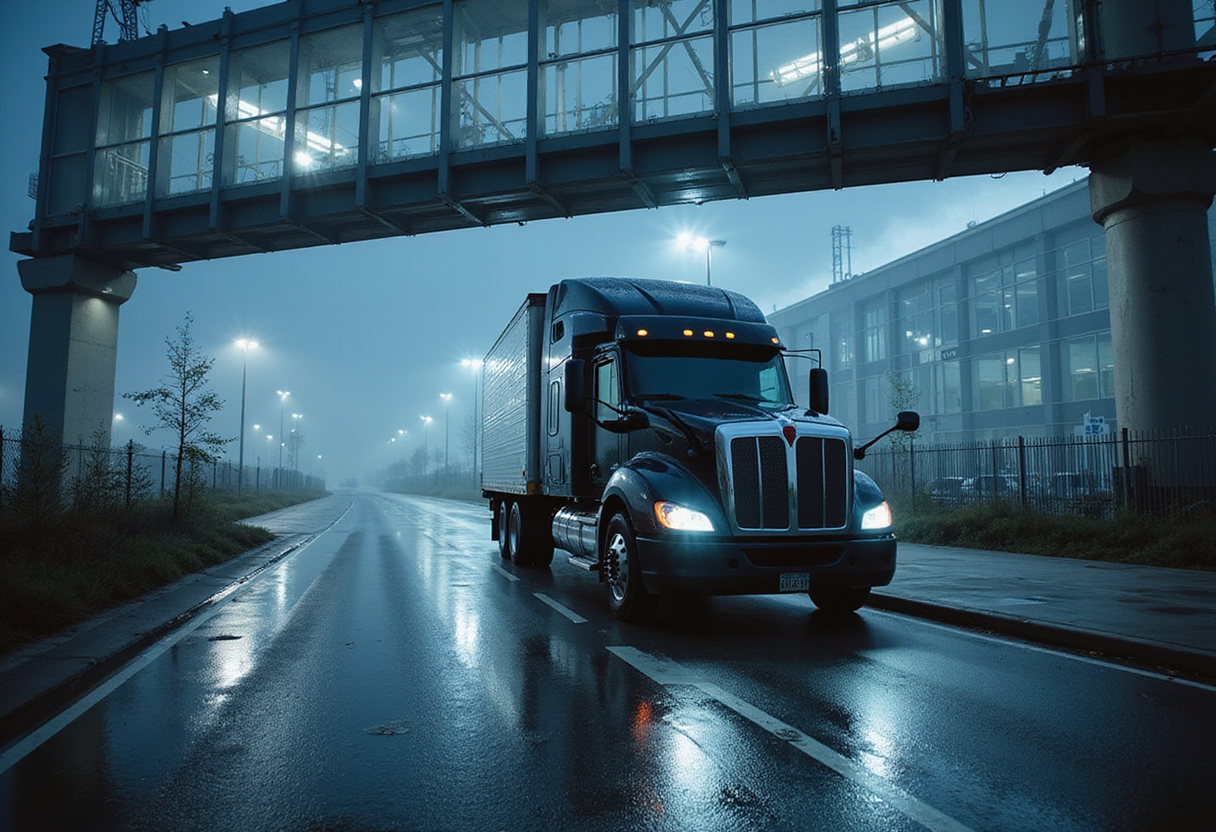
Diesel prices at record highs have pushed the White House toward examining export restrictions on the fuel, with President Donald Trump endorsing the idea this week and farm-state lawmakers pressing for action against soaring fuel costs.
The operational stakes are outsized: the United States is the world's largest diesel exporter. Any restriction on outbound cargoes would redirect product flows at a scale no other exporter could immediately replace, and the administration has not yet detailed what form a ban or limit would take.
"I've said let's not send out the diesel," Trump said this week, giving the most direct endorsement yet of a policy that until now has lived mostly in congressional complaints rather than executive action.
What is driving the export-ban debate?
The pressure comes from the demand side of the barrel. Farmers, truckers, and construction companies face record fuel costs, and those costs pass through to consumers. Restricting exports, on paper, keeps more American-made diesel at home and increases domestic supply.
The appeal to farm-state lawmakers is straightforward. Their constituents buy diesel at the pump and in bulk ahead of planting and harvest windows, and record prices land directly on their operating margins.
What would a ban actually change?
The logic of an export restriction rests on a simple supply arithmetic: hold domestic barrels in the domestic market, and price pressure eases. But the United States occupies the top rung of the global diesel export ladder, and that position cuts both ways.
Restricting exports would not simply redirect surplus barrels into U.S. tanks. It would rework the economics of the refining system itself — the same Gulf Coast and mid-continent complexes that produce export-grade diesel — and would force foreign buyers to bid for replacement barrels elsewhere.
The tradeoffs, as analysts framing the debate note, are hidden rather than absent. A policy designed to relieve domestic pump prices would test whether the world's largest exporter can wall off part of its product slate without distorting the incentives that built that export capacity in the first place.
Who is pushing, and how far has it gone?
The administration is examining possible restrictions. That is a study stage, not a sanctioned policy: no ban has been announced, no volume limit set, and no timeline published.
Farm-state lawmakers are the loudest constituency, responding to fuel costs that have climbed into record territory. Their pressure gives the White House a political reason to keep the option alive even as the mechanics remain undefined.
What comes next?
The watch items are three. First, the scope of any restriction — a full ban, a volume cap, or a licensing regime — which the administration has not specified. Second, the reaction of refiners and exporters, whose Gulf Coast loading schedules would be the first operational signal of any change. Third, the domestic price response itself: record highs are the metric that both triggered the debate and will judge the policy.
Until the White House converts examination into an actual rule, the world's largest diesel export machine keeps running as built.
via spglobal.com (Original)