Well report No. RR-4809 · T19N · R22W · SEC 31 · filed October 10, 2026
Refining & PetrochemicalsWell report
Uganda crude oil refinery facility crosses 99% complete
Uganda's crude oil refinery facility has crossed 99% complete, according to APAnews, putting the project at the threshold of mechanical completion and the start of commissioning activities.
Field notes
- Uganda's crude oil refinery facility has crossed 99% complete, per APAnews
- The report did not name the operator, capacity, construction cost, or equity participants
- Mechanical completion is the standard hand-off point between contractor and commissioning team
- Refinery projects of comparable size typically require a 6-12 month commissioning window
- Watch items: commissioning schedule, first-crude date, supply agreement, and offtake terms
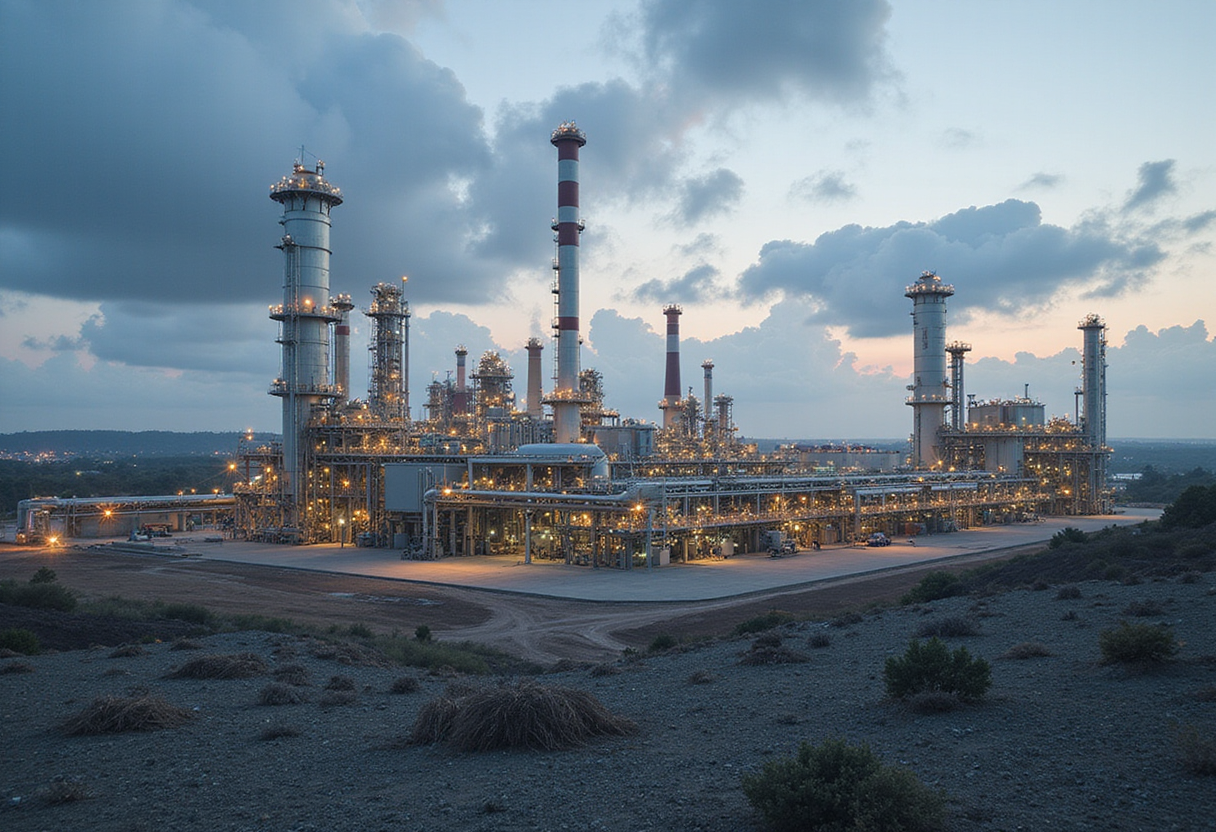
Construction of Uganda's crude oil refinery facility has crossed 99% complete, according to a report from APAnews. The reading places the project at the threshold of mechanical completion, the standard hand-off point between the construction contractor and the commissioning team on a greenfield refinery of this scale.
What does the 99% mark signal?
A refinery construction reading above 99% typically indicates that bulk civil, mechanical, and electrical works have closed out, with the residual scope absorbed by punch-list items, vendor documentation, and final instrumentation loops. In EPC contract terms, this is the run-up to mechanical completion, the milestone that triggers the contractor's performance guarantees and the operator's right to take possession of the systems. Projects of comparable footprint normally move from that point into pre-commissioning and commissioning across a 6-12 month window, the duration driven by the complexity of the process units, the readiness of utilities and off-site packages, and the depth of operator pre-start-up training.
The transition from construction to commissioning is the highest-risk phase of a greenfield refinery. Operators historically trace a large share of unplanned downtime in the first 18 months of operation back to commissioning shortcuts or incomplete loop checks.
What comes next
After the contractor declares practical completion, the operator's commissioning team takes ownership of the systems in a defined sequence: utilities first, then product handling, then the main process units. The utilities block — power, steam, water, instrument air, and flare — must be stable before the main process trains can be brought online. Feedstock introduction is the milestone that resets the project calendar, followed by performance testing against nameplate throughput and product yield. The first 30-60 days of feedstock introduction typically operate at reduced throughput, with the operator throttling back to manage system response and tune process control loops before ramping toward design rates.
What the report did not say
The APAnews report did not name the operator, the nameplate capacity, the construction cost, or the equity participants behind the Uganda facility. The piece carried no timeline for the remaining 1% of works, no commissioning date, and no first-crude forecast. Trade-press readers tracking the project will need to wait for the operator's formal announcement before any of these gaps close.
Watch items
- The operator's commissioning schedule and the formal handover date
- The first-crude introduction date
- The crude supply agreement tying the facility to upstream production
- Off-take arrangements for refined products into Uganda and the regional market
- The funding structure of any remaining works
- The status of any associated storage, jetty, or pipeline tie-ins
Trade-press framing
For Uganda, the move from construction to commissioning is the most-watched step on the downstream calendar. A working refinery would shift the country from a crude-export-only model to a hybrid that retains a share of value-added processing onshore, a transition that hinges on the operator's ability to deliver consistent product quality and secure offtake at a margin that competes with regional imports. The next trade-press trigger is the operator's commissioning schedule. Until that drops, the 99% reading is the headline and the start-up date is the story. The narrower question — who runs the plant, at what capacity, and on what crude slate — remains unanswered in the public domain.
via Google News: Refineries and petrochemicals (Source)
More from Daniel Okafor
Show full bio
Market editor covering consumer brands and retail at Rig & Refinery.
321 articles
Adjoining reports
- Bids in for main EPC on Libya's 30,000 bpd South Refinery
- EACOP startup slips to June 2027 as Uganda pipeline hits fresh delay
- Saudi Arabia Aims to Restart Half of Key Oil Pipeline Within Days
- Iraq-Syria Oil Pipeline Construction Could Begin First Quarter 2027
- EIL Tapped to Execute Dangote Greenfield Refinery in Kenya