Well report No. RR-5327 · T13N · R31W · SEC 25 · filed October 10, 2026
Petroleum MarketsWell report
Ukraine Strikes Russian Refinery as Kremlin Rejects Energy Truce
A Ukrainian strike has hit a Russian oil refinery as the Kremlin rejects an energy truce ahead of winter, Kyiv Post reported. Site, capacity and date were not disclosed in the headline item, leaving downstream impact unquantified.
Field notes
- Ukraine struck a Russian oil refinery, per a Kyiv Post headline item; the specific site, capacity and date were not disclosed.
- Moscow rejected an energy truce proposed ahead of the November–March heating season.
- Russian refining throughput runs roughly six million barrels per day of crude across the national fleet.
- A typical refinery strike removes an estimated 50,000–300,000 bpd of throughput depending on units damaged.
- Russian domestic demand for heating oil and diesel peaks between November and February.
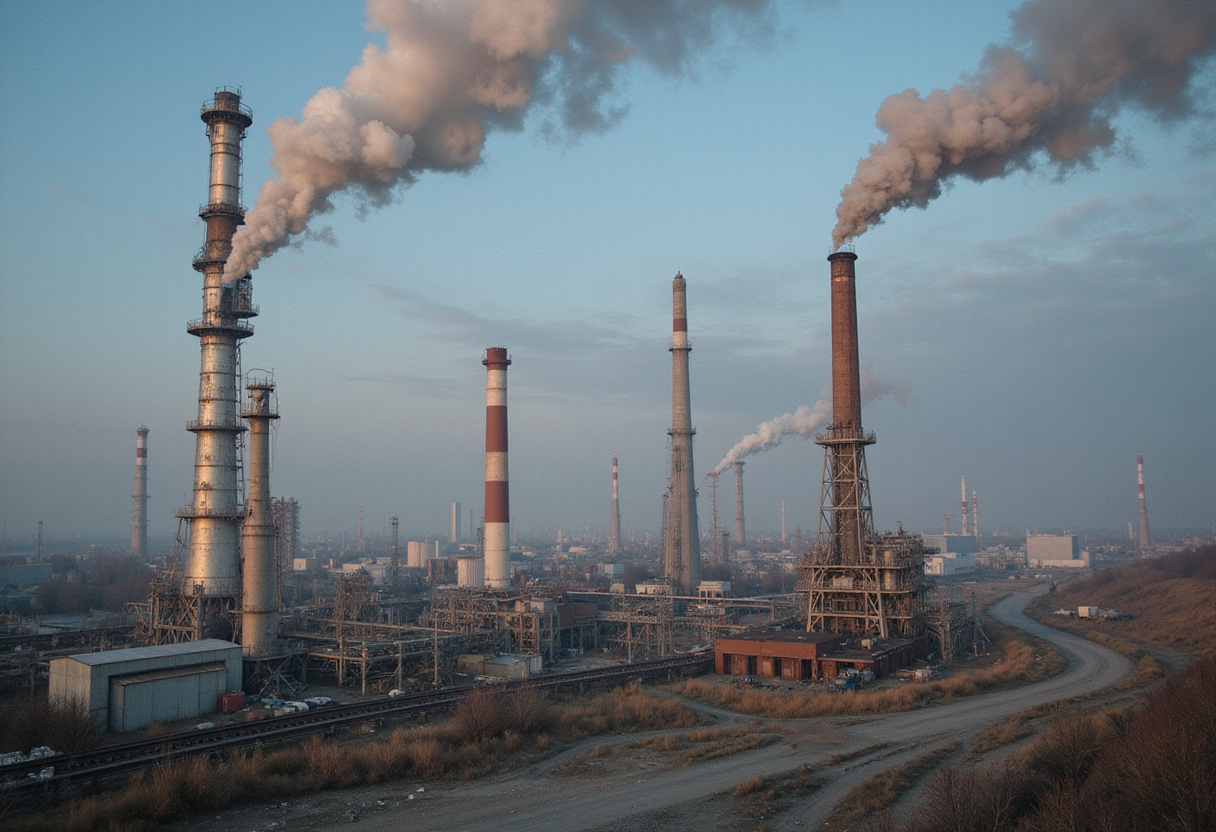
A Ukrainian strike has hit a Russian oil refinery as the Kremlin rejects an energy truce proposed ahead of the winter heating season, Kyiv Post reported. The outlet did not name the refinery, region, capacity or date in its headline item, leaving the operational impact on Russian downstream product supply unspecified. Trade desks tracking Black Sea and Baltic product flows will watch for follow-up reporting identifying the site, the throughput loss, and any halt to crude unit operations.
What is the "energy truce" Moscow is resisting?
The term refers to mutual restraint on energy infrastructure strikes — power generation, transmission, refining and storage. It functions as a confidence-building measure timed to peak winter demand. Russian domestic demand for heating oil and diesel peaks between November and February, and refined product inventories typically draw through the first quarter.
Russian refineries schedule turnarounds in spring and early autumn to free capacity for winter-grade distillate production. That timing leaves October and November outages particularly sensitive to unplanned downtime, since spare capacity in the system tends to shrink as units return to service ahead of cold-weather demand.
Why a refinery hit matters heading into winter
Russia runs roughly six million barrels per day of crude through its refinery network. That fleet supplies diesel, heating oil, gasoline and jet fuel for domestic consumption and for export to buyers across the Mediterranean, the Baltic, and Asia via ESPO pipeline loadings and seaborne shipments.
A single refinery strike typically removes between 50,000 and 300,000 bpd of throughput. The exact loss depends on which processing units sustain damage — atmospheric and vacuum distillation columns, fluid catalytic crackers, hydrotreaters — and on the time required for repair and safe restart. With no capacity figure in the headline item, the immediate impact on Russian diesel, gasoil and heating oil availability remains unquantified.
Trade flows to Turkey, India and other buyers of Russian seaborne product could tighten if the affected unit sits inside one of the export-oriented clusters — Black Sea terminals, southern Russia, or Volga-region sites. Russian diesel exports typically climb into October as the heating season pulls domestic product inland, leaving export availability sensitive to any unplanned refinery downtime.
The Kremlin's calculus on a truce
Moscow's reported resistance to an energy pause puts the operational calculus alongside the political one. Ukrainian strikes on Russian refining capacity have continued throughout 2024 and 2025 as part of a deliberate effort to erode the revenue base funding the conflict. Russia has reciprocated with attacks on Ukrainian power and gas infrastructure.
The winter truce concept has surfaced periodically in third-party mediation tracks — Turkish, Gulf-state, and to a lesser extent Chinese — without producing a binding arrangement. Past proposals have typically covered reciprocal halts to long-range strikes on power stations, refineries and fuel depots for the November-to-March heating season.
Watch items
- Site identification: Kyiv Post's full text should name the refinery, the region and the processing units damaged. Russian refining assets have absorbed strikes on more than a dozen occasions since the start of 2024.
- Throughput impact: Any disclosed daily capacity loss, unit restart timing, and the operator's plan to balance crude runs across the remaining fleet.
- Product export flows: Whether seaborne diesel and gasoil loadings from Black Sea and Baltic ports adjust on the November-January schedule, and whether Russian export duties shift in response.
- Domestic supply: Whether the Russian energy ministry orders any drawdown from strategic product stocks or alters the export duty schedule to keep heating oil inventories intact.
- Diplomatic track: Whether the rejected truce proposal resurfaces in upcoming multilateral contacts, and whether either side offers reciprocal terms.
For trade desks, the combination of a refinery strike and the rejection of an energy pause ahead of the heating season resets the watchlist on Russian product balances. The next 72 hours of source reporting will determine whether the strike registers as a marginal operational event or a material disruption to winter distillate supply and export flows.
via Google News: Refineries and petrochemicals (Source)
More from Priya Raman
Show full bio
Senior reporter covering media and advertising at Rig & Refinery.
420 articles