Well report No. RR-8766 · T8N · R8W · SEC 8 · filed October 10, 2026
Petroleum MarketsWell report
Venezuela Weighs Leaving OPEC as US Talks Target Oil Field Stakes
Venezuela is weighing an exit from OPEC while discussing a U.S. stake in its oil fields, The Japan Times reported — a founding member's potential departure from the group.
Field notes
- Venezuela is weighing an exit from OPEC, The Japan Times reported.
- Caracas and Washington are discussing a U.S. stake in Venezuelan oil fields.
- Venezuela has been an OPEC member since the group's founding in 1960.
- The report names no specific fields, companies, ownership shares, or timeline.
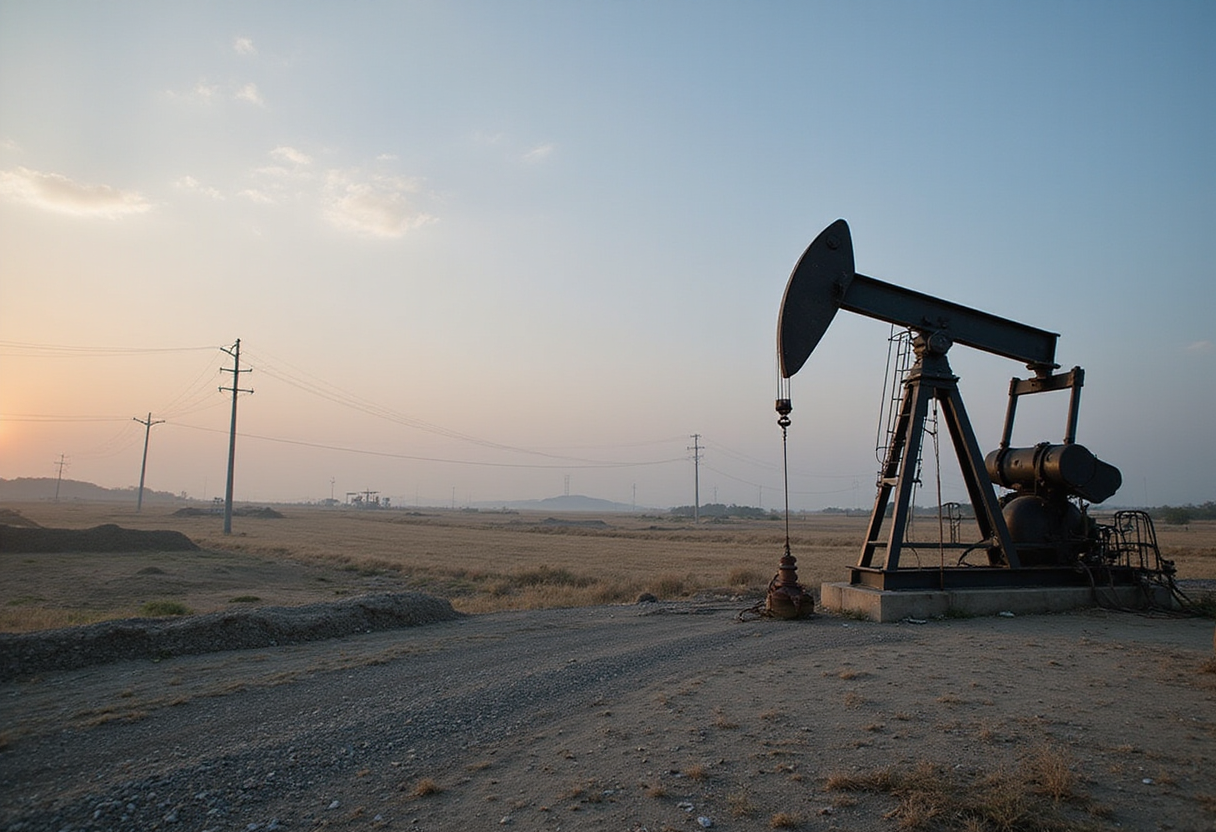
Venezuela is weighing an exit from OPEC, The Japan Times reported, while the country simultaneously discusses a U.S. stake in its oil fields — a pairing that, if carried through, would reshape both the producer group's composition and the ownership structure of the world's largest proven crude reserves.
The report gives no timeline for a membership decision and names no specific fields under discussion. But the two tracks — possible departure from the 12-member producer group and negotiation over U.S. participation in Venezuelan upstream assets — signal a potential break with more than six decades of Caracas anchoring its oil policy inside the cartel it co-founded in 1960.
What would an exit from OPEC mean?
Venezuela has been a founding member of OPEC since the organization's creation in 1960. Leaving would remove the holder of the largest proved oil reserves in the group from its quota framework — though Venezuela's actual output has long sat far below its allocation, a legacy of underinvestment, sanctions, and operational decline in the Orinoco Belt and Lake Maracaibo.
For OPEC, the departure would be largely symbolic in volume terms. For Venezuela, it would mark a policy reorientation. Membership has bound Caracas to coordinated production decisions taken largely by Gulf producers; an exit would free the country to pursue output and export arrangements — including with U.S. counterparties — without reference to group strategy.
The Japan Times report attributes the membership review to Venezuelan deliberations, not to any decision already taken. No OPEC statement on the matter appears in the reporting.
What do the oil field talks involve?
The second strand of the story is the discussion between Venezuela and the United States over a stake in Venezuelan oil fields. The report does not specify which blocks, which companies, or what ownership share is on the table.
The prospect of U.S. participation in Venezuelan fields reverses years of sanctions-driven exclusion. Under the previous licensing framework, Washington had granted individual companies narrow authorizations to operate in Venezuela, and revoked others. A direct U.S. government-linked or corporate equity stake would go substantially further than any recent arrangement.
Field-level talks of this kind would most plausibly touch the Orinoco Belt heavy-oil projects and joint-venture structures in the Maracaibo region, where most of Venezuela's productive capacity sits. The report itself does not confirm specific assets.
Why the two issues travel together
Analysts cited in the trade press have long argued that Venezuela's OPEC membership is increasingly a formality given its constrained output. The Japan Times report now raises the possibility that Caracas views the membership question as negotiable in the context of a broader accommodation with Washington over oil field access.
Any deal granting U.S. interests a stake in Venezuelan production would require sanctions relief and a legal framework for investment — and, in the scenario the report describes, could coincide with Venezuela charting an oil policy outside the OPEC umbrella.
The report does not quote named officials on either side, and neither the Venezuelan oil ministry nor OPEC has confirmed the deliberations.
The watch items
Three things to monitor. First, any formal Venezuelan notification to OPEC on membership — the step that would convert deliberation into decision. Second, identification of the fields and counterparties in the U.S. stake discussions, which would signal whether the talks concern specific Orinoco or Maracaibo projects or a broader framework. Third, the U.S. sanctions and licensing actions that would have to precede any equity transfer. Until those pieces move, the story remains at the deliberation stage, not the deal stage.
via Google News: OPEC and oil markets (Source)
More from Daniel Okafor
Show full bio
Market editor covering consumer brands and retail at Rig & Refinery.
335 articles
Adjoining reports
- Venezuela Weighs OPEC Exit While US Discusses Oil Field Stake
- Venezuela weighs OPEC exit as producer alliance faces new strain
- Caracas Hosts First Major Oil Summit as Venezuela Reopens to Foreign Investors
- Venezuela Revival Would Need Over $100 Billion, Analysis Finds
- Venezuela's 65 Billion Barrels Anchor Case For Oilfield Services Stocks