Well report No. RR-8784 · T20N · R39W · SEC 20 · filed October 2, 2026
Midstream & PipelinesWell report
Canada Fast-Tracks Pacific Oil Pipeline to Cut US Dependence
Ottawa moves to accelerate a new Pacific Coast crude pipeline, aiming to break Canada's reliance on the US as the sole buyer of its oil exports.
Field notes
- Canada is fast-tracking a proposed oil pipeline to the Pacific coast to reduce dependence on the US market
- Nearly all Canadian crude exports currently go to US refineries
- No capacity, route, or operator details for the proposed line have been announced
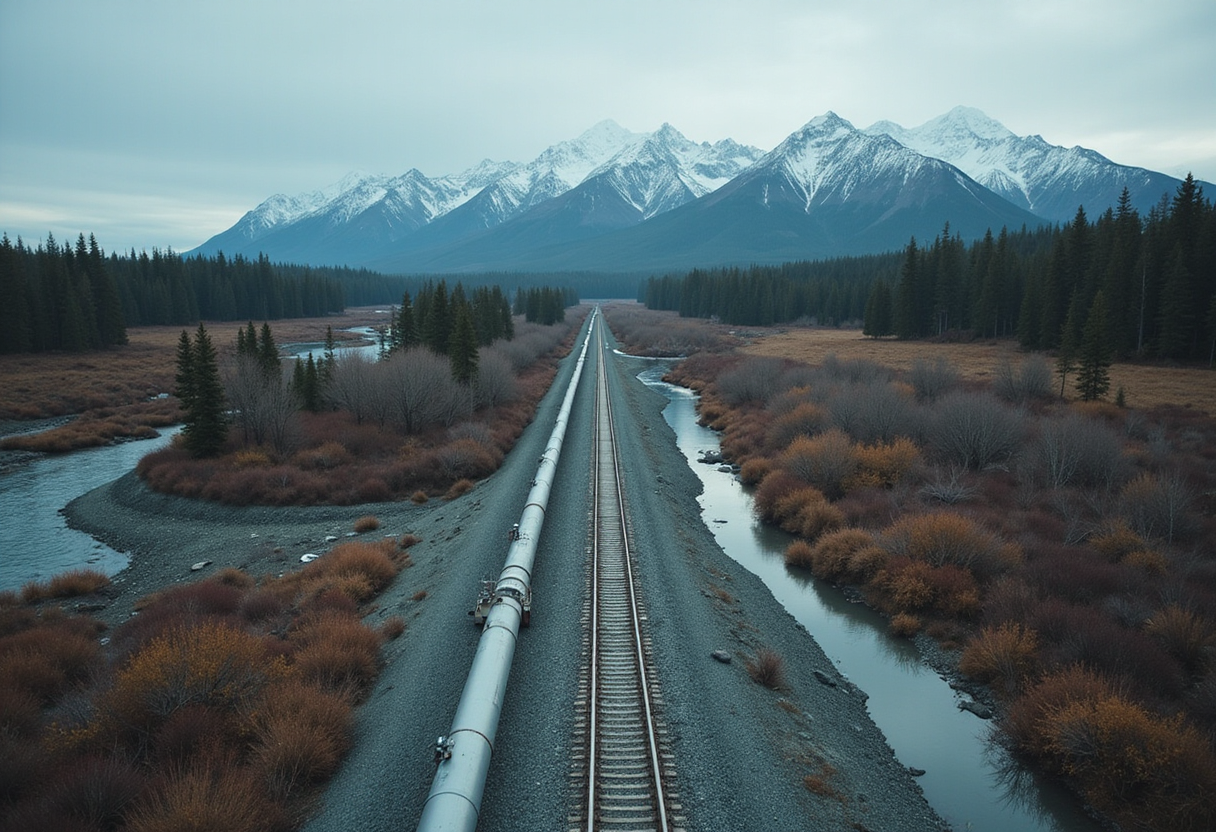
Canada is fast-tracking a proposed oil pipeline to the Pacific coast, an effort to reduce the country's near-total dependence on the US market for its crude exports.
The plan, reported by AOL.com citing federal initiatives, would give Canadian producers a second outlet to tidewater on the West Coast. Today, virtually all Canadian crude exports flow to US refineries, leaving producers exposed to a single buyer and to the discount that concentrated market access imposes on heavy barrels.
The push carries echoes of the Trans Mountain expansion debate. Ottawa bought the existing Trans Mountain line from Kinder Morgan in 2018 for C$4.5 billion when the previous owner threatened to walk away over regulatory and political risk. The twinning project added 590,000 bpd of capacity when it started up in May 2024, roughly tripling throughput on the line from Edmonton to Burnaby, British Columbia.
A new Pacific pipeline would extend that logic. Any second West Coast line would need a corridor through British Columbia — the province whose opposition delayed Trans Mountain for years — and would face the same questions of Indigenous consultation, municipal permitting, and environmental review that drove up Trans Mountain's final cost to roughly C$34 billion.
For producers in the Alberta basin, additional tidewater access matters directly for netbacks. Western Canadian Select has traded at wide discounts to West Texas Intermediate when pipeline capacity ran tight, and any disruption to US-bound flows now has no alternative route at scale beyond Trans Mountain.
On the refining side, the calculus cuts the other way. US Gulf Coast and Midwest refineries configured for heavy Canadian crude depend on those barrels; a diverted volume would test their willingness to pay full market price rather than discounted levels.
The fast-track designation signals Ottawa's intent to shorten regulatory timelines, though no capacity figure, operator, or route has been specified for the proposed line. Whether the project attracts private capital after Trans Mountain's cost overruns — or requires federal backing again — remains the central commercial question.
Watch for: the pipeline's stated capacity and route, the regulatory schedule Ottawa attaches to the fast-track designation, and any producer commitments behind the line.
via Google News: Pipelines and midstream (Source)
More from Daniel Okafor
Show full bio
Market editor covering consumer brands and retail at Rig & Refinery.
122 articles
Adjoining reports
- Canada Moves to Fast-Track New West Coast Oil Pipeline
- Ottawa to Fast-Track Crude Pipeline Aimed at Non-US Markets
- Canada to Fast-Track Oil Pipeline Aimed at Reducing US Export Dependence
- Ottawa Fast-Tracks Pacific Oil Pipeline as Alberta Separation Vote Nears
- Ottawa Faces Deadline on West Coast Pipeline Fast-Track Decision