Well report No. RR-9583 · T13N · R2W · SEC 13 · filed October 10, 2026
Gas & LNGWell report
Canada's First Major LNG Export Terminal Eyes Capacity Doubling
Canada's first major LNG export terminal plans to double its capacity, expanding its Pacific export footprint and lifting feedgas demand in the supplying basin.
Field notes
- Canada's first major LNG export terminal plans to double its capacity
- The expansion would be the facility's second major growth phase
- A capacity doubling would require additional trains, storage, and marine loading capacity
- The project requires FID, offtake contracts, and regulatory approvals before proceeding
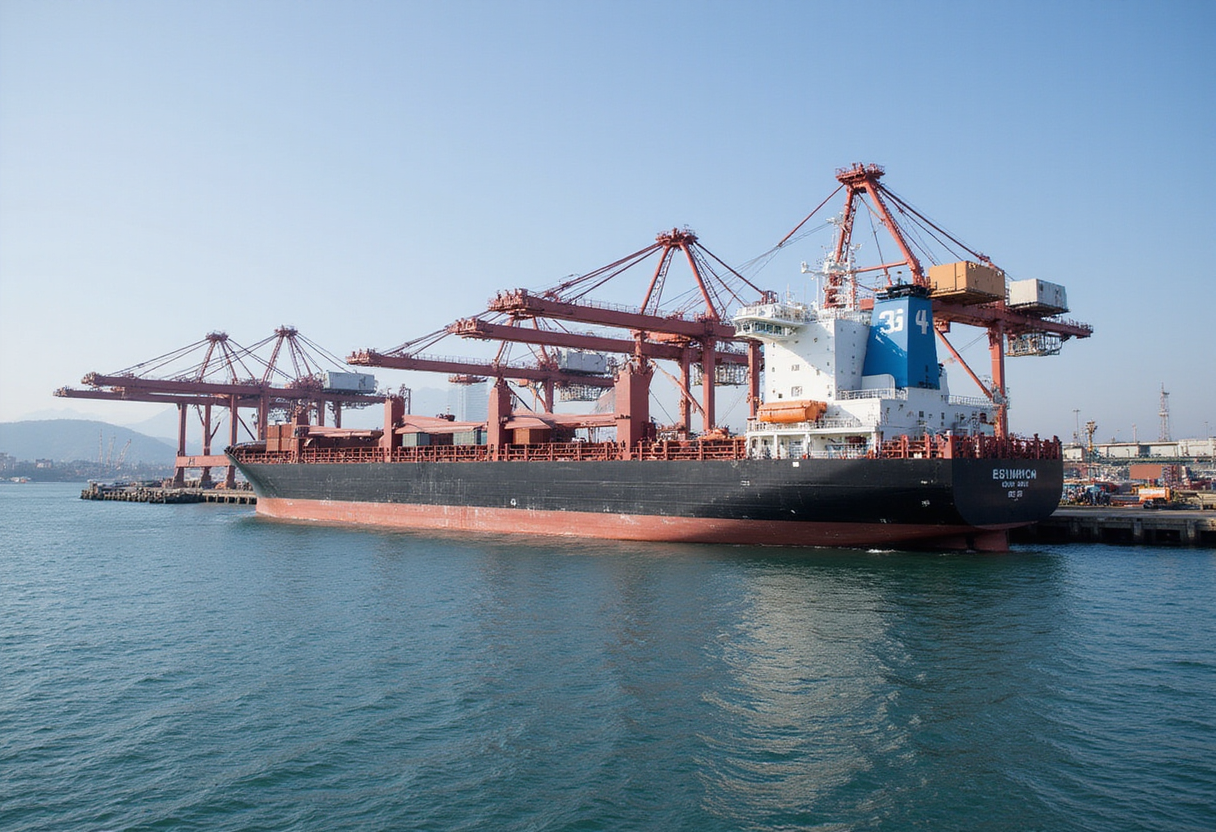
Canada's first major LNG export terminal plans to double its capacity, a move that would significantly expand the country's foothold in the global liquefied natural gas trade barely after it entered the market.
The planned expansion marks the second growth phase contemplated for the facility, which holds the distinction of being Canada's first large-scale LNG export operation. For a country that sat on some of the world's largest gas resources while watching the US Gulf Coast build out liquefaction capacity for a decade, the startup of the terminal was a structural shift — and the expansion plan signals the operator sees room for considerably more.
What does the expansion plan change?
Doubling capacity at a liquefaction complex is not a marginal debottlenecking exercise. An expansion of that scale effectively proposes a second project of equivalent size to the first, with everything that entails: additional liquefaction trains, expanded feedgas pipeline throughput, more storage tankage, and a larger jetty or loading schedule at the marine terminal.
Each of those elements carries its own permitting, engineering, and procurement timeline. Companies typically move from a stated intention to a final investment decision only after securing the commercial foundation — long-term offtake agreements covering the bulk of the new volume — and the regulatory approvals that govern both the plant footprint and the upstream supply chain feeding it.
For gas producers in the supplying basin, the difference between the original configuration and a doubled one is the difference between one demand anchor and two. Feedgas requirements would rise roughly in proportion to the added liquefaction capacity, pulling incremental volumes through gathering systems and trunklines that were sized for the first phase.
Why is the timing significant?
Canada arrived late to LNG exports. While US terminals on the Gulf Coast and East Coast locked in long-term contracts with Asian and European buyers years ago, Canadian gas largely flowed to domestic and US markets. The first terminal's startup changed that equation, giving Western Canadian gas a direct route to tidewater and, from there, to Pacific Basin buyers.
An expansion proposal arriving this early in the facility's operating life reads as a vote of confidence in both the plant's performance and the demand outlook. Buyers in Japan, South Korea, China, and Southeast Asia have continued contracting for new LNG volumes, and European importers have added procurement flexibility since losing Russian pipeline supply.
The operator now joins a cohort of North American developers betting that demand growth through the end of the decade will absorb new supply. That is contested ground: analysts are split on how quickly gas demand expands in power generation and industry, and price commentary from forecasters remains analysis, not established fact.
What stands between the plan and steel in the ground?
A capacity-doubling plan at this stage is a sanctioned-intent item, not a sanctioned project. The sequence ahead is familiar to anyone tracking liquefaction builds:
- Final investment decision, contingent on offtake coverage for the expanded volumes
- Regulatory review covering plant, pipeline, and marine works
- Engineering, procurement, and construction contracting
- Mechanical completion, commissioning, and first cargo from the new trains
History argues for schedule realism. Greenfield and expansion liquefaction projects across North America have repeatedly run past initial timelines amid labor constraints and contractor bottlenecks, and an expansion at an operating site still competes for the same specialized fabrication and construction resources as every other project on the continent's LNG books.
The watch items are concrete: the FID date the operator commits to, the volume of long-term offtake it signs for the added capacity, and the regulatory milestones that follow. Until those land, the doubling remains an ambition attached to a plant that has already made history once.
For Canadian gas, the stakes are straightforward. The first terminal proved the corridor works. The second phase, if sanctioned, determines whether Canada becomes a durable LNG supplier or a single-project participant in a market its neighbors dominate.
via Google News: LNG export terminals (Source)
More from Daniel Okafor
Show full bio
Market editor covering consumer brands and retail at Rig & Refinery.
335 articles
Adjoining reports
- LNG Canada Plans to Double Output at British Columbia Terminal
- LNG Canada Sets Course to Double Output at Kitimat Terminal
- LNG Canada Lines Up Output Doubling at British Columbia Terminal
- LNG Canada Weighs Doubling Capacity at Kitimat Export Terminal
- Canada's First Major LNG Terminal Eyes Capacity Doubling