Well report No. RR-6828 · T18N · R32W · SEC 30 · filed October 10, 2026
Midstream & PipelinesWell report
Carney tags West Coast pipeline as Canada's first national-interest project
Prime Minister Mark Carney has designated a West Coast pipeline as Canada's first national-interest project, putting it on a federal fast-track alongside LNG terminals and critical-mineral facilities.
Field notes
- Prime Minister Mark Carney designated a West Coast pipeline as Canada's first national-interest project.
- The designation falls under a federal framework intended to compress environmental, Indigenous-consultation and interprovincial review timelines.
- The Toronto Star report did not name the operator, route, capacity or in-service date.
- West Coast proposals in front of regulators serve Woodfibre LNG, Cedar LNG and Ksi Lisims LNG near Kitimat, BC.
- The Major Projects Office is expected to publish operator, capacity and route details within weeks.
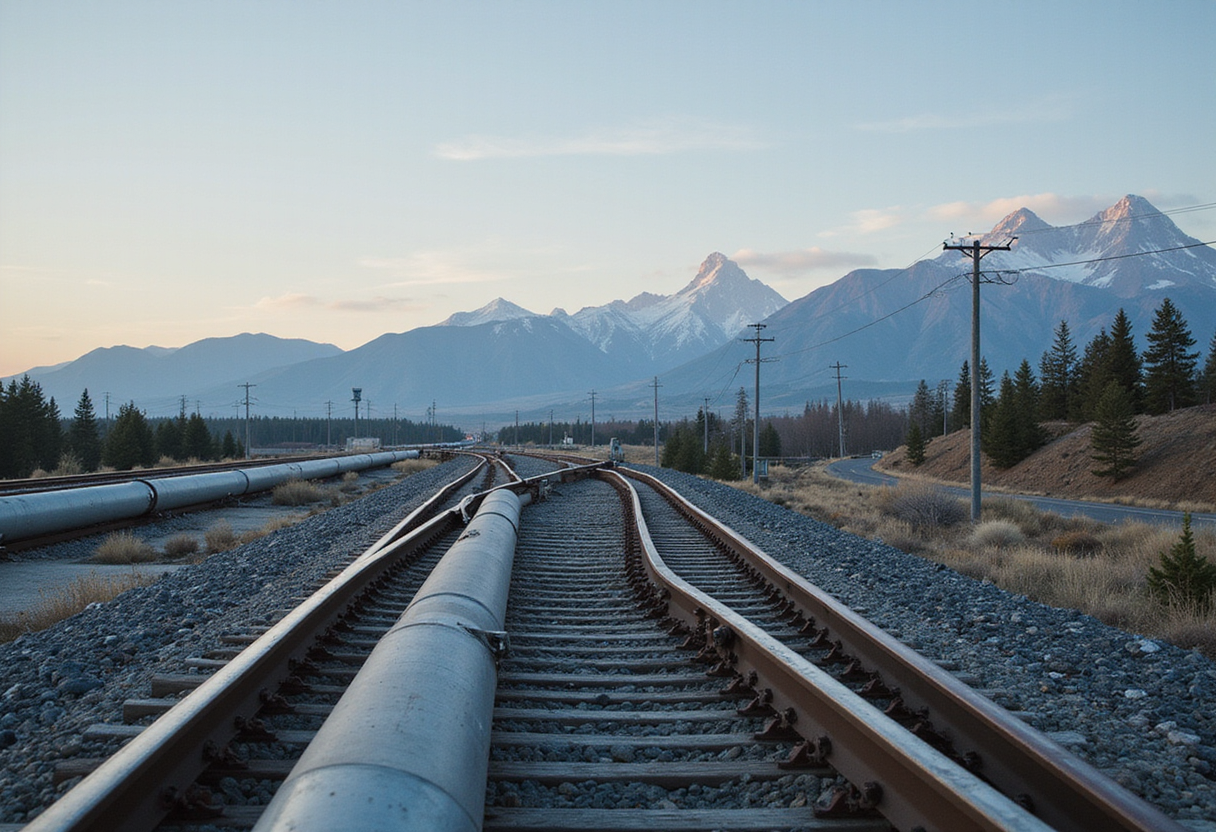
Prime Minister Mark Carney has designated a West Coast pipeline as Canada's first national-interest project, a federal status designed to fast-track approvals for strategically significant energy infrastructure.
The project, identified only as a "West Coast pipeline" in the Toronto Star report, becomes the inaugural recipient of a classification Carney's government introduced to compress permitting timelines on developments it treats as critical to Canada's resource economy. The label places the pipeline inside a coordinated federal framework covering environmental assessment, Crown consultation duties, and interprovincial regulatory alignment.
What does the designation change?
For proponents, the practical effect is a shortening of the path from regulatory filing to construction notice. Pipelines in Canada typically navigate a fragmented review that includes the Canada Energy Regulator, the Impact Assessment Agency of Canada, and provincial permitting authorities, with Indigenous consultation duties running on parallel tracks. The national-interest framework consolidates those streams into a single federal window with mandated milestones and a named federal project lead.
Industry has long argued that the multi-agency approach produces duplicative hearings, particularly for projects that cross provincial boundaries or intersect with multiple First Nations treaty territories. The new tag is the federal response.
What project is it?
The announcement does not name the operator, route, capacity, or commissioning date. The Toronto Star headline refers only to a "West Coast pipeline," leaving open whether the line feeds an operating LNG export terminal on the British Columbia coast, supports a proposed floating LNG development, or carries Montney or Duvernay-sourced gas from northeastern BC and northwestern Alberta to a tidewater point.
West Coast pipeline proposals currently before federal regulators include gathering and transmission lines serving the under-construction Woodfibre LNG, the proposed Cedar LNG and Ksi Lisims LNG developments near Kitimat, and expansions to existing systems that already deliver Montney-sourced gas to the coast. The Carney government has not clarified which proposal the national-interest tag covers. Proponents of competing projects will seek parallel designation.
What is the watch item?
The follow-on filings from the Major Projects Office — expected within weeks — will identify the operator, capacity in million cubic feet per day or barrels per day, route length in kilometres, and the binding regulatory calendar. Until those numbers appear, the announcement functions as a political signal rather than a sanctioned project.
For LNG offtakers on the BC coast, the move is a procurement signal. A confirmed pipeline offtake path allows buyers to lock long-term supply without the construction-timing risk that has stalled several West Coast LNG proposals over the past decade. For Montney and Duvernay producers, the announcement removes one layer of uncertainty around a tidewater egress route, although downstream treating, loading, and shipping remain separate workstreams.
Industry reaction will be the next indicator. Major pipeline operators — Enbridge, TC Energy, and smaller midstream specialists active in the BC corridor — will be watching for confirmation of which line has been tagged and whether the designation extends to associated gathering systems, storage, and compression that typically form part of any integrated West Coast delivery package.
via Google News: Pipelines and midstream (Source)
More from Priya Raman
Show full bio
Senior reporter covering media and advertising at Rig & Refinery.
395 articles
Adjoining reports
- Carney Set to Tag West Coast Pipeline as Project of National Interest
- Carney Invokes New Powers to Fast-Track Pacific Oil Pipeline
- Carney Fast-Tracks West Coast Oil Pipeline With New Powers
- Ottawa tags Pacific Link pipeline as project of national interest
- Canada designates Pacific Link pipeline a project of national interest