Well report No. RR-3255 · T15N · R41W · SEC 27 · filed October 10, 2026
Midstream & PipelinesWell report
Chevron Books $3-4 Billion Writedown on Hess Midstream Exit
Chevron will absorb a $3-4 billion writedown as it exits Hess Midstream, trimming Bakken infrastructure inherited in its $53 billion Hess acquisition.
Field notes
- Chevron taking a $3-4 billion charge on its exit from Hess Midstream.
- The midstream position came with Chevron's roughly $53 billion acquisition of Hess Corp.
- Hess Midstream was spun out of Hess in 2019 and serves the Bakken/Williston Basin.
- The Hess deal closed after Chevron prevailed in arbitration over the Guyana Stabroek stake.
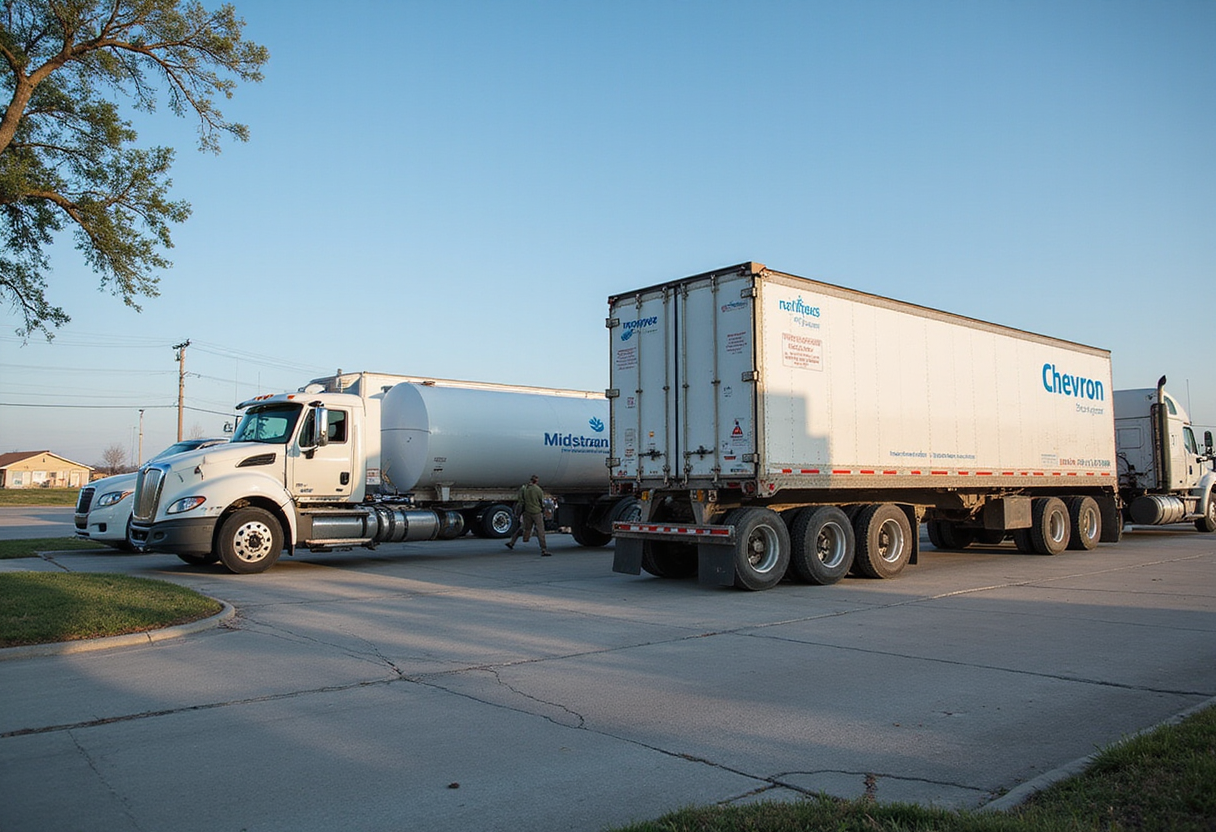
Chevron will take a $3-4 billion charge as it moves to offload Hess Midstream assets, a writedown disclosed as the company continues digesting its acquisition of Hess Corp. The scale of the hit places the exit among the larger single-asset impairments booked by a US supermajor this cycle.
The announcement lands months after Chevron closed its roughly $53 billion acquisition of Hess, a deal that brought Bakken shale positions in North Dakota alongside a 30% stake in Guyana's Stabroek block. Hess Midstream — the publicly traded pipeline and terminal operator spun out of Hess in 2019 — came with the package. Chevron has now signalled it does not intend to keep it.
What does the writedown actually cover?
The $3-4 billion charge reflects the gap between the carrying value of Chevron's midstream position and the value the company now assigns it as it seeks buyers or other exit routes. Impairments of this kind are non-cash accounting entries; they cut reported earnings but do not by themselves drain cash from the balance sheet.
That distinction matters for how the market reads the move. A writedown acknowledges that an asset will not return the value booked on paper — in this case, midstream infrastructure tied to the Bakken system that Hess built out to move crude, gas and produced water across the Williston Basin.
How are investors reading the CVX impact?
Commentary on the stock response has been split, and price reaction should be treated as analysis rather than settled verdict. Bulls argue the exit sharpens Chevron's focus on upstream growth engines — Guyana above all, where Stabroek output keeps climbing, and the Permian, where the company has guided to 1 million bpd of production.
The bear case holds that a multi-billion-dollar hit so soon after closing the Hess deal raises questions about price discipline on the acquisition itself. Chevron paid a premium for Hess in an all-stock transaction completed after a prolonged arbitration fight with ExxonMobil over rights of first refusal on the Guyana stake — a dispute Chevron won, clearing the deal.
Why shed midstream at all?
For a supermajor of Chevron's scale, midstream positions inherited through M&A are frequently non-core. Hess Midstream owns gathering and transport infrastructure serving the Bakken; Chevron's own portfolio is anchored by Gulf Coast refining and chemical assets and by export terminals better aligned with its upstream footprint.
Selling down such positions recycles capital toward higher-return drilling programs and shareholder returns — the framework Chevron has used since 2020, when it first tightened capital allocation around free-cash-flow metrics. The company has not detailed the buyer process or timing for the Hess Midstream exit.
What comes next?
The watch items are concrete. First, the size and structure of the eventual Hess Midstream disposal — whether Chevron sells the stake in the market, negotiates a trade sale, or unwinds it in stages. Second, the accounting quarter in which the $3-4 billion charge lands, which will shape reported EPS comparisons for CVX through the next several quarters. Third, Chevron's next capital allocation update, where management will face questions on whether the writedown changes guidance for the combined Hess-Chevron portfolio.
For downstream and midstream readers, the longer-term signal is portfolio rotation: integrated majors exiting basin-anchored infrastructure they inherited rather than built, and infrastructure funds stepping in as natural buyers of contracted Bakken takeaway capacity.
via Google News: Pipelines and midstream (Source)
More from Daniel Okafor
Show full bio
Market editor covering consumer brands and retail at Rig & Refinery.
321 articles
Adjoining reports
- Chevron to divest Hess Midstream stake, book $3-4B writedown
- Chevron Swaps Hess Midstream Stake for 50% Bakken Cost Cut, $200M
- Chevron to sell Hess Midstream stakes and DJ Basin crude assets
- Chevron halves Bakken midstream costs, exits Hess Midstream for $200 million
- Chevron Moves to Shed Hess Midstream Stake in Bakken Restructuring