Well report No. RR-6085 · T7N · R48W · SEC 7 · filed October 30, 2026
Refining & PetrochemicalsWell report
Dangote Refinery IPO Closes Threefold Oversubscribed at 7.7x Earnings
Dangote's IPO closed about three times oversubscribed at a $48.3 billion implied equity value. Nine-month net profit hit $4.73 billion, but margins and capex raise cycle questions.
Field notes
- Offer of 4.1 billion shares at 525 naira closed roughly three times oversubscribed; implied equity value about $48.3 billion.
- Nine-month 2026 results: revenue $22.48 billion, EBITDA $5.52 billion, net profit $4.73 billion.
- Annualized earnings put the offer at about 7.7 times; EBITDA margin near 24.6%.
- Planned capex totals $11.8 billion: $4.8 billion in 2026, $3.9 billion in 2027, $3.1 billion in 2028.
- Stated crude-processing capacity is 700,000 bpd.
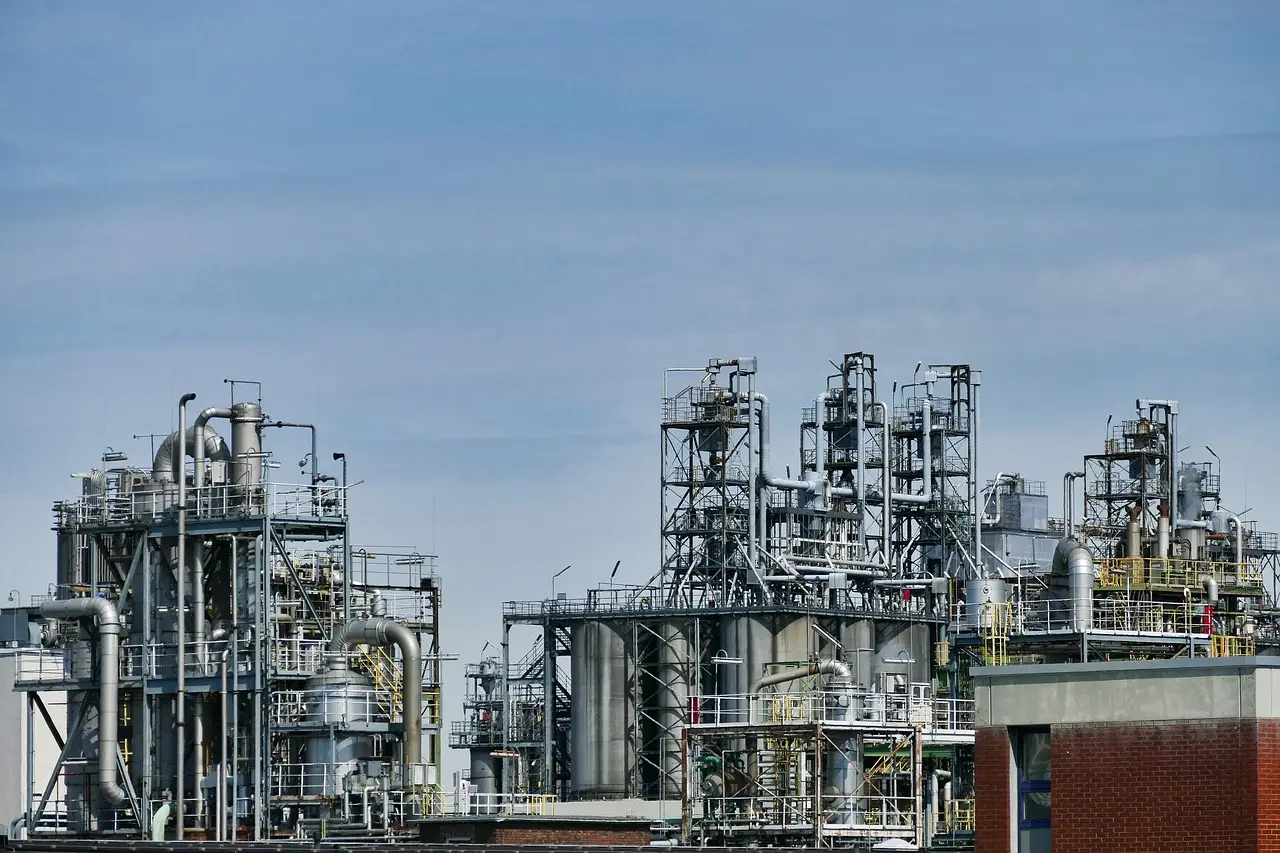
Dangote Petroleum Refinery has closed its public offer roughly three times oversubscribed, with a post-offer equity value of about 65.22 trillion naira, or $48.3 billion at the illustrative rate of 1,350 naira to the dollar. The base offer comprised 4.1 billion new shares at 525 naira each, implying approximately 2.15 trillion naira in gross proceeds if fully allotted. Applications are still being checked. Regulatory approval of allotments and the start of trading remain ahead, following the October 27 celebrations.
The oversubscription shows appetite at the offer price. It does not establish what the business is worth through a refining downturn, a distinction analysts say matters after the closing bell.
What do the numbers show?
The Lagos coastal complex combines refining, petrochemicals, storage, and marine infrastructure, with stated crude-processing capacity of 700,000 bpd. Unaudited results for the first nine months of 2026 showed:
- Revenue of $22.48 billion
- EBITDA (earnings before interest, tax, depreciation and amortization) of $5.52 billion
- Net profit of $4.73 billion
- Operating cash flow of about $3.68 billion
- Cash of $6.69 billion and reported net cash of $650.8 million
The EBITDA margin reached approximately 24.6%, driven mainly by a dramatic improvement in refining economics. These figures weaken the argument that the IPO simply rescues a financially distressed project. They do not represent normal earning power, because earnings depend on the spread between feedstock costs and product revenues, not on oil prices alone.
Takeaway: the refinery is generating real cash, but part of it reflects unusually favorable product markets.
Is the valuation cheap?
Straight-line annualization of nine months of net income produces about $6.31 billion, putting the offer at roughly 7.7 times earnings. Annualization is arithmetic, not a forecast. Investors buying apparently cheap earnings may in fact pay a demanding price for profits measured across a full cycle. A convincing valuation requires assumptions about refining margins, utilization, taxation, and maintenance costs.
Cash conversion offers another test. Operating cash flow represented about 78% of reported net income over the nine months. That difference deserves explanation through working-capital movements. Operating cash flow also comes before capital expenditure, so not all of it is freely available for dividends.
What will absorb the cash?
The prospectus envisages capital expenditure of $4.8 billion for the remainder of 2026, $3.9 billion in 2027, and $3.1 billion in 2028. That totals $11.8 billion across the stated periods. These are planned expenditures, not confirmed spending. Expansion could ultimately increase earnings and reinforce the competitive position of a complex that competes with imported fuels and supplies overseas customers. It also exposes shareholders to construction costs, commissioning delays, and the risk that new capacity starts up into weaker margins.
Feedstock adds another layer. The offer documents show meaningful reliance on imported and spot barrels alongside domestic supplies, bringing freight, currency, and working-capital requirements into the economics. If Dangote expands capacity as planned, procurement discipline will need to increase.
What are the risks after listing?
Dangote's political connections in Nigeria cut both ways. Nigeria benefits from reliable domestic fuel production after decades of imports, but shareholders seek commercially attractive margins, and the two can conflict when international prices rise. Investors should allow for pressure over pricing, import competition, and domestic supply priorities.
Currency risk also remains. The prospectus makes distributions conditional on financial capacity, financing arrangements, and approvals; payment may occur in naira, and share trades will settle in naira until dollar settlement becomes operationally available. Dollar-linked revenues do not guarantee frictionless dollar returns to offshore shareholders.
Watch items: the regulatory approval of allotments, the listing-day exchange rate, and whether refining margins survive normalization as the $11.8 billion build-out proceeds.
via OilPrice.com (Source)
More from Olivia Hart
Show full bio
Correspondent covering technology and product news in Oil and gas industry operations and markets at Rig & Refinery.
556 articles
Adjoining reports
- Dangote Refinery Posts $4.73 Billion Profit Ahead of Record IPO
- Dangote Refinery Profit Climbs as Nigeria Plant Prepares IPO
- Dangote Refinery Targets $14 Billion Expansion as IPO Documents Signed
- Dangote Refinery Lifts Nigeria's Seaborne Product Shipments Seven-Fold
- Dangote Refinery logs $4.7bn profit on $22.5bn revenue across nine months