Well report No. RR-5481 · T13N · R49W · SEC 1 · filed October 10, 2026
Upstream Drilling & ProductionWell report
EU Holds Line on Arctic Drilling Ban as Norway Presses Case
Brussels will maintain its opposition to new Arctic oil drilling despite diplomatic pressure from Norway, Reuters reports, leaving upstream operators to navigate a widening policy gap between the EU and its largest pipeline gas supplier.
Field notes
- EU will continue opposing new Arctic oil drilling, Reuters reported.
- Norway is the EU's largest pipeline gas supplier by pipeline volume.
- Norway sits among the world's top-ten crude exporters.
- Russian pipeline gas volumes to Europe collapsed starting in 2022.
- EU carbon-border adjustment mechanism is set to tighten through the back half of the decade.
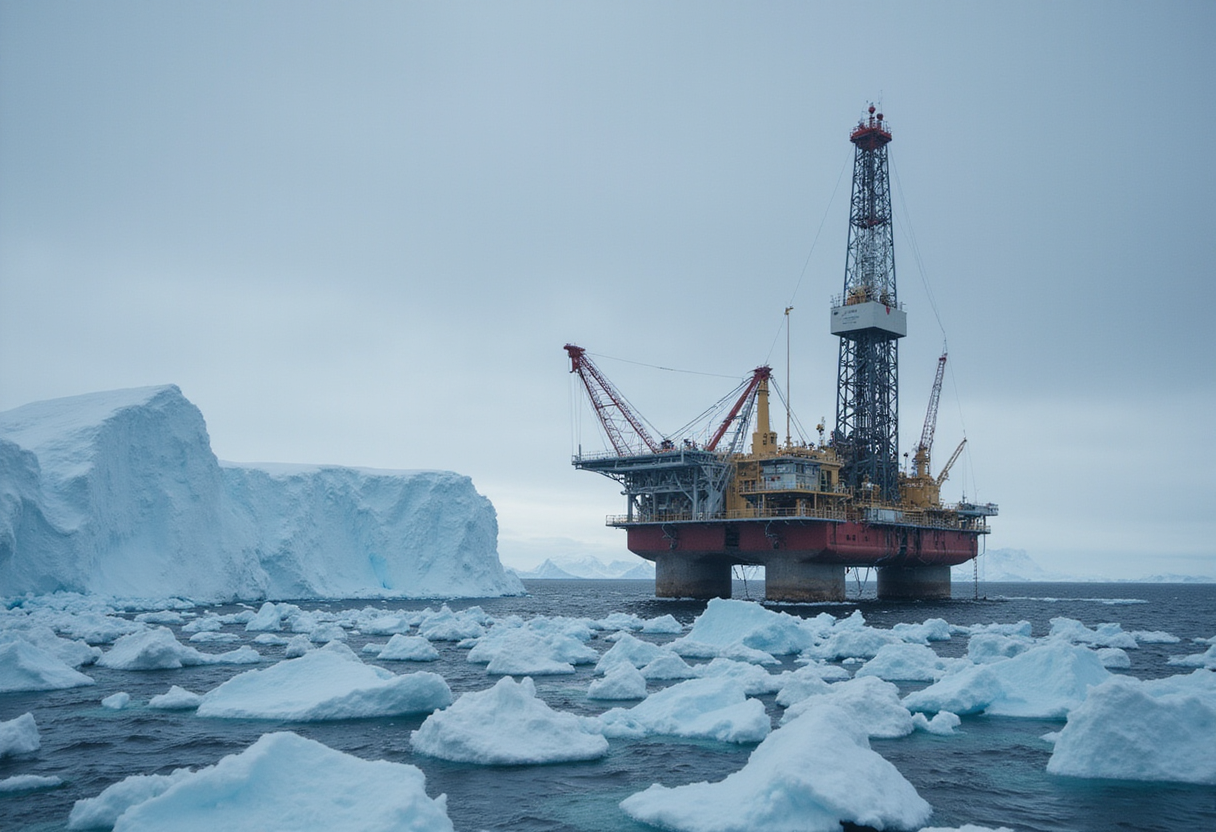
The European Union will continue to oppose new Arctic oil drilling despite diplomatic pressure from Norway, Reuters reported, sharpening a long-running policy divide between Brussels and its largest pipeline gas supplier.
The Reuters dispatch frames the dispute as a structural disagreement that matters directly to upstream operators weighing exploration in frontier Arctic acreage, including Barents Sea blocks where Norwegian state-controlled Equinor and a cohort of independents have built their deepest-water portfolios.
What does Norway bring to the argument?
Norway is the EU's largest pipeline gas supplier by pipeline volume and a top-ten global crude exporter. The country's Barents Sea acreage represents its largest remaining frontier resource base, with successive license rounds extending into deep-water blocks.
Those blocks have drawn European majors, Norwegian independents, and selected US-based E&Ps over multiple licensing cycles. Seismic campaigns continue across the western Barents despite periodic frontier-round pushback from environmental groups.
Oslo's central counter to Brussels, as Reuters characterised it, rests on three points: that disciplined Arctic development meets strict environmental and operational standards; that frontier acreage supports European energy security; and that Arctic resources counter the bloc's diversification objectives.
Norwegian operators cite specific analogues. Production at Barents Sea developments including the Johan Castberg hub has demonstrated that frontier projects can clear technical and environmental benchmarks in Norwegian waters. Carbon-capture operations at Sleipner have anchored Norway's argument that emissions management can scale to higher latitudes.
What does EU opposition look like in practice?
Brussels does not directly license Arctic acreage — that authority sits with the Arctic coastal states under international maritime conventions. But EU policy shapes financing access, dual-use equipment export controls, insurance terms, and the carbon-related levies applied to crude and product flows.
EU environmental frameworks have already reshaped trade flows for crude and refined products since the start of 2022, when Russian pipeline gas volumes to Europe collapsed. Brussels has signalled that the carbon-border adjustment mechanism will tighten progressively through the back half of the decade.
That tightening raises the implicit carbon cost on any Arctic-sourced crude entering the EU refining system. EU sanctions architecture around dual-use oilfield equipment has tightened in parallel, constraining technology transfer to Arctic operators regardless of nationality.
For producers planning sanctions on new Arctic developments, the Reuters report signals that access to European offtake and capital is unlikely to ease.
The EU's stated position remains that Arctic oil activity is incompatible with the bloc's climate objectives. That stance has shaped EU negotiating lines at international climate forums and constrained European major appetite for frontier Arctic projects. The Arctic Council, where several EU member states sit alongside Norway, has become a recurring forum for that disagreement.
What should operators watch?
The next decision points will sit in Oslo rather than Brussels. Norway's Ministry of Petroleum and Energy has signalled continued interest in frontier exploration, and upcoming license-round announcements will test domestic policy direction.
For European refiners dependent on Atlantic Basin crudes, the EU's stance will show up in cargo allocation rather than licensing decisions. The watch items are the autumn Arctic Council ministerial, the next Norwegian licensing round, and EU clarification on carbon-border adjustment treatment of crude produced in Arctic waters.
via Google News: Oil drilling and production (Source)
More from James Calloway
Show full bio
Staff writer covering industry trends and analytics at Rig & Refinery.
384 articles