Well report · filed November 24, 2026
Petroleum MarketsWell report
Gulf Exports Still 3.2 Million bpd Below Pre-Conflict Level
Gulf exports sit 3.2 million bpd below the pre-conflict 19.5 million, and Libya's 0.2-0.5 million bpd gain covers only a fraction — the bearish Brent consensus may be underpricing tail risk.
Field notes
- Gulf exports recovered to ~16.3 million bpd, still 3.2 million bpd below the pre-conflict 19.5 million
- Libya raised output to ~1.4-1.5 million bpd, an incremental gain of ~0.2-0.5 million bpd
- The Strait of Hormuz carried roughly 20% of world oil and LNG supply before the conflict
- Consensus sees Brent drifting toward $80; the analysis argues tail risk is underpriced
- Hormuz-related flows at risk total ~20 million bpd, with no 5-10 million bpd spare cushion available
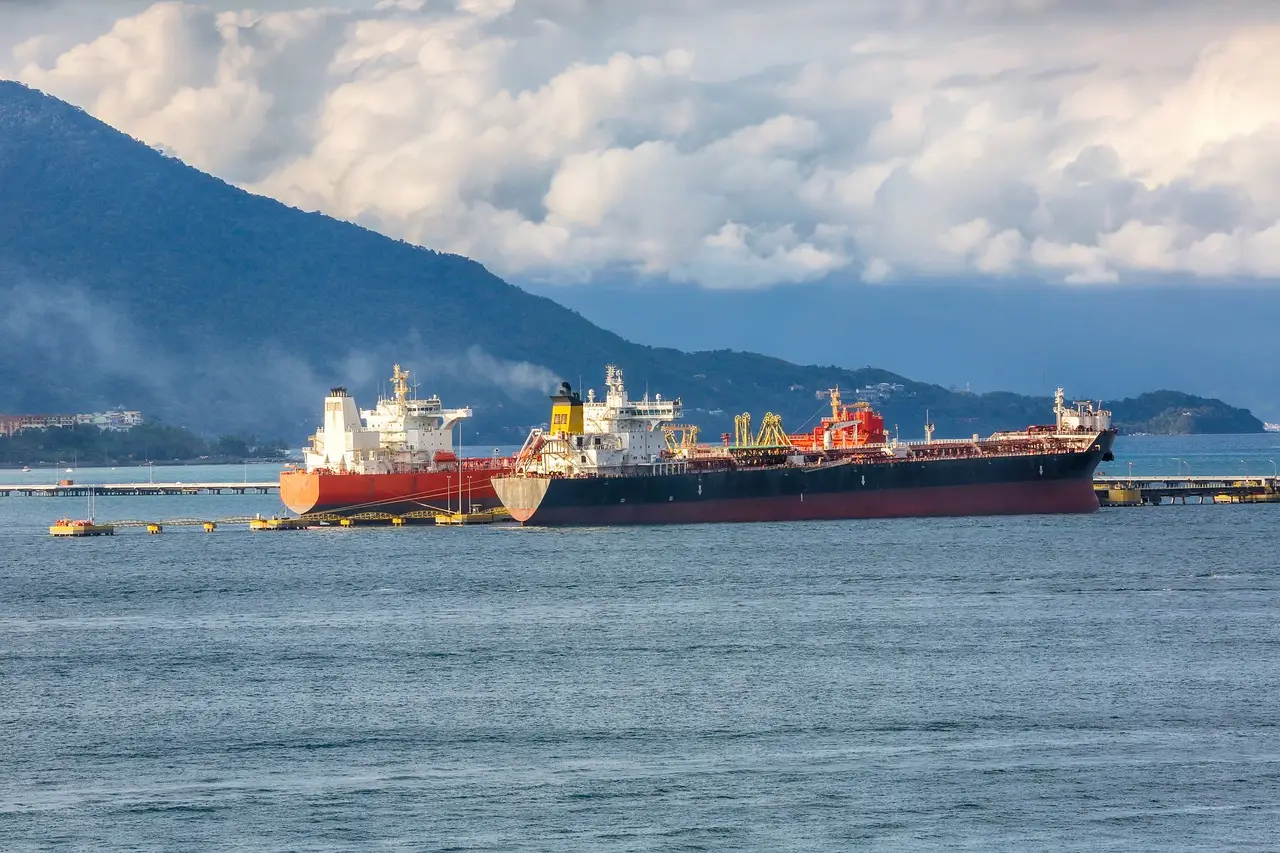
Gulf exports remain roughly 3.2 million bpd short of their pre-conflict level of 19.5 million bpd, and the barrels returning elsewhere — chiefly Libya — cover barely a tenth of that gap. That is the core of a market analysis published on TradingView by contributor S_de_Bont, who argues that the bearish consensus on Brent rests on a spare-supply cushion thinner than traders assume.
The piece, titled "Don't Count on a Further Decline of the Oil Price," works through the arithmetic that headline writers skip: how much extra supply could actually offset a serious disruption of Iranian and Gulf exports.
How big is the extra supply, really?
Libya has raised production to about 1.4-1.5 million bpd, up roughly 0.2-0.3 million bpd from previous levels. Even if Tripoli hits its near-term target, the incremental gain reaches perhaps 0.2-0.5 million bpd. Helpful, the author writes — but not transformational.
Set against the Gulf, the shortfall is stark:
- Libya production increase: ~0.2-0.5 million bpd
- Missing Gulf exports versus pre-conflict: ~3.2 million bpd
- Hormuz-related flows at risk: ~20 million bpd
Before the conflict, the Strait of Hormuz carried roughly 20% of world oil and LNG supply. Gulf producer exports ran near 19.5 million bpd before disruption and later recovered to about 16.3 million bpd.
The takeaway: Libya is contributing, but it is nowhere near enough to replace Gulf supply.
Why is Brent not at $120?
The market, the analysis says, is currently pricing five assumptions:
- Hormuz stays open.
- Saudi Arabia continues exporting.
- UAE continues exporting.
- Most disruptions remain temporary.
- Strategic inventories can bridge short-term shortages.
In short, the market is pricing the most likely outcome, not the worst outcome. The author reads that as an asymmetry between two scenarios.
The consensus view: supply recovers, Brent drifts toward $80, everything remains manageable. The tail-risk view: another major incident occurs, insurance costs spike, tanker traffic slows, and Gulf exports fall again.
If that happens, oil does not move from $87 to $92. It moves much more violently, the author argues, because there is not 5-10 million bpd of spare supply sitting around waiting to replace the Gulf.
What could actually replace Iran and its neighbours?
The honest answer, per the analysis: nothing can fully replace them quickly. The market can absorb roughly 0.3 million bpd from Libya, some extra OPEC production, and some inventory drawdowns — but it cannot easily replace a sustained, multi-million-barrel-per-day disruption across Iran, Iraq, Kuwait, UAE, and Saudi export routes.
What does this mean for oil stocks such as Shell?
The author frames the equity angle as more nuanced than a simple "sell Shell because oil will fall" argument. If consensus expects Brent to fall to $80 and geopolitical risk to fade, while the actual downside protection from spare supply is thinner than people think, then oil stocks may carry a better risk/reward profile than the consensus implies.
Not because oil is certain to rise — but because the market may be underpricing geopolitical risk, shipping risk, insurance risk, and the lack of truly replaceable Middle East supply.
The distinction matters for practitioners. The consensus narrative is "supply is ample." The factual alpha question is "how much spare supply really exists if something goes wrong?" Those are not the same thing.
The author's conclusion: the bearish oil consensus is probably reasonable for the base case, but it may be underestimating the upside tail risk if the Gulf situation deteriorates.
The watch item is the gap itself: the 3.2 million bpd still missing from Gulf exports, and whether Hormuz flows hold while it closes.
via tradingview.com (Source)
More from James Calloway
Show full bio
Staff writer covering people, launches and day-to-day practice in Oil and gas industry operations and markets at Rig & Refinery.
656 articles
Adjoining reports
- Iraq's October Exports Top 3.4 Million Bpd, Nearing Pre-War Level
- Libyan Oil Pipeline Back in Service After Blockade Ends
- Gulf Crude Exports Back at Pre-War Levels as Dubai Slips to Contango
- JPMorgan sees 1.4 million bpd oil surplus as exports recover
- Iraq chases 2 million bpd Kirkuk-Baniyas line as Hormuz workaround