Well report No. RR-6559 · T7N · R34W · SEC 19 · filed October 10, 2026
Upstream Drilling & ProductionWell report
Lea County pipeline blast leaves two dead in Permian
Two died in a pipeline explosion in Lea County, New Mexico, KOAT reports. Operator, segment, and ignition source remain pending. The county anchors the Permian Delaware takeaway network.
Field notes
- Two fatalities in a pipeline explosion in Lea County, New Mexico
- Initial reporting by KOAT; operating company not named
- Pipeline diameter, service class, and ignition source not disclosed
- Lea County overlies the Delaware sub-basin of the Permian
- New Mexico OCD, PHMSA, and OSHA expected to open separate incident reviews
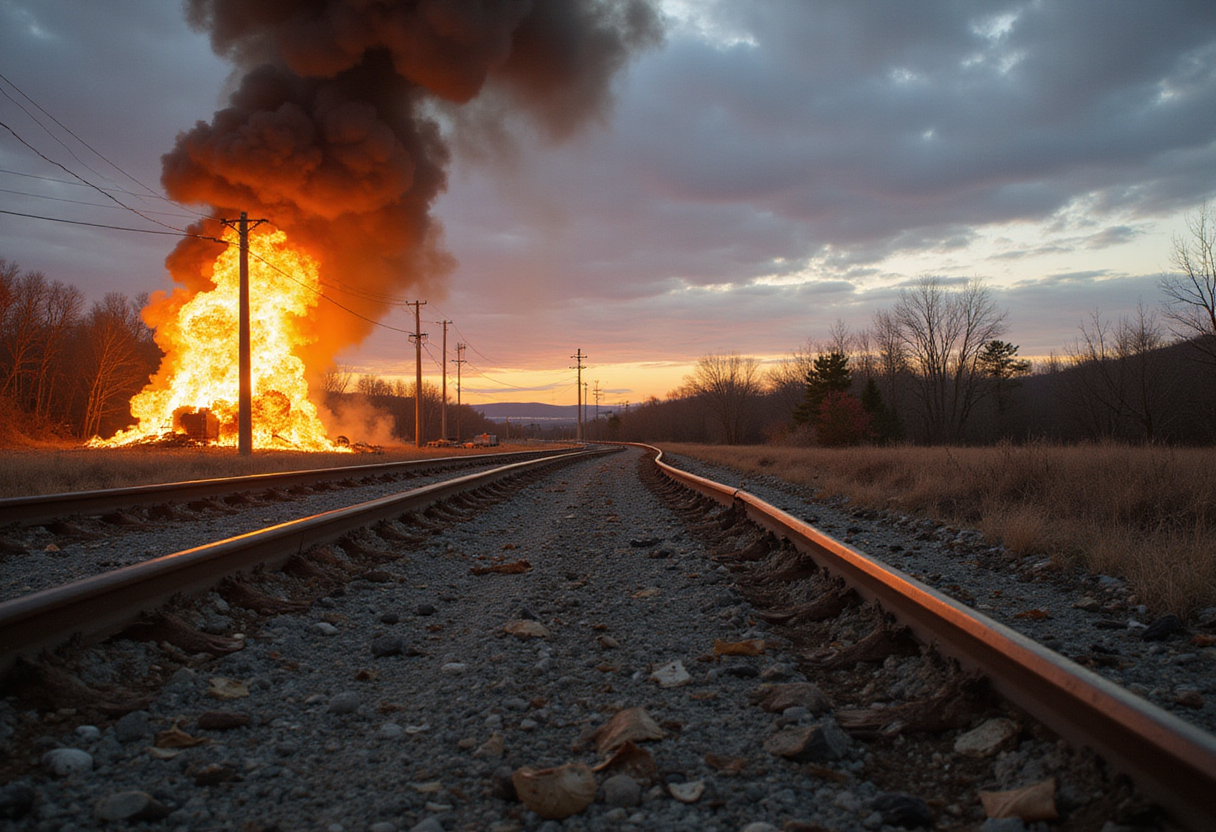
Two people died in a pipeline explosion in Lea County, New Mexico, according to KOAT, the Albuquerque ABC affiliate that first reported the incident. The broadcaster's initial dispatch did not name the operating company, identify the pipeline segment, or describe the ignition source.
Where the rupture occurred
Lea County anchors the southeastern corner of the Permian Basin — the most active tight-oil play in the United States and the largest producing basin outside the Middle East. The county overlies the Delaware sub-basin, where Wolfcamp and Bone Spring horizontals drive a multi-stacked pay section that has lifted New Mexico oil production to record levels.
How dense is the gathering network?
The county sits at the seam of three crude takeaway systems: the Permian Highway Pipeline running toward the Gulf Coast, the Longhorn system serving Midcontinent refineries, and the Cactus II line out of the southern Delaware. Residue gas exits the basin through the Wahalajara corridor and the Trans-Pecos extension into the Texas grid.
A typical lease in central Lea County connects to a centralized tank battery, then to a saltwater disposal line, then to a low-pressure gas gathering lateral. Single laterals feed entire pads. A rupture on one lateral can take down lift operations on a dozen wells within hours.
Compression stations on those leases typically run unattended, with remote monitoring through SCADA systems that flag pressure excursions and trigger automatic shutdown sequences.
What remains pending
KOAT's report did not specify:
- The operating company
- The pipeline diameter or service class
- The product carried — crude, condensate, gas, or produced water
- The ignition mechanism
- The volume released
- The containment status
Lea County sheriff's deputies and emergency management officials had not posted an operational summary at the time of writing.
How regulators typically respond to a Permian fatality
The New Mexico Oil Conservation Division (OCD), housed within the Energy, Minerals and Natural Resources Department, holds primacy over upstream gathering lines inside the producing field.
The Pipeline and Hazardous Materials Safety Administration (PHMSA) claims jurisdiction over designated interstate gas transmission lines. The Occupational Safety and Health Administration (OSHA) opens a process-safety inspection that examines hot-work permits, lockout-tagout procedures, and contractor training records.
Each agency typically files its incident report weeks after a fatality event. Telephonic notifications, however, usually reach PHMSA and the state within hours of the incident.
Why a Lea County rupture carries elevated risk
The county's produced-gas stream runs sour on many leases, with hydrogen sulfide concentrations that push operators to install automatic shutoff valves and line-break controls along laterals serving tank batteries and compressor stations. A rupture on a sour-gas segment typically triggers automatic isolation within seconds.
The thermal pulse from a sustained release can still ignite gathering-header gas and surrounding tankage before the isolation valves close. Tank battery fires can then propagate to adjacent production equipment, including separator vessels, treaters, and pumpjack prime movers. Flame arrestors at compressor stations provide the last line of containment.
What is the operational impact?
The Permian has added significant takeaway capacity in recent years, with multiple new gas and crude lines entering service across the Delaware and Central Basin platforms. Even so, redundancy at the lease edge remains thin, where single laterals connect individual pads to centralized gathering.
A fatality-producing rupture usually halts the operator's affected system until the New Mexico OCD issues an operational clearance. That clearance process typically spans several days and includes a root-cause review. The operator must then submit a restart plan covering any process changes and a verification of the line's integrity.
The watch item
The first regulatory filing — an OCD incident report, a PHMSA telephonic notice, or an OSHA fatality inspection — will fix whether the segment falls under state gathering rules or federal jurisdiction. That filing is expected within 24 to 72 hours. The same filing will drive PHMSA's classification of the line, which in turn sets the operator's ongoing integrity-management cycle.
via Google News: Pipelines and midstream (Source)
More from Olivia Hart
Adjoining reports
- New Mexico pipeline ruptures lift incident count as Permian trend climbs
- Permian Growth Pushes US Gas Output to Record
- Dallas Fed Survey: Oil, Gas Output Rises Across Texas, Louisiana, New Mexico in Q3
- Dallas Fed Survey: Oil, Gas Output Rises in Texas, Louisiana, New Mexico in Q3 2026
- Permian Output Up 284% in a Decade as Laterals Stretch Past 15,000 ft