Well report No. RR-1518 · T16N · R32W · SEC 28 · filed October 10, 2026
Midstream & PipelinesWell report
New Mexico pipeline ruptures lift incident count as Permian trend climbs
Two pipeline ruptures in New Mexico lifted the state's incident count, the Albuquerque Journal reported, signaling rising integrity pressure on gathering and transmission lines across the Permian's Delaware sub-basin.
Field notes
- Two pipeline ruptures were reported in New Mexico in the most recent incident cycle
- Failures occurred along the eastern flank of the Permian Basin's Delaware sub-basin
- Eddy and Lea counties anchor New Mexico's record-high production from the Bone Spring and Wolfcamp benches
- Intrastate gathering lines fall under the New Mexico Energy, Minerals and Natural Resources Department's Oil Conservation Division
- Interstate pipelines sit under U.S. Department of Transportation's Pipeline and Hazardous Materials Safety Administration jurisdiction
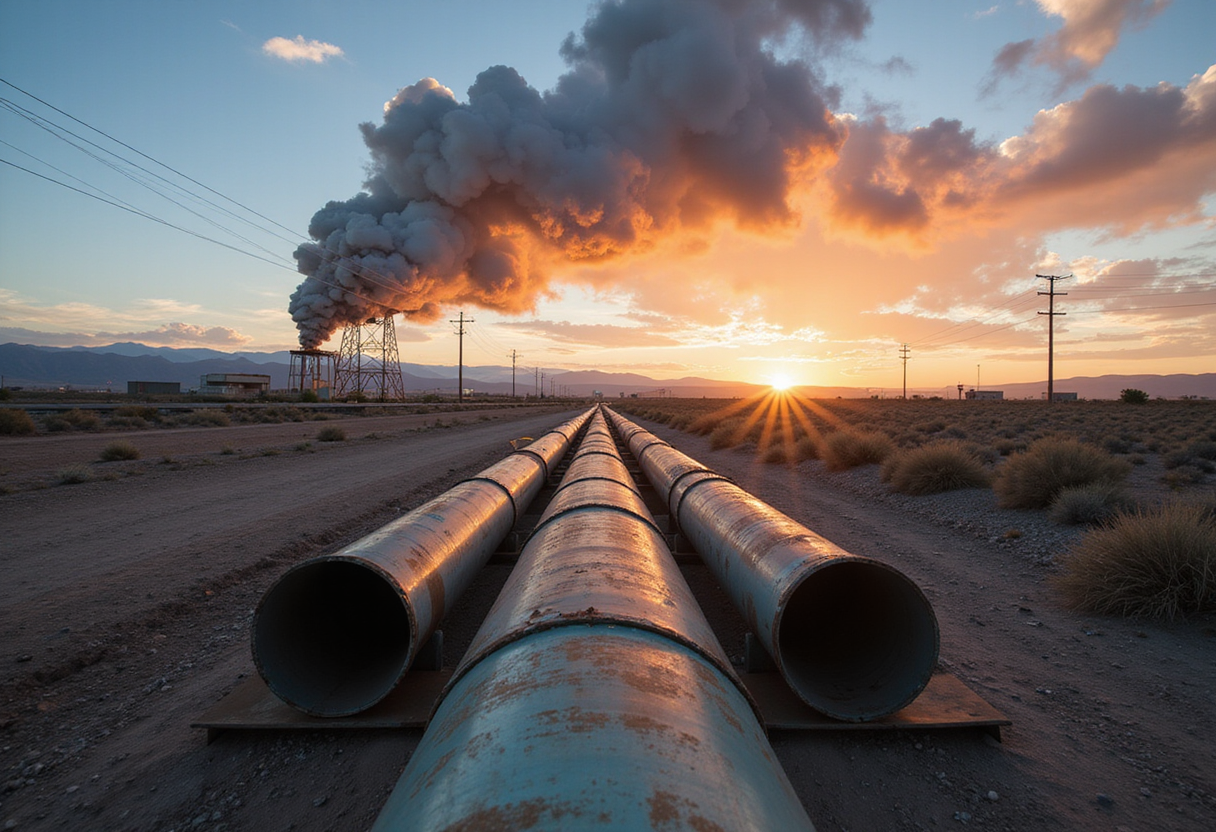
Two pipeline ruptures in New Mexico have lifted the state's pipeline incident count, with the Albuquerque Journal reporting the failures as part of a broader upward trend along the Permian Basin's eastern flank.
The newspaper, the principal daily covering New Mexico's energy-producing southeast, captured the two fresh ruptures at the headline level without naming operators or pinning specific locations. New Mexico's pipeline network spans tens of thousands of miles of gathering, transmission and distribution lines threading the Delaware sub-basin of the Permian — the state's primary producing region — with cross-border connections running into the Texas portion of the basin and onward toward Gulf Coast and Midcontinent markets.
What is driving the uptick?
Three recurring stressors surface when Permian gathering and transmission integrity is reviewed:
- Rising throughput, as horizontal drilling expanded the well count across Eddy and Lea counties through 2023 and 2024, pushing more barrels and cubic feet per day through gathering capacity that has not scaled at the same pace
- Corrosive service from hydrogen sulfide, CO₂ and high-salinity produced water streams common to the basin's deeper Bone Spring and Wolfcamp benches
- Aging infrastructure, with lines installed during the prior shale cycle now operating beyond original design envelopes
The two recent ruptures arrive against a backdrop of record New Mexico production, with state-level data placing output at multi-decade highs and rig activity concentrated in the southeast. Greater throughput on gathering capacity engineered for lower basin volumes compounds fatigue and corrosion cycles, shortening the interval between routine integrity assessments.
Where does regulation sit?
Intrastate gathering lines in New Mexico fall under the state's Energy, Minerals and Natural Resources Department, which houses the Oil Conservation Division (OCD) — the same agency that permits wells and regulates produced-water handling. Interstate pipelines and intrastate lines crossing federal thresholds sit under the U.S. Department of Transportation's Pipeline and Hazardous Materials Safety Administration (PHMSA).
The split governs both reporting timelines and remediation duties. PHMSA-administered lines trigger mandatory notification within hours of a release meeting specified volume or impact criteria. OCD-regulated gathering lines operate under state rules that, while aligned with federal standards on safety practice, can differ in inspection cadence, recordkeeping and spill-response obligations.
What are the operator-level stakes?
Midstream companies along the New Mexico Permian flank have invested in integrity-management programs — pressure testing, in-line inspection tool runs, and cathodic protection retrofits — to identify wall loss before rupture events. The current incident pattern carries consequences beyond the immediate sites:
- Cleanup and remediation costs, including produced-water recovery and impacted-soil handling
- Possible regulatory follow-up triggering additional inspection cycles or expanded reporting mandates
- Reputational risk concentrated in the operating counties where releases surface
- Counterparty pressure from producers and refiners relying on uninterrupted gathering service
Whether the New Mexico uptick drives a state-level review of gathering-line oversight or remains an operator-by-operator patching exercise will shape the policy response. Operators with overlapping right-of-way should expect a higher documentation bar regardless.
Watch item
The next confirmation point is the next quarterly incident-disclosure cycle from either OCD or PHMSA covering the period in which the two ruptures occurred, paired with any formal enforcement action tied to the specific sites. Operators running gathering systems through the same Bone Spring and Wolfcamp benches should expect stepped-up document requests on cathodic-protection records, pressure-test cycles and right-of-way patrol logs.
via Google News: Pipelines and midstream (Source)
More from Olivia Hart
Adjoining reports
- Lea County pipeline blast leaves two dead in Permian
- Permian Growth Pushes US Gas Output to Record
- Permian Output Up 284% in a Decade as Laterals Stretch Past 15,000 ft
- Dallas Fed Survey: US Oil, Gas Output Up in Q3 as Price Doubts Weigh
- Dallas Fed Survey: Oil, Gas Output Rises Across Texas, Louisiana, New Mexico in Q3