Well report No. RR-8872 · T12N · R3W · SEC 24 · filed October 2, 2026
Midstream & PipelinesWell report
Pacific Link Draws 1 MMb/d Target, Guarded Welcome in Oilsands Country
Ottawa names Pacific Link the first national-interest project under the Building Canada Act: a $35-44 billion, 1 MMb/d line from Bruderheim to Roberts Bank, targeting completion by 2032-33.
Field notes
- Pacific Link designated as first national-interest project under Building Canada Act; estimated cost $35.2-43.7 billion; target completion 2032-33
- 1,200-km line would move up to 1 million b/d from Bruderheim, Alta., to Roberts Bank port near Delta, B.C., for mostly Asian-bound tankers
- Ownership: Alberta and Trans Mountain Corporation 45% each, Pembina Pipeline 10% with option for 10% more post-completion; Indigenous communities offered minimum 10% equity
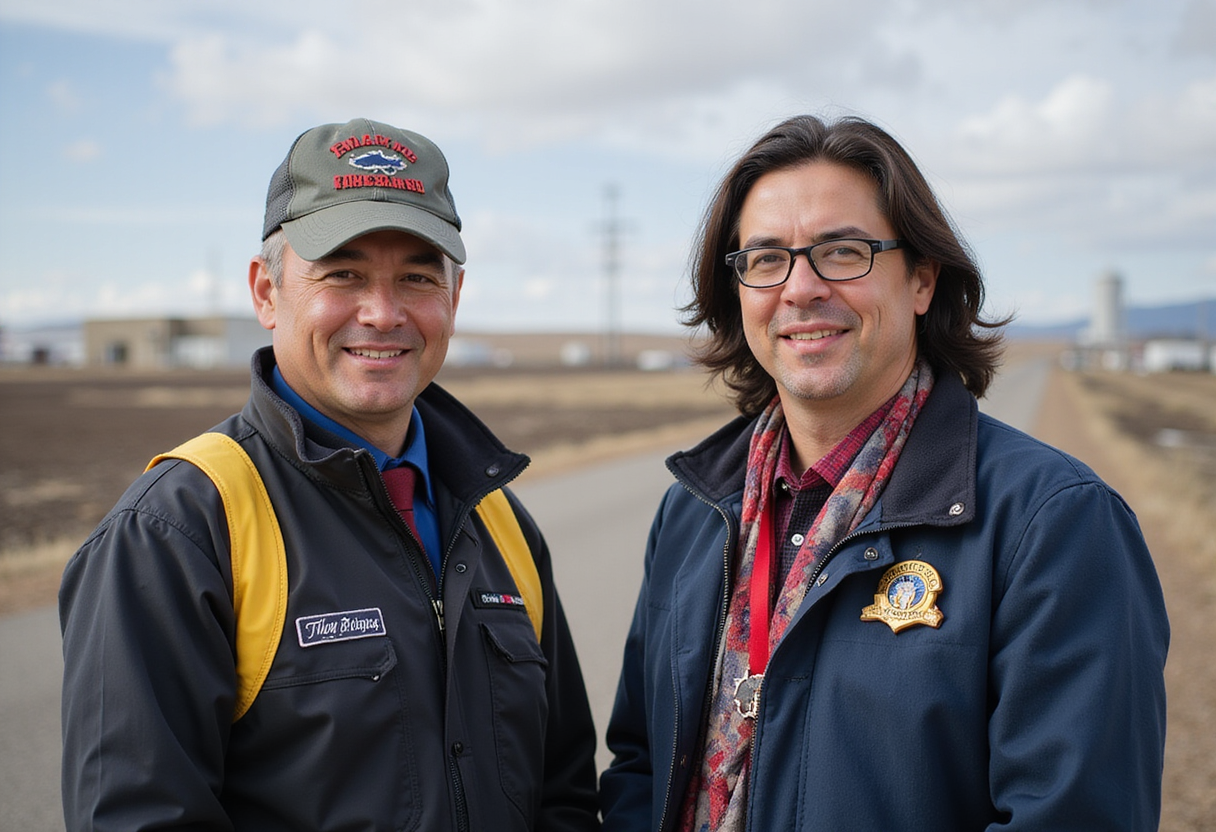
A 1.2 million-barrel-per-day question now hangs over Alberta's oilsands region: can a 1,200-kilometre pipeline to British Columbia's coast actually be built by 2032-33? Prime Minister Mark Carney and Alberta Premier Danielle Smith took the first formal step Thursday in Fort McMurray, naming the proposed Pacific Link pipeline as the first project designated in the national interest under the Building Canada Act.
The designation commits the federal government to fast-track the project by consolidating the approval process. Ottawa estimates construction costs between $35.2 billion and $43.7 billion, according to the government's figures released with the announcement.
The line would begin roughly 47 kilometres northeast of Edmonton at Bruderheim and run to the Roberts Bank deepwater port near Delta, B.C., where crude would load onto tankers bound mostly for Asian markets. Designed capacity is one million barrels per day.
Ownership is structured three ways. The province and the federally owned Trans Mountain Corporation will each hold 45 per cent. Calgary-based Pembina Pipeline, whose CEO Scott Burrows attended Thursday's announcement at SMS Equipment north of Fort McMurray, takes 10 per cent, with an option to purchase a further 10 per cent once the line is complete. Carney said Indigenous communities will be offered a minimum 10 per cent equity stake.
Smith has separately said she wants the oilsands to double production to eight million barrels per day by 2035 — a target that depends heavily on new egress, and one that analysts, not the government, will continue to price against pipeline timelines and differential risk.
Regional leaders temper expectations
Sandy Bowman, mayor of the Regional Municipality of Wood Buffalo, welcomed the rare sight of federal and provincial alignment on an oilsands-region project.
"What we're seeing today overall is a strong provincial government working with the federal government, and that's something we haven't seen in a long time," Bowman said after the news conference. "It's one of probably the biggest announcements we've had in a long time, and to have a prime minister here when it's not a natural disaster is a huge thing."
He dismissed any comparison to the last oilsands boom, which drove record population growth and tax revenues across the region. Instead, Bowman forecast "steady growth," pointing to the 2025 census, which recorded Wood Buffalo's first slight population increase in a decade. He said the municipality has land ready for developers should new housing demand materialise.
Further west, Edson Mayor Kevin Zahara — whose town sits on the pipeline's right-of-way — said the community is already in a "mini-boom" from two unrelated projects under construction by TC Energy and Atco. He is preparing for an influx of Pacific Link construction workers, but wants more than designations.
"I'm heartened to see the positive relationship between the province and the federal government, but it takes action," Zahara told CBC News Network's Power and Politics. "When you actually see shovels in the ground and things moving forward, I think that will have a bigger impact on residents."
First Nations split on equity offer
The Indigenous equity component drew a mixed response from communities along the route and downstream of the oilsands.
Chief Raymond Powder of the Fort McKay First Nation, about 60 kilometres north of Fort McMurray, said he is interested in a potential partnership and expects the pipeline "will get Indigenous buy-in" provided environmental concerns are addressed during consultation.
"I believe that today's announcement actually brings benefits to the nation," Powder told reporters. "We want to continue to sustain the growth of our nations. But within that support, of course, we're going to have to address some of the challenges."
Mikisew Cree First Nation Chief Melody Lepine, whose community sits downstream at Fort Chipewyan, withheld judgement. Local First Nation leaders met Carney on Wednesday evening and raised concerns over equity stakes and environmental impacts.
"I'd say it's too early to tell, but we've got the commitment that we're going to work on these things, and I'm committed to do that work," Lepine said. "If this pipeline is the opportunity to address a number of these concerns, then we're going to take advantage of that."
The Athabasca Chipewyan First Nation, also based in the Fort Chipewyan area, issued a firmer statement Thursday evening. Economic opportunities "do not diminish our responsibility" to address health and environmental concerns tied to oilsands development, the statement said, adding: "We want to emphasize that participation in these discussions does not constitute ACFN's consent to the proposed pipeline. This is the beginning of a process and its outcome is not predetermined."
The project remains at designation stage, not sanction. No construction schedule beyond the 2032-33 completion target has been published. The watch items are the consolidated approval process Ottawa must now design, the Indigenous equity consultations, and whether shovels reach ground in Bruderheim on a timeline consistent with that completion window.
via cbc.ca (Original)
More from James Calloway
Show full bio
Staff writer covering industry trends and analytics at Rig & Refinery.
143 articles
Adjoining reports
- Ottawa Lists Pacific Link Pipeline as First National Interest Project
- Ottawa Names 1-Million-bpd Pacific Link Pipeline First National-Interest Project
- Ottawa Lists Pacific Link Pipeline as Project of National Interest
- Carney Fast-Tracks 1 Million-bpd Pacific Link Pipeline to BC Coast
- Canada Designates 1 Million bpd Pacific Link Pipeline as National Interest Project