Well report No. RR-3868 · T24N · R44W · SEC 36 · filed October 10, 2026
Midstream & PipelinesWell report
Pacific Link Pipeline Named First National-Interest Project
Canada has designated the 1 million bpd Pacific Link pipeline from Alberta to the B.C. coast as its first national-interest project, targeting a 2032-33 startup at a cost of $35.2-43.7 billion.
Field notes
- Pacific Link will carry 1 million bpd of bitumen 1,200 km from Bruderheim, Alberta to a deepwater port near Delta, B.C., in service by 2032-33.
- Estimated project cost: $35.2-43.7 billion including contingency.
- Alberta and Trans Mountain Corporation each hold 45%; Pembina Pipeline holds 10% with an option for 10% more post-startup.
- Conditions document due Sept. 1, 2027, clearing the way for construction.
- Government estimates up to $30 billion annual GDP lift and up to 140,000 jobs.
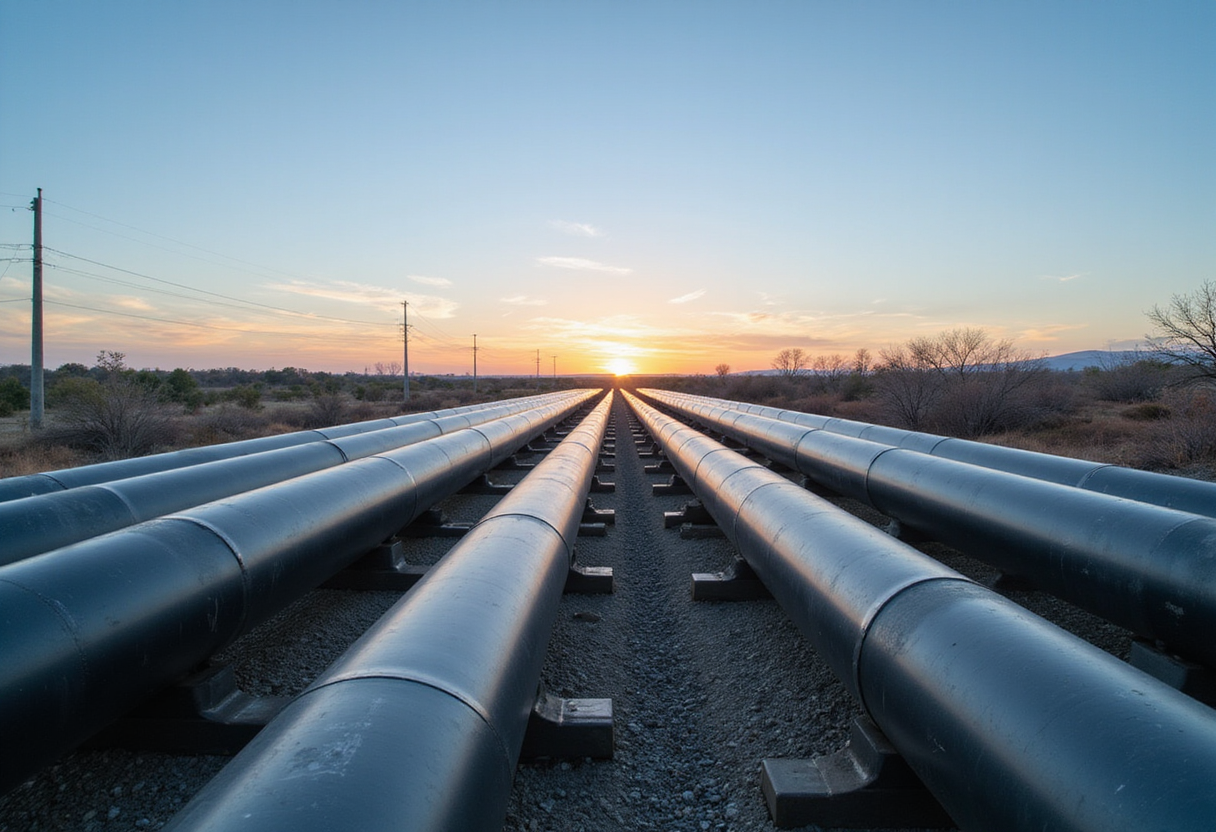
A 1 million bpd oil pipeline from Bruderheim, Alberta to a deepwater port near Delta, B.C. has become the first project designated under Canada's national-interest fast-track process — with a price tag the federal government puts at $35.2-43.7 billion and an in-service target of 2032-33.
Prime Minister Mark Carney and the Alberta government announced Thursday in Fort McMurray that the pipeline, officially named Pacific Link, will be listed on Schedule 1 of the Building Canada Act. The designation moves Ottawa from debating whether the 1,200-kilometre bitumen line should be built to determining how it will be built, consolidating approvals and environmental assessments into a single fast-tracked process.
"Before the Building Canada Act, proponents would have to spend years and potentially billions of dollars doing this work before even knowing where the federal government stood on the project," Carney said. "For many builders, the risk was not worth it. So, Canada stopped building. Now, the federal government is making its position clear at the beginning of the process, rather than at the end."
What does the designation change?
The immediate effect is sequencing. A conditions document setting out the project's requirements — environmental protections, oversight, Indigenous ownership and local hiring — must be completed by Sept. 1, 2027. Dominic LeBlanc, minister of the one Canadian economy, is responsible for delivering it. The Major Projects Office and the Canada Energy Regulator will run stakeholder consultations in support of that work. Once the conditions are met, construction can begin, with startup targeted for 2032-33.
Government modelling, briefed to reporters by a senior official, projects the pipeline could add up to $30 billion annually to Canada's GDP — $20 billion from the pipeline itself. Diversifying exports away from the U.S. market, officials argued, would let Canada capture a higher price on barrels currently shipped south, worth an additional $10 billion a year in revenue. The government also projects up to 140,000 jobs once the project is approved. Those figures are government estimates, not independent analysis.
Who owns the line?
The ownership structure keeps the project 90 per cent in public hands through construction:
- Alberta government: 45 per cent
- Federally owned Trans Mountain Corporation: 45 per cent
- Calgary-based Pembina Pipeline Corporation: 10 per cent through construction, with the option to buy an additional 10 per cent once the line operates
Carney said Indigenous communities will be offered a minimum 10 per cent ownership stake.
A senior official, speaking on background, said private investors are watching whether Canada can actually deliver Pacific Link on the 2032-33 timeline. Trans Mountain's fraught approvals and construction history have made them cautious. Alberta Premier Danielle Smith framed government participation as a bridge to future private-led projects.
"I think in order to give the industry confidence that we can get these kinds of major projects built, we have to walk every step of the way with them until it's completed," Smith told CBC's Power & Politics.
Carney pointed to Canada's effective investment tax rate — now cut to less than a third of the G7 average — as an added draw. "This is the best country in the world, major economy in the world, to invest," he said.
Route and terminal scope
The southern alignment avoids northern B.C. and what Carney called "highly sensitive ecosystems, including the Great Bear Sea." The line carries bitumen from Bruderheim to a deepwater port near Delta, where Roberts Bank terminal infrastructure will be expanded. Ottawa announced $1.2 billion in ocean protections on Tuesday, including measures Carney said will protect killer whale habitat during the Roberts Bank expansion.
How does Ottawa square the emissions math?
A government explanatory note concedes the pipeline "does not directly contribute to Canada's greenhouse gas emission reduction targets" but frames it as part of a plan to cut emissions intensity per barrel. That plan leans on the Pathways Project carbon capture initiative, which Carney said will absorb and store up to 16 million tonnes of CO2 annually, plus an agreement in principle with Alberta to cut methane emissions 75 per cent below 2014 levels by 2035.
The Pembina Institute pushed back: "New oilsands and pipeline projects will drive emissions even higher. Every fraction of a degree matters." Canadian Climate Institute president Rick Smith said the government must now fix what he called broken climate policies to offset the added production.
The Canadian Chamber of Commerce welcomed the up-front regulatory backing. "Getting our resources to Asia-Pacific markets is a path to more production, prosperity and a brighter future for workers, their families and communities," the chamber's Bryan Detchou said in a statement.
Politically, the project splits the opposition. NDP Leader Avi Lewis accused Ottawa of rushing approvals "while sweeping aside environmental protections" and called it "a gift to an oil industry already on track to make $100 billion in wartime profits this year alone." Conservative Leader Pierre Poilievre supports the pipeline but criticized the pace: "We need a pipeline in the ground, not just on a list."
The watch item: LeBlanc's conditions document, due Sept. 1, 2027 — the gate that must clear before steel goes in the ground.
via s.yimg.com (Original)
More from Daniel Okafor
Show full bio
Market editor covering consumer brands and retail at Rig & Refinery.
335 articles
Adjoining reports
- Pacific Link Pipeline Designated First 'National Interest' Project
- Ottawa Fast-Tracks 1 Million bpd Pacific Link Pipeline to BC Coast
- Ottawa Names 1-Million-bpd Pacific Link Pipeline First National-Interest Project
- Ottawa Designates 1 Million bpd Pacific Link Pipeline in National Interest
- Carney Fast-Tracks Alberta-to-Pacific Oil Pipeline as First Project Under New Review Regime