Well report No. RR-1641 · T7N · R47W · SEC 19 · filed October 10, 2026
Midstream & PipelinesWell report
Syria blames sabotage for fire on Al-Shola–Deir al-Zour gas pipeline
Syrian authorities have blamed an "act of sabotage" for a fire on the gas pipeline running between Al-Shola and Deir al-Zour in eastern Syria, Reuters reports. No damage scope, throughput, or restart timing has been disclosed.
Field notes
- Location: gas pipeline between Al-Shola and Deir al-Zour in eastern Syria
- Cause attribution: Syrian authorities cited an 'act of sabotage'
- Source: Reuters carried the official statement without independent verification
- Status: no damaged length, throughput loss, or restoration schedule disclosed
- Corridor: historically carries Euphrates Valley basin gas to eastern Syria's power plants
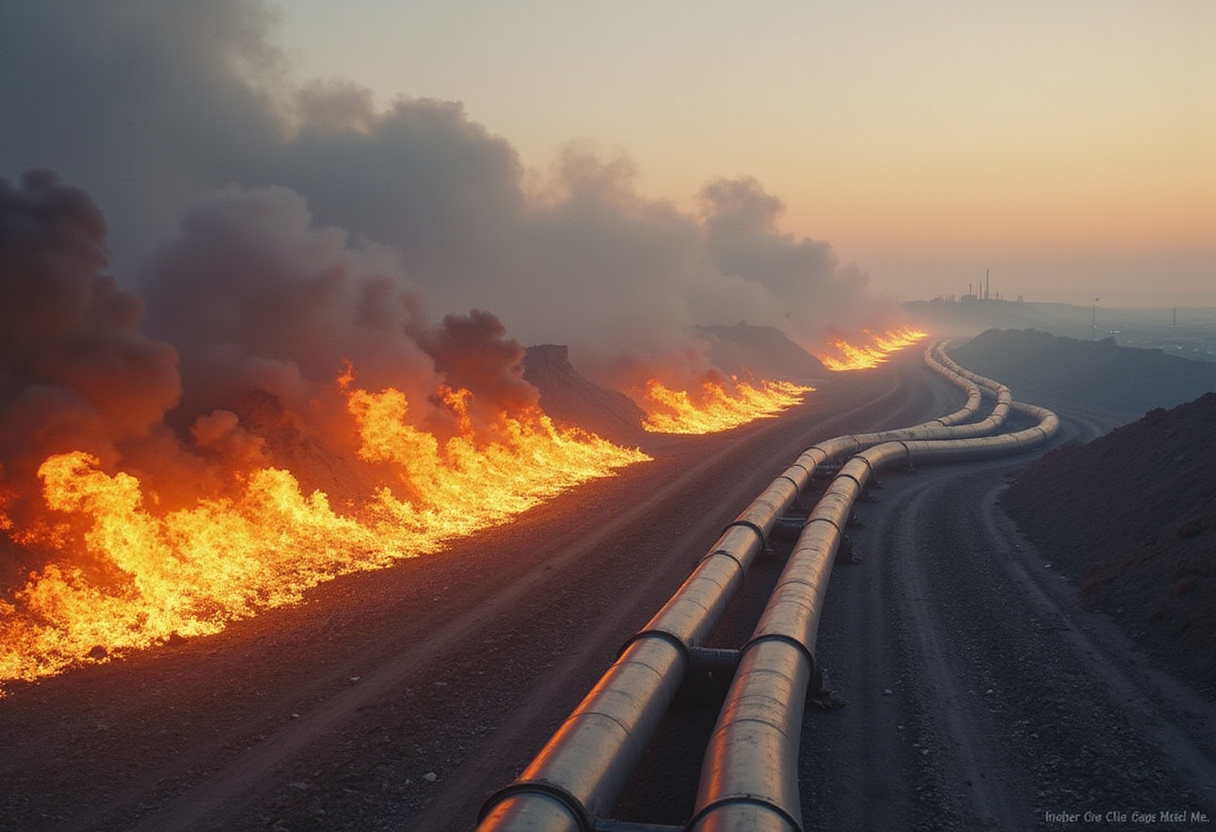
Syrian authorities have blamed an "act of sabotage" for a fire on a gas pipeline running between Al-Shola and Deir al-Zour in eastern Syria, according to a Reuters dispatch. The cause, blast site, and extent of damage remain under official investigation; no throughput figure, restoration schedule, or production impact has been disclosed.
Where the line sits
The pipeline links Al-Shola, in the northern Deir al-Zour governorate, to the provincial capital Deir al-Zour. Deir al-Zour holds the bulk of Syria's pre-war natural gas reserves, and the corridor historically carried gas from the Euphrates Valley basin to power-generating units that fed the national grid. The eastern governorate has remained a focal point of energy-infrastructure incidents since the country's conflict began in 2011.
Reuters carried the Syrian government's framing without independent verification. Syrian state media has used the same "act of sabotage" formulation for previous pipeline ruptures along the same valley, in line with a long-running official pattern of attributing blasts to sabotage rather than technical failure.
What authorities said
Syrian officials attributed the fire to deliberate action. "An act of sabotage caused the fire on the gas pipeline between Al-Shola and Deir al-Zour," authorities told Reuters, in language consistent with past statements on attacks against energy infrastructure.
The Reuters dispatch did not name a faction or party that Syrian authorities held responsible, nor did it cite any claim of responsibility from the field. The Deir al-Zour corridor has seen recurring incidents on energy assets since the territorial defeat of Islamic State group forces in 2019, with periodic attacks reported on transmission lines, gathering stations, and processing facilities.
What remains unconfirmed
Syrian authorities have not published a damaged length, lost gas volume, or stabilization timetable. Reuters did not give a flow rate for the Al-Shola–Deir al-Zour section, nor a pressure rating, pipe diameter, or the timing of the fire itself.
Gas from the Deir al-Zour basin feeds power plants that supply much of eastern Syria. Outages along the corridor tend to constrain generation in Deir al-Zour city and the surrounding province, where grid reliability has been a recurring problem for residents and industry. Restoration efforts on similar Syrian gas lines have ranged from a few days to several weeks, depending on rupture severity and security access for repair crews.
How significant is the line?
Syria's natural gas output today sits well below its pre-war baseline. The Deir al-Zour fields were developed by international operators before the conflict under production-sharing arrangements that have since been suspended. Gas from the basin covers a portion of Syria's power-sector demand, with the balance met by fuel oil and limited imports, depending on the season and refinery throughput elsewhere in the country.
International sanctions remain in force on Syrian hydrocarbon trade and investment. Any repair requiring imported equipment, fittings, or specialist crews would face licensing constraints that typically route through humanitarian exemptions or third-country procurement.
Watch items
- Restoration timing and whether the line returns to nominal operating pressure
- A formal statement from the Syrian Ministry of Petroleum quantifying the loss
- Whether any armed group publicly claims the incident
- Disruption reported at downstream generating units in and around Deir al-Zour city
- Cross-line flows on parallel sections along the Euphrates Valley
- Any knock-on lift on imports at Syria's western border crossings
- Satellite-imagery confirmation of the rupture site and damaged length
via Google News: Pipelines and midstream (Source)
More from Priya Raman
Show full bio
Senior reporter covering media and advertising at Rig & Refinery.
381 articles
Adjoining reports
- Syrian gas pipeline catches fire after blast Rudaw reports as sabotage
- Syria Confirms Sabotage Attack on Northeast Transmission Pipeline
- Damaged Pipeline in Northeastern Syria Halts Flow
- Third pipeline sabotage attack hits Syrian oil network in 10 days
- Syria reports 'sabotage attack' on oil pipeline, arrests suspects