Well report No. RR-2344 · T14N · R47W · SEC 2 · filed October 10, 2026
Refining & PetrochemicalsWell report
Trump announces Texas refinery, calls it first US greenfield in 50 years
President Trump announced plans for what he called the first new US oil refinery in roughly 50 years, set for Texas per FOX 26 Houston. Operator, capacity, and timeline remain unspecified in the available reporting.
Field notes
- Trump described the project as the first new US oil refinery in roughly 50 years, per FOX 26 Houston
- US operable refining capacity stands at roughly 18 million bpd per the EIA, with no major greenfield project in the published pipeline
- Texas anchors roughly 6 million bpd of US refining capacity, about a third of the national total
- Refinery sizing ranges from below 20,000 bpd topping units to more than 300,000 bpd complex conversion sites
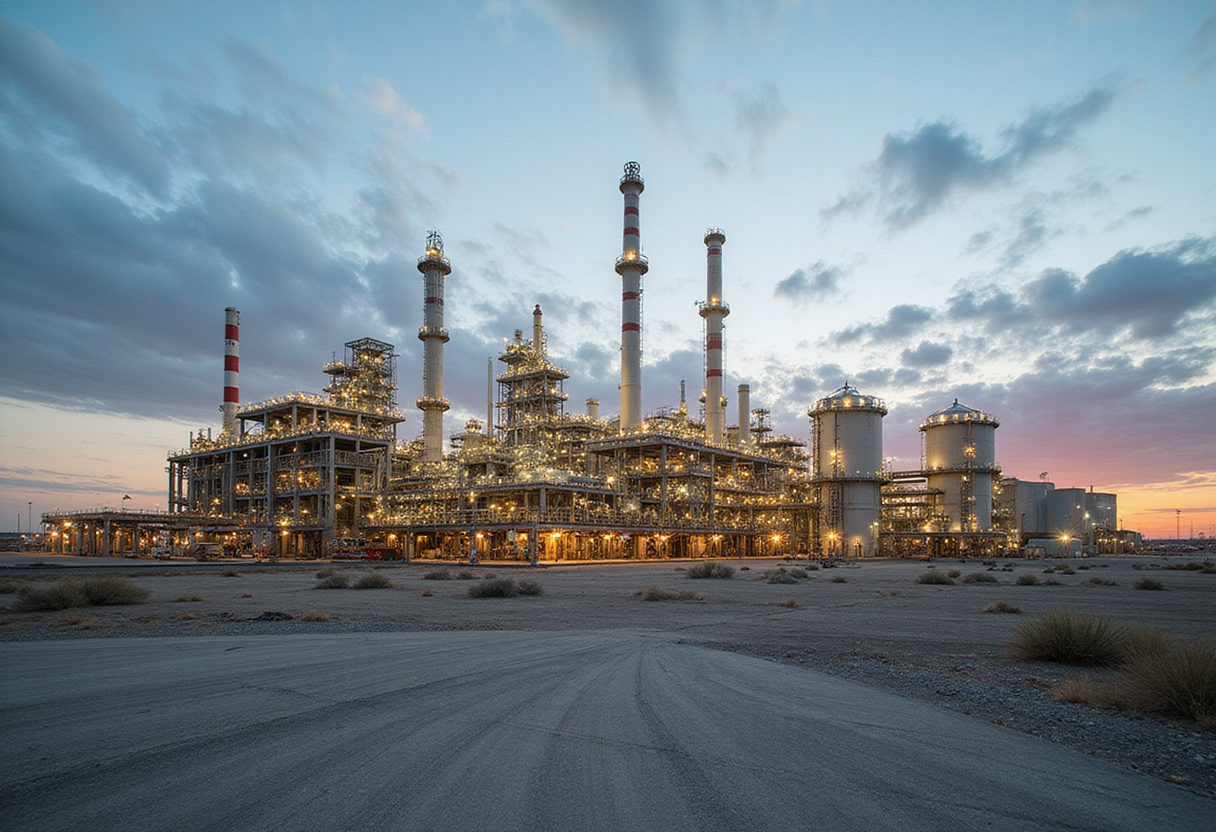
President Donald Trump announced plans to build what he called the first new US oil refinery in roughly 50 years in Texas, according to FOX 26 Houston.
The announcement does not specify a developer, capital cost, processing capacity, or startup date.
What the announcement contains
The FOX 26 Houston report attributes the Texas project to Trump's statement. No specific site, capacity figure, feedstock, or product slate appears in the headline coverage. Refinery sizing varies by an order of magnitude: topping units operate below 20,000 bpd, while complex conversion refineries handle 300,000 bpd or more. Without a permitting filing or operator statement, the project scale remains undefined.
How unusual is a greenfield US refinery?
The US refining base has not added a major greenfield facility in decades. Capacity additions over the past generation came almost exclusively from expansions at existing sites, yield-improving hydrocracker and coker upgrades, and renewable-diesel conversions at shuttered fossil-fuel sites. US operable refining capacity stands at roughly 18 million barrels per day, per the US Energy Information Administration, with no major greenfield project in the published near-term pipeline.
The pattern reflects economics as much as permitting. Building a new US refinery requires multi-billion-dollar capital, multi-year environmental review, and access to crude supply and product offtake — conditions more readily met by expansions or conversions at sites with existing infrastructure and existing permits.
Texas refining footprint
Texas anchors roughly a third of US operable refining capacity. Major complexes run along the Gulf Coast from the Houston Ship Channel through Port Arthur to Corpus Christi. Marathon Petroleum, ExxonMobil, Valero, Phillips 66, and LyondellBasell operate these sites. They draw on Permian Basin and Eagle Ford production, supplemented by waterborne imports, and feed integrated petrochemical clusters.
Operator profile
A new US refinery of meaningful scale would typically require an integrated major — an ExxonMobil, a Marathon, a Valero — or a sovereign-backed entity, given the capital intensity and the multi-year return profile. Independent refiners have demonstrated capacity to add yield-improving units at existing sites, but rarely to build greenfield capacity. The absence of a named operator in the announcement leaves the project's commercial structure undefined.
What's not in the public record
The FOX 26 report does not include:
- A named developer or refinery operator
- A specific Texas site
- A capacity figure in barrels per day
- A capital cost estimate
- A construction start or commissioning date
- A crude feedstock slate
- A product yield profile
- Any reference to air permits filed with the Texas Commission on Environmental Quality or refinery NSPS applicability at the EPA
What to watch
The next data points will be regulatory filings, not rhetoric. Watch items include:
- A corporate press release naming the operating partner or refinery
- A Texas Commission on Environmental Quality air permit application
- An EPA refinery NSPS applicability determination
- A pipeline-tariff filing with a crude-gathering or products-distribution operator
- Any FID-style announcement of capital commitment and EPC award
The presence or absence of a TCEQ air-permit application within the next reporting cycle will distinguish a permitting event from a verbal announcement. Previous US refinery announcements without an operator or air permit have not progressed to construction; the Texas announcement will face the same filter.
via Google News: Refineries and petrochemicals (Source)
More from James Calloway
Show full bio
Staff writer covering industry trends and analytics at Rig & Refinery.
400 articles