Well report No. RR-7742 · T16N · R24W · SEC 28 · filed October 16, 2026
Midstream & PipelinesWell report
Two Syrian Pipelines Damaged in Explosion and Fuel Leak
An explosion and a fuel leak have damaged two Syrian pipelines, the latest disruption to a war-hit fuel network with no repair timeline or restart date yet given.
Field notes
- Two pipelines in Syria damaged in an explosion and a fuel leak
- No operator, route, or volume figures specified in the report
- No repair timeline or restart date announced
- Syria's energy network has faced repeated disruptions since 2011
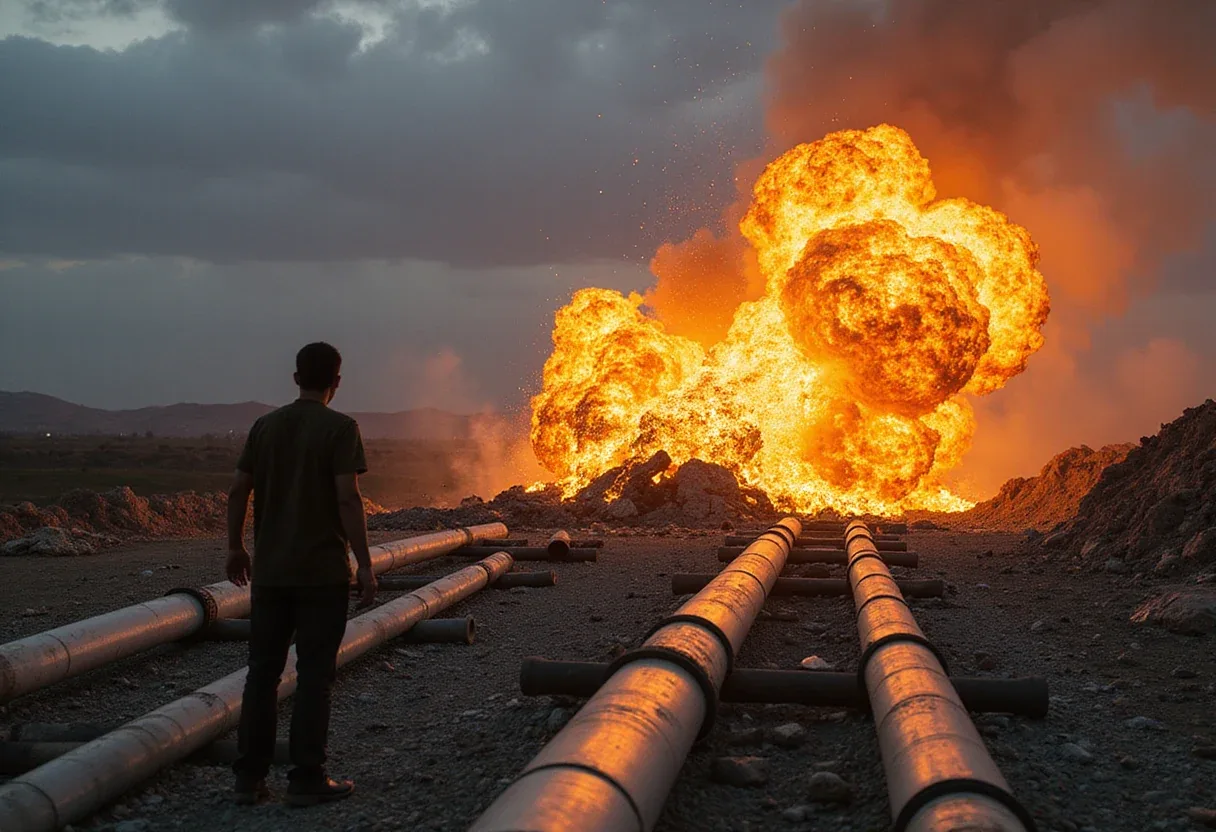
Two pipelines in Syria were damaged in an explosion and fuel leak, dealing another blow to a hydrocarbon network that more than a decade of war has left operating well below design capacity.
The Times of India reported the incident, citing an explosion on one line and a fuel leak on a second. The report did not specify the pipeline routes affected, the operator, or the volumes moved before the damage. For a system already constrained by war-era disruption, any line loss matters — Syria's refined-product supply depends heavily on a small number of trunk routes feeding distribution terminals.
What does the damage change for operators?
For practitioners, the immediate questions are mechanical. An explosion on a liquids line usually means a section replacement, not a repair — and Syria's access to line pipe, valves, and welded-joint crews is limited by sanctions and by currency constraints. A concurrent fuel leak on a second line raises containment and response questions: whether local crews can isolate the damaged segments, and how quickly product losses can be stopped.
The report gave no startup date, no force majeure declaration, and no repair timeline. That gap leaves downstream users — power plants, distribution companies, and any refinery still running — without a firm resumption window for the affected volumes.
How does this fit the wider network picture?
Syria's pipeline network, built to carry crude from eastern fields to coastal and inland refineries, has suffered repeated attacks and illegal tapping since 2011. Each incident compounds the last. Inspectors face a system where integrity data is stale, cathodic protection is patchy, and right-of-way security is uneven across contested territory.
Two lines damaged at once narrows reroute options. Where a single-line outage can be worked around with trucking or a parallel route, a second concurrent failure removes that margin, and product must be prioritized — typically toward power generation and transport fuels.
What should readers watch next?
The open items are concrete:
- Confirmation of which lines and routes were damaged, and their nominal capacities
- A repair assessment and estimated restart date from the operating authority
- Any declaration of force majeure or emergency product allocation
- Indications of import tendering to cover the lost volumes
No company or agency source had issued a damage estimate at the time of the report. The watch item is the restart timeline — until an operator puts a date on restoration, every downstream plan in the affected region stays provisional.
via Google News: Pipelines and midstream (Source)
More from James Calloway
Show full bio
Staff writer covering people, launches and day-to-day practice in Oil and gas industry operations and markets at Rig & Refinery.
522 articles
Adjoining reports
- Syria Pipeline Blast Exposes Fragility of Post-War Energy Network
- Damaged pipeline spills crude in central Syria
- Blast Hits Syrian Gas Pipeline as Energy Infrastructure Attacks Persist
- Two Syrian pipelines damaged in attacks on energy infrastructure
- Explosion Hits Syrian Gas Pipeline as Energy Infrastructure Attacks Continue