Well report No. RR-7806 · T20N · R30W · SEC 20 · filed October 15, 2026
Refining & PetrochemicalsWell report
Ukraine strikes Ryazan oil refinery, Asharq Al-Awsat reports
Ukraine struck the Ryazan oil refinery southeast of Moscow, Asharq Al-Awsat reports. No damage assessment yet from Russian authorities or the plant's operators.
Field notes
- Ukraine struck the oil refinery in Russia's Ryazan region, Asharq Al-Awsat reported.
- The Ryazan refinery sits roughly 200 km southeast of Moscow in central Russia.
- No damage assessment, throughput-loss figure, or operator statement had been released at time of reporting.
- The strike fits Kyiv's broader campaign against Russian refining and export infrastructure.
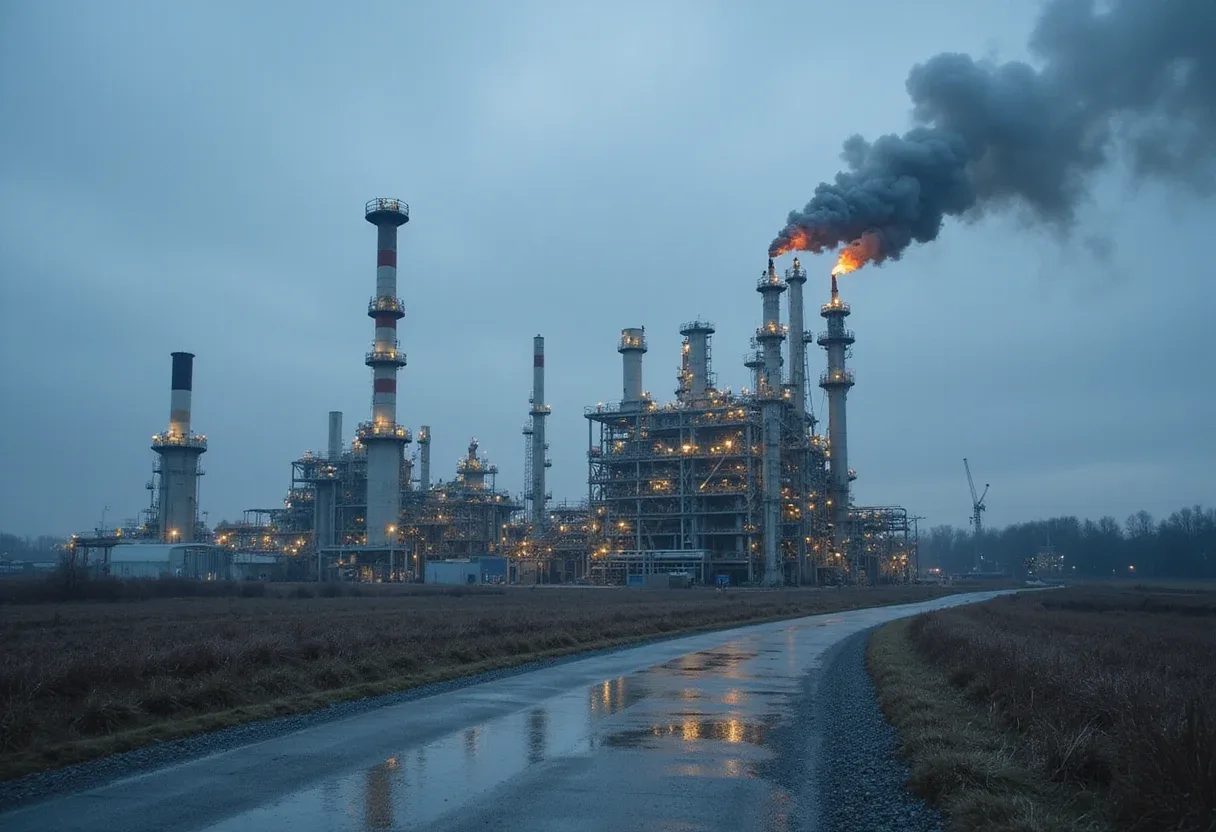
Ukraine has struck the oil refinery in Russia's Ryazan region, southeast of Moscow, according to a report from Asharq Al-Awsat carried by UA.NEWS. The strike lands on one of the country's major fuels production sites and pushes the number of Russian refining assets hit in the war to another grim milestone for downstream supply.
Details in the initial reporting remain thin. Neither the Ukrainian side nor Russian regional authorities had, at the time of writing, published a confirmed damage assessment for the Ryazan plant, and there was no word yet on fire containment, throughput losses, or how long any units might be offline.
What is the Ryazan refinery?
The Ryazan refinery is a cornerstone of Russia's domestic fuels system — a large complex refining operation serving central Russia, sitting roughly 200 km from the capital on key rail and pipeline routes. Plants of this scale typically run well above 300,000 bpd of crude and supply a significant slice of the Moscow region's gasoline and diesel.
That is what makes these strikes a downstream story as much as a military one. When a refinery of Ryazan's rank goes dark, even briefly, the effect ripples into regional gasoline balances, retail prices, and export allocations within days — not months.
The reported strike fits the pattern Kyiv has pursued across the war: targeting refining and export infrastructure deep inside Russia rather than front-line fuel depots alone. Earlier strikes in the campaign have hit plants from the Baltic to the Volga, at times knocking hundreds of thousands of barrels per day of Russian refining capacity offline and forcing Moscow to juggle product exports, refinery maintenance schedules, and a gasoline export ban it has toggled on and off in response.
Whether Ryazan's loss proves temporary or lasting depends on which units took the hit and how badly — the kind of detail engineers, not communiqués, will settle in the coming days.
What does this change for fuels markets?
For traders, the first question is volume: how much capacity exited the market, and for how long. The second is location — Ryazan feeds central Russia, so the immediate squeeze lands on domestic product supply, with knock-ons for export availability if the outage stretches.
No official throughput figure for the plant's current post-strike status had been released. Until Russian energy authorities or the operator speak, any capacity-loss number circulating should be treated as estimate, not measurement — the trade-press convention that separates a confirmed outage from desk speculation.
What comes next
Watch three things. First, satellite imagery and regional governor statements over the next 48 hours, which typically settle whether units were damaged or the strike missed process infrastructure. Second, any move by Moscow on gasoline export restrictions, its usual lever when domestic refining takes a hit. Third, product cracks in Northwest Europe, where Russian supply disruptions have repeatedly translated into diesel and gasoline price moves.
The refinery's operators and Russian authorities have yet to comment — their assessment, when it lands, will tell the market whether this was a graze or a genuine hit on capacity.
via Google News: Refineries and petrochemicals (Source)
More from Elena Vasquez
Show full bio
News editor covering technology and product news in Oil and gas industry operations and markets at Rig & Refinery.
479 articles