Well report No. RR-2439 · T19N · R42W · SEC 19 · filed October 15, 2026
Refining & PetrochemicalsWell report
Ukrainian Drones Hit Rosneft's Ryazan Refinery, Ending Energy Pause
Ukrainian drones struck Rosneft's Ryazan refinery, about 300 km southeast of Moscow, ending Kyiv's pause in energy attacks after Zelenskyy said Moscow ignored the ceasefire.
Field notes
- Ukrainian drones struck the Rosneft-owned Ryazan refinery on Thursday.
- Ryazan accounts for nearly 5% of Russia's refinery throughput.
- The refinery sits roughly 300 kilometers southeast of Moscow.
- Ryazan Governor Pavel Malkov confirmed a fire at the facility.
- The strike ended Kyiv's pause after Zelenskyy said Moscow ignored the U.S.-promoted ceasefire.
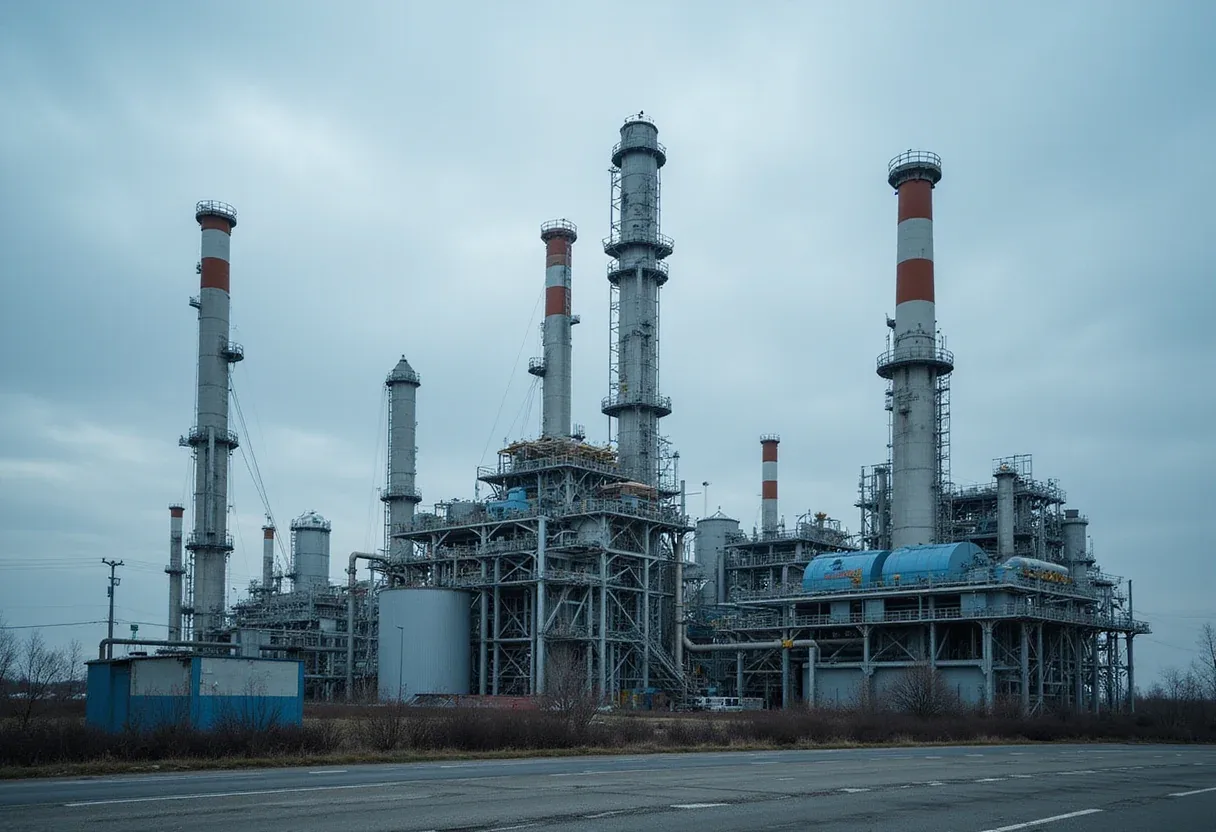
Ukrainian drones struck Rosneft's Ryazan refinery on Thursday, ending Kyiv's brief pause in attacks on Russian energy infrastructure and putting roughly 5% of Russia's refinery throughput back in the crosshairs.
The Ryazan complex sits about 300 kilometers southeast of Moscow. It processes nearly one barrel in twenty of Russia's total refinery throughput, which makes it one of the larger single-site exposures in the country's downstream fleet. Ryazan Governor Pavel Malkov confirmed a fire at the facility.
The strike came hours after President Volodymyr Zelenskyy declared his position bluntly: "we're done." Kyiv had held off attacks on Russian energy infrastructure during a ceasefire push promoted by U.S. President Donald Trump. Zelenskyy said Moscow had ignored the truce. The drones followed within hours.
What does the strike change for Russian supply?
For refiners and cargo traders, the immediate question is run cuts. Ryazan is a Rosneft-owned asset with meaningful placement in domestic fuel supply. A sustained fire and damage assessment cycle at a site of this scale typically translates into reduced runs for weeks, not days, depending on which units took the hit.
The governor's confirmation of a fire is, at this writing, the extent of the official operational picture. Unit-level damage, force majeure declarations, and any export schedule changes have not been disclosed.
The arithmetic is straightforward. One-twentieth of national throughput is not a marginal loss. It is the kind of volume that forces product balancing across the domestic system and, potentially, draws on import buffers for gasoline and diesel in affected regions.
The verdict for now: supply impact unquantified, escalation risk repriced.
How did we get here?
The sequence matters for anyone tracking risk premia. Zelenskyy publicly framed the pause around a U.S.-backed ceasefire. Moscow, in Kyiv's assessment, ignored it. Kyiv then converted rhetoric into ordnance within hours, choosing a target with high throughput weight and proximity symbolism — 300 kilometers from the capital.
This is not the first strike on Ryazan in the conflict, but it is the first after the pause. That timing signals intent. The message reads as follows: ceasefire terms without compliance carry an energy-infrastructure cost.
For insurers, trading houses, and anyone pricing Russian refined product, the resumption removes the assumption that energy assets had gained durable immunity through diplomacy.
What should the market watch next?
The watch items are concrete.
- Unit-level damage disclosure from Rosneft or regional authorities
- Any declaration of reduced runs or maintenance-driven outage at Ryazan
- Russian domestic product export allocations, which would signal internal shortfalls
- Further strikes, which would confirm a sustained campaign rather than a single signal
- Diesel and gasoline crack spreads in Northwest Europe, the natural clearing market for any displaced barrels
A fire at a 5%-of-throughput refinery does not wait politely for confirmation. Fuel markets will price the uncertainty first and the facts later.
The takeaway in plain words: Kyiv's pause is over, Ryazan is burning, and Russia's downstream just reacquired a risk premium it had briefly shed.
via OilPrice.com (Source)
More from Daniel Okafor
Show full bio
Market editor covering companies, deals and strategy in Oil and gas industry operations and markets at Rig & Refinery.
467 articles