Well report No. RR-3075 · T7N · R20W · SEC 31 · filed October 9, 2026
Refining & PetrochemicalsWell report
Ukrainian Drones Strike Lukoil Refinery in Russia's Komi Republic
Ukrainian drones hit a Lukoil refinery in Russia's Komi Republic, per Odessa Journal, extending strikes on Russian downstream assets deep into the far north.
Field notes
- Ukrainian drones targeted a Lukoil refinery in Russia's Komi Republic, Odessa Journal reported.
- Komi Republic lies roughly 1,500 km from the Ukrainian border, in Russia's far northwest.
- The report did not specify the plant's capacity or extent of damage.
- Lukoil is Russia's largest private crude producer and among its biggest refiners.
- Watch for damage confirmation, export policy response, and claims of responsibility.
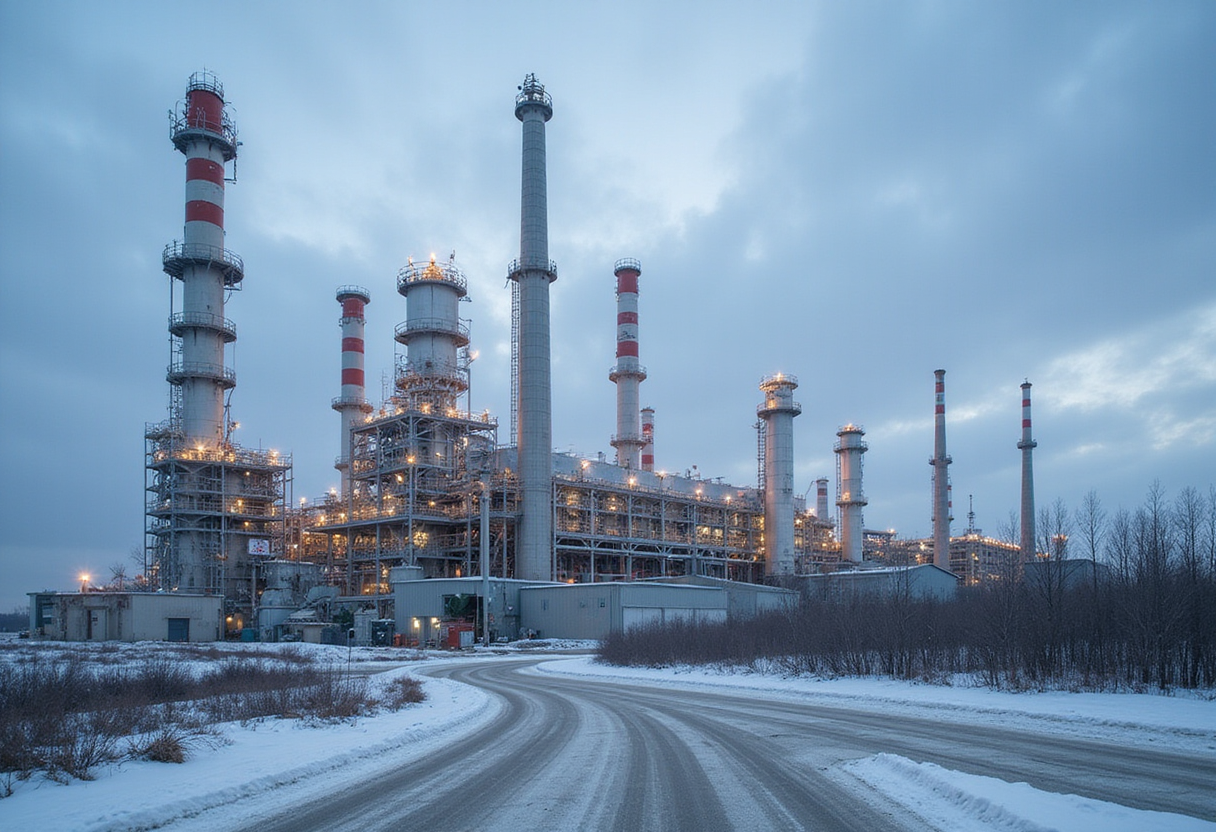
Ukrainian drones have targeted a Lukoil-operated oil refinery in Russia's Komi Republic, according to a report by the Odessa Journal, extending the range of strikes on Russian downstream assets deep into the country's northwest.
The facility sits in the Komi Republic, a region in the Russian Far North roughly 1,500 km from the Ukrainian border. The attack places a Lukoil refining asset — rather than a fuel depot or crude export terminal — among the targets hit in the sustained drone campaign against Russian oil infrastructure.
Which asset was hit?
Lukoil operates refining capacity concentrated at its flagship sites in Volgograd, Nizhny Novgorod and Perm, but the company also holds upstream and processing positions across the Russian north, including in the Timan-Pechora basin, which straddles Komi. The Odessa Journal report did not specify the exact plant, its throughput capacity, or the extent of damage.
Trade attention now turns to whether the strike forced a unit shutdown or flare-off. Recent drone hits on Russian refineries have ranged from no operational impact to fires that idled crude distillation units for weeks, so the absence of damage detail leaves the operational picture unresolved.
What does this mean for Russian fuel supply?
Russia has absorbed repeated refinery outages since early 2024 by routing crude toward export and drawing on product inventories, along with gasoline export bans and pipeline rerouting. A single strike in Komi is unlikely to move domestic diesel or gasoline balances on its own, but cumulative capacity losses have already pushed Moscow to impose export restrictions at times.
Lukoil is Russia's largest private crude producer and one of its biggest refiners. Any sustained outage at one of its northern plants would tighten regional fuel supply in northwest Russia, where logistics alternatives are limited.
Kyiv has systematically targeted Russian refining and export infrastructure over the past two years, aiming to degrade revenue from oil products and complicate military logistics. Strikes have previously reached plants in Nizhny Novgorod, Ryazan, Volgograd and as far as St Petersburg's surroundings, so a Komi strike fits an established pattern of extending range.
What to watch
The next confirmations to look for: satellite imagery of the site, a statement from Lukoil or Russian regional authorities on damage and throughput, and any move by Moscow on gasoline or diesel export policy in response. Watch also for the Ukrainian side's claim of responsibility and the specific drone type used, which would signal how far the effective strike envelope now reaches into the Russian Arctic flank.
via Google News: Refineries and petrochemicals (Source)
More from Elena Vasquez
Adjoining reports
- Overnight drone strikes ignite fires near Lukoil's Volgograd refinery
- Drone Strike Halts Operations at Another Russian Refinery
- Ukrainian Drones Hit Major Russian Refineries and Defence Plant
- Ukrainian Strikes Hit Volgograd Refinery, Samara Blending Station
- Ukrainian Drone Strike Hits Russia's Largest Oil Refinery