Well report No. RR-4622 · T10N · R7W · SEC 34 · filed October 2, 2026
Midstream & PipelinesWell report
Canada Designates Pacific Link Pipeline a National-Interest Project
Ottawa designates the proposed Pacific Link oil pipeline a project of national interest, fast-tracking federal treatment of a second Pacific Coast crude outlet while FID, permits, and shipper commitments remain outstanding.
Field notes
- Canada has designated the Pacific Link oil pipeline a project of national interest, per Investing.com Nigeria.
- The designation fast-tracks federal permitting treatment but does not constitute FID, shipper commitments, or construction.
- The project would add a second major Canadian crude outlet to the Pacific Coast following Trans Mountain's 2024 startup.
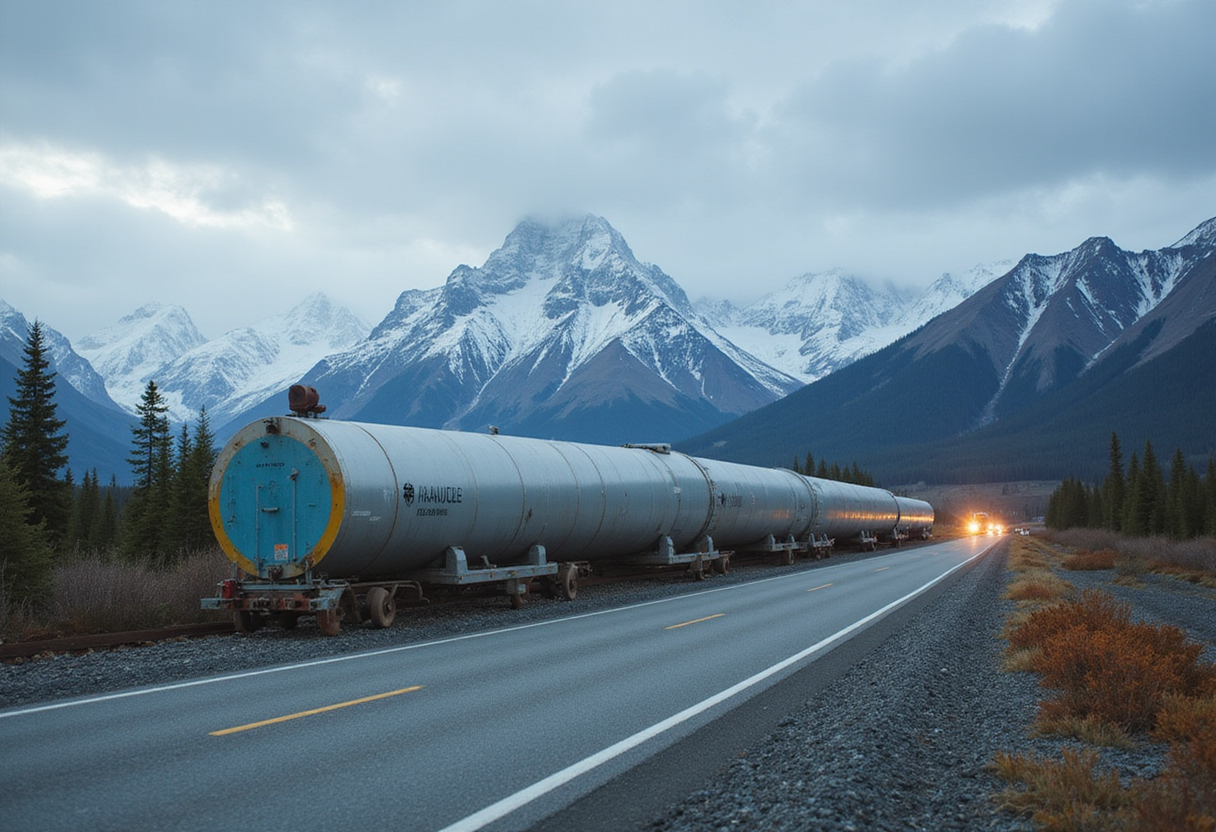
Canada has designated the Pacific Link oil pipeline a project of national interest, according to a report from Investing.com Nigeria, moving the proposed crude line onto a federal fast-track footing and sharpening the country's debate over new oil export capacity to the Pacific Coast.
The designation itself is the story. A national-interest listing does not pour concrete, drive pipe, or commit a barrel of throughput — but it changes the permitting arithmetic. For a pipeline proponent, it signals that Ottawa intends to treat the review timeline, the consultation process, and the interjurisdictional coordination a major cross-border crude line demands as priorities rather than routine files. For counterparties weighing capacity commitments, it reduces one category of risk: the risk that a project dies in the queue.
What the designation does not do is equally important for readers tracking sanction-stage versus appraisal-stage assets. There is no indication in the announcement, as reported, that the Pacific Link scheme has reached a final investment decision, secured firm shipper commitments, or completed the regulatory steps that separate a sanctioned project from a concept. Trade coverage should treat the pipeline as designated, not as built, sanctioned, or even fully permitted — the distinction that matters when forecasting Canadian crude egress and takeaway economics.
The policy context frames the move. Canada has spent a decade oscillating on oil export infrastructure. The federal government bought and then expanded the Trans Mountain system, adding roughly 590,000 bpd of capacity to the British Columbia coast when TMX entered service in 2024 — but that volume absorbed quickly into an Asian-bound arbitrage, and producers in the Alberta basin have continued to argue that egress remains tight relative to growth plans in the oil sands and the Montney. A second Pacific outlet has long been the industry's ask; the Pacific Link designation suggests Ottawa is now willing to let at least one such proposal advance through the federal apparatus.
The designation also lands amid a broader North American push to streamline permitting for large energy projects. Governments on both sides of the border have faced pressure from producers and refiners over the years-long timelines that killed or delayed earlier pipeline ventures. In Canada, that history is particularly raw: Northern Gateway was blocked in 2016, Energy East was cancelled in 2017, and Trans Mountain required a federal purchase to survive. Whether the national-interest instrument changes that trajectory for Pacific Link will depend on execution, not announcement.
For downstream readers, the watch items are concrete. First, the regulatory filings: a designated project still requires environmental assessment and Indigenous consultation, and the depth of both will determine the calendar. Second, the commercial case: open season results, shipper contracts, and any producer equity participation would mark the transition from policy support to capital commitment. Third, the route and terminus questions that have defined every previous West Coast line proposal — landowner, First Nations, and marine-traffic issues that no designation waives.
On the upstream ledger, incremental Pacific capacity would matter for differential watchers. WCS–WTI spreads are, in the end, an egress calculation, and analysts attribute much of the recent narrowing to TMX's startup. Any credible second link would feed the same calculus — but that is market commentary to attribute, not a fact of the designation, and no timeline for construction or startup accompanied the announcement as reported.
For now, the operational number is zero — zero barrels moving, zero steel in the ground, zero FID dollars committed. What exists is a federal imprimatur on a pipeline concept, and the burden shifts to the proponent to convert designation into scope, schedule, and shipper support.
The watch item: the proponent's next regulatory filing and any open-season announcement, which will show whether Pacific Link follows Trans Mountain's path or Northern Gateway's.
via Google News: Pipelines and midstream (Source)
More from Priya Raman
Show full bio
Senior reporter covering media and advertising at Rig & Refinery.
142 articles
Adjoining reports
- Canada Designates Pacific Link Pipeline as National Interest Project
- Canada Designates 'Pacific Link' Pipeline a National Interest Project
- Ottawa Designates 1 Million bpd Pacific Link Pipeline in National Interest
- Ottawa Fast-Tracks Pacific Oil Pipeline as Alberta Separation Vote Nears
- CAPP Backs National Interest Designation for West Coast Oil Pipeline